
The simplest storage option isn’t always the easiest fit for a move. For temporary storage between moves, compare self-storage, portable containers and storage arranged as part of a removal service. The overall cost depends on the volume of furniture, storage period, access needs, and whether transport and handling are included. Request a quote for the specific move.
It’s understandable to focus on the storage fee, but practical details matter too. You may need frequent access, help moving heavy furniture or a secure place for everything while your new home is being prepared. This guide compares the main options, explains what affects the overall cost and helps you match storage to your timing and needs. It also helps you decide whether to manage storage yourself or arrange it alongside your move.
Key Takeaways
- Choose a storage option around how often you’ll need your belongings, not just how much space they occupy.
- Estimate the furniture and boxes to be stored, then allow room to reach items you may need during the transition.
- Compare who handles delivery, loading, transport and collection, as well as the storage arrangement itself.
- For a move that needs coordinated packing, removals and storage, see how a full-service approach could simplify the handover between homes.
Storage access during delays and renovations
Renovation schedules and handover dates can change, so consider access as well as the storage period. Compare opening hours, retrieval arrangements and the protection available for your belongings.
Accessing Stored Belongings
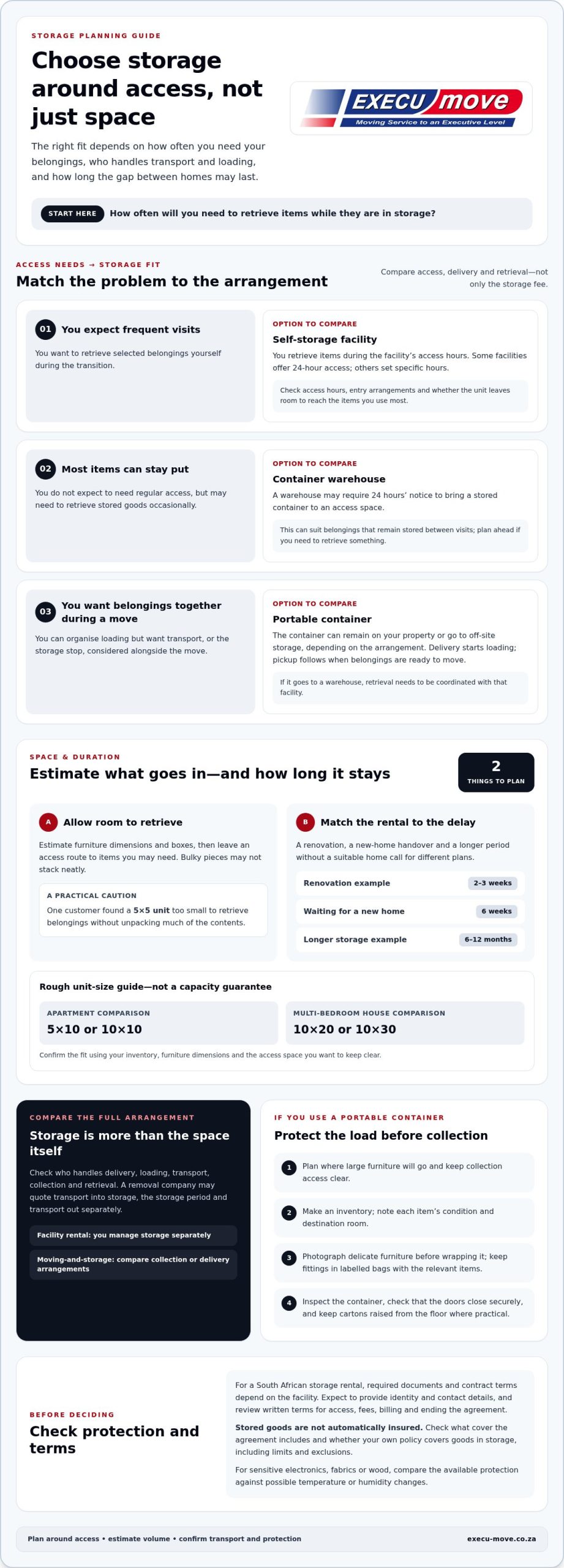
At a self-storage facility, you retrieve belongings yourself during its access hours. Some facilities offer access 24 hours a day, while others restrict entry to set hours. Container storage warehouses may require 24 hours’ notice to bring a stored container to an access space. That can suit items you won’t need often, but is less convenient for regular retrieval.
Self-Storage Access and Climate Control
A self-storage unit gives you a dedicated space to organise your belongings and retrieve selected items. Some facilities offer climate-controlled units, which can help protect furniture, clothing and electronics from extreme temperatures and humidity. Others use features such as gated entry, personal access codes and cameras. Compare the available features with your belongings and how often you’ll need to visit.
Storage Unit Size and Access
Choose a unit based on furniture dimensions, boxes and the space needed to reach items. A 5×5 unit proved too small for one customer to retrieve belongings without unpacking much of the contents. Leave an access route to frequently needed items, rather than stacking everything tightly. A larger unit can make retrieval easier, but uses more space.
For a South African storage rental, required documents and contract terms depend on the facility’s rental process. Expect to provide identity and contact details, and review written terms covering access, fees, billing and ending the agreement. Household goods aren’t automatically insured just because they’re inside a facility. Check what cover the agreement includes and whether your own policy covers goods in storage, including its limits and exclusions.
| Option | Access | Useful for |
|---|---|---|
| Self-storage facility | Entry during facility hours; some offer 24-hour access | Frequent visits and personal retrieval |
| Container warehouse | May require 24 hours’ notice | Items that can remain stored between visits |
| Portable container | Can remain on your property or go off-site | Keeping belongings together during a move |
Choose based on when you’ll need your belongings, how often you’ll visit and how much space you need to retrieve items safely.
Do removal companies offer storage?
Some removal companies offer storage alongside transport, while a facility rental lets you manage storage separately. Compare self-storage with moving-and-storage arrangements, including whether collection or delivery is provided. Transport is especially relevant if you want your belongings moved to storage rather than taking them there yourself.
Short-Term Storage Facilities
A short-term storage facility rents space for belongings you’ll collect yourself. Self-storage units can typically be rented monthly without a commitment, which can suit a renovation lasting 2-3 weeks. For collection or delivery, a moving-and-storage arrangement is a closer fit than a facility-only rental. Portable containers can stay on your property or be sent to off-site storage, depending on the arrangement.
Storage by Item Quantity and Type
Estimate furniture and box volume first, then account for bulky items that don’t stack neatly. Traditional unit sizes provide a rough planning guide: a 5×10 or 10×10 unit may suit an apartment, while a 10×20 or 10×30 unit may suit a multi-bedroom house. These are comparisons, not exact capacity guarantees. Separate fragile, bulky or frequently needed belongings in your inventory.
Storage by Duration and Capacity
Match the rental period to the reason for storing. A family waiting six weeks for a newly built home needs a different plan from someone without a suitable home, whose storage period could last 6-12 months. Longer storage makes clear billing periods and the process for moving items in and out especially relevant. A removal company may quote separately for transport into storage, the storage period and transport out.
If you want transport and storage considered together, explore moving and storage options as part of your planning.
Bonus tip: Are moving companies with storage worth it?
A portable storage container can combine household storage with transport. Whether it suits you depends on how much of the moving work you want to handle yourself.
Container Delivery, Loading, and Storage
With a portable container, delivery begins the loading stage, and pickup follows when your belongings are ready to move. Before loading, plan where large furniture will go and keep access clear for the collection vehicle. If the container is taken to a warehouse, retrieving your goods means coordinating with that facility. This option may suit you if you can organise loading but want transport handled.
Packing and Organising a Storage Container
Make an inventory as you load each item, noting its condition and destination room. Photograph delicate furniture before wrapping it, and keep screws or fittings with the relevant item in a labelled bag. These steps make it easier to find parts or locate a specific box at delivery. Avoid placing heavy items where they could shift onto fragile belongings during transport.
Container Security and Weather Protection
Before loading, inspect the container’s interior for visible damage and make sure its doors close securely. Protect furniture with suitable wrapping, and keep cartons raised from the floor where practical. A portable container may not provide the same conditions as a controlled storage environment, so consider extra protection for sensitive electronics, fabrics or wood if temperatures or humidity may change. Check that the arrangement’s security and weather protection suit the goods you plan to store.
To decide whether a moving company with storage suits your needs, list the tasks you can manage and those you’d rather coordinate as part of the move. A container warehouse may work well if you don’t need regular access and are comfortable handling loading and unloading. If time or physical capacity is limited, compare the effort of packing, lifting and arranging transport with a service that combines moving and storage. Consider the whole process, not just the container.
Comparing portable storage with full-service movers and rental trucks
When moving between homes, compare who handles loading, transport and unloading, not only where your furniture will be stored. Portable containers, full-service movers and rental trucks divide these tasks differently.
| Option | Loading and transport | Storage and access | Best fit |
|---|---|---|---|
| Portable container | You load it; it can be moved to off-site storage | Access depends on whether it stays on your property or enters a warehouse | Keeping belongings together while managing your own packing |
| Full-service movers | Movers handle household transport; storage may be arranged with the move | Access depends on the storage arrangement | Reducing the work of moving furniture and cartons yourself |
| Rental truck | You load, drive and unload the truck | Storage must be arranged separately if your new home isn’t ready | People able to manage transport and handling themselves |
A portable container combines storage with transport, but you manage packing and loading. It may stay on your property or be taken to an off-site location. A container warehouse can suit belongings you won’t need regularly, especially if you prefer to load and unload yourself. This can reduce handling steps, though access may depend on the warehouse arrangement.
Full-service movers take on more of the physical work. A removal company may quote separately for moving items into storage, the storage period and moving them out. Compare those costs and tasks with the container’s delivery, collection and storage arrangements. With a rental truck, you control the journey but organise loading, driving, unloading and any separate storage yourself.
Choose according to the work you can manage, your access needs and the furniture involved. Electronics and delicate furniture may need careful packing, while bulky household contents can make self-loading more demanding. If time between homes is limited, weigh the extra coordination of separate transport and storage against a combined arrangement.
Use this decision guide: choose a container if you want to pack yourself and keep items together; full-service movers if you want help with handling; or a rental truck if you can manage the transport and storage logistics. Plan your moving arrangements around the tasks you want handled.
Execu-Move: International Furniture Removals
Execu-Move can help plan your move when your belongings need to be stored before reaching your next home. Its Secure Storage Solutions let you include the storage period in your relocation plan instead of treating it as a separate decision.
Share your move dates, destination and storage needs so they can be considered together. This is particularly useful when your handover schedule is still taking shape or you need help coordinating the transition.
Discuss your move and storage needs with Execu-Move.
Make your next move easier to plan
Before arranging storage, note your move dates, which items need to be stored and when you’ll need access. This gives you a clearer brief for choosing temporary storage between moves and planning how your furniture will reach your next home. If dates change, revisit the storage period and access arrangements promptly.
Execu-Move coordinates Domestic Furniture Removals and International Furniture Removals, with Full Packing and Wrapping for household contents that need careful preparation. Discussing these needs together can help you plan the transition around your destination, belongings and timing.
For a considered next step, discuss your upcoming move with Execu-Move. A clear plan can make the space between homes feel more manageable.
Frequently Asked Questions
How much does storage with a move cost?
The total cost depends on the volume of goods, transport distance, storage period and services included. It may also vary according to packing needs and whether belongings need transport into and out of storage. The price for a specific move is provided after a quote request. Share your inventory and move dates to help define the scope clearly.
What Does & Doesn’t Go in Short-Term Storage?
Furniture, boxed household contents and appliances can generally be considered for storage, subject to the facility’s agreement. Keep passports, identity documents, medication, valuables and everyday essentials with you during the move. Before packing, sort belongings into “store”, “take with me” and “donate or discard”. Review the storage terms for restricted items, as accepted contents depend on the facility’s rules.
Where can you store your belongings when you move if you’re not using a removal company?
You could ask a trusted family member or friend about using suitable spare space, such as a garage, during the transition. Agree in writing which items will be stored, for how long and when you can retrieve them. Make an inventory and photograph valuable furniture before moving it. Keep essential documents, medication and daily necessities with you rather than packing them away.
What is temporary storage?
Temporary storage is a short-term arrangement for belongings that can’t yet go into your next home. For example, if your lease ends before your purchase is ready, furniture can be stored until the new property is available. This could mean using a storage unit or container, or arranging storage as part of a move. The required period depends on the gap between homes.
What other storage costs do I need to allow for?
Alongside the storage charge, account for related tasks: transporting goods in and out, packing and any separate handling fees. A change in move dates can also extend the storage period. When comparing quotes, list each cost category so you can see whether transport and packing are included or priced separately.
What temporary storage options are available between moves in South Africa?
Common options include self-storage facilities, portable containers, container warehouses and storage arranged alongside a removal. They differ in who handles transport and loading, how you access your belongings, and whether goods stay on your property or at an off-site facility. If you need frequent access, prioritise convenient retrieval; for a more hands-off move, consider an arrangement that combines storage and transport.