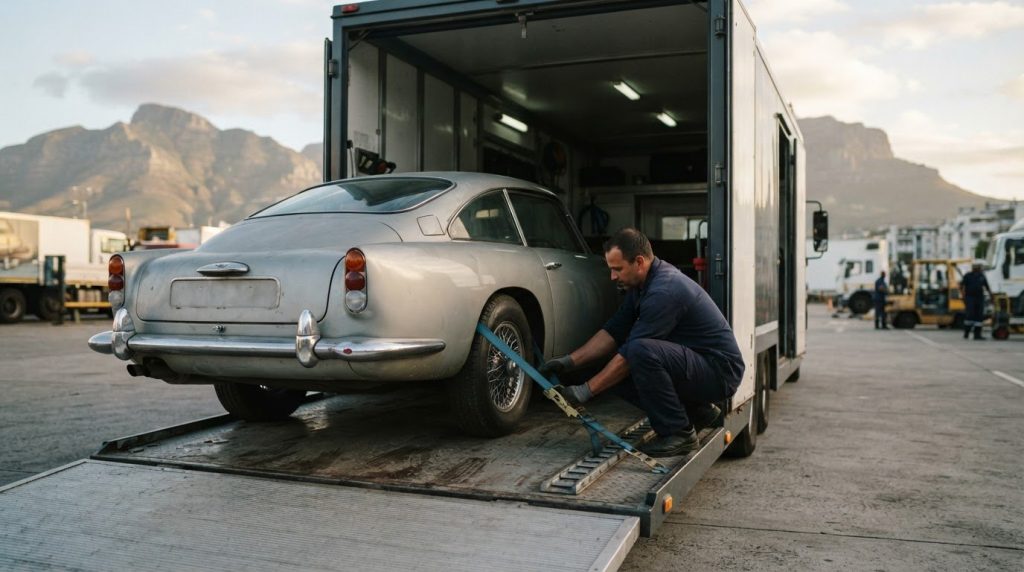
Driving your classic or luxury car may feel like the most controlled option, but shipping it over a long distance can avoid extra road kilometres and wear. When moving a classic or luxury car, weigh driving against transport by considering the distance, the vehicle’s condition and how much exposure you’re comfortable with. Enclosed transport shields the car from weather and road debris; an open carrier leaves it exposed.
It’s also natural to wonder whether you can pack belongings inside the vehicle. Most auto transport carriers prohibit personal items, so plan to move loose belongings separately. This guide explains when driving makes sense, how open and enclosed carriers differ, and how South African weather and your destination’s climate can shape the decision, helping you prepare the vehicle with care.
Key Takeaways
- Weigh the journey’s distance, your car’s condition and the extra road wear before deciding whether to drive or arrange transport.
- Consider enclosed transport to reduce exposure to rain, dust and road debris, especially for a valuable or delicate finish.
- Use the route and destination climate to plan timing and assess which carrier type better suits your vehicle.
- Prepare for transport by documenting the car’s condition and understanding how insurance applies during the move.
Should I Drive My Car or Use Auto Transport Service When I Move?
Choose based on the route, your car’s condition and the extra road use you’re willing to accept. Moving a classic or luxury car by transport avoids adding journey kilometres, while driving gives you direct control over the trip.
-
Verify Transporter Credentials and Coverage
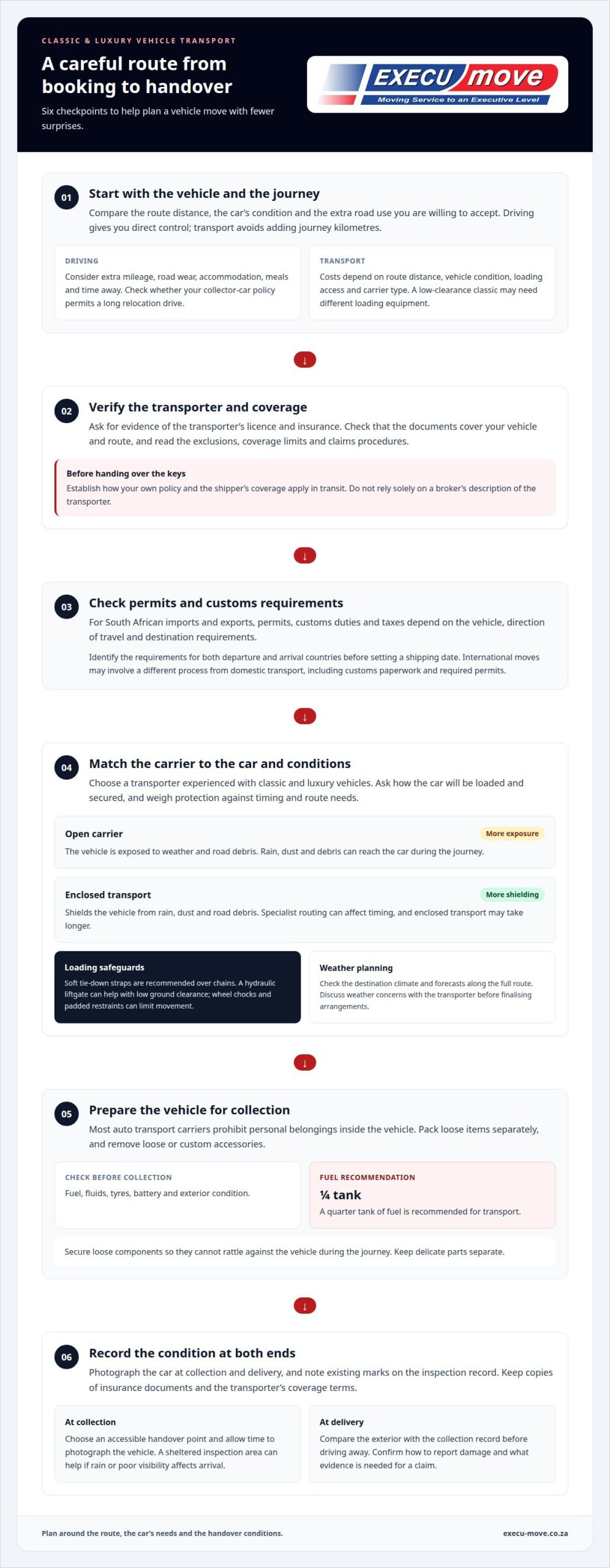
Ask for evidence of the transporter’s licence and insurance, then check that the documents cover your vehicle and route. Read the terms for exclusions, coverage limits and claims procedures. Don’t rely solely on a broker’s description of the transporter. Before handing over the keys, establish how your own policy and the shipper’s coverage apply while the vehicle is in transit.
-
Check Import and Export Requirements
For South African imports and exports, permits, customs duties and taxes depend on the vehicle, the direction of travel and the destination’s requirements. Identify the applicable requirements for both the departure and arrival countries before setting a shipping date. Moving a classic or luxury car internationally may involve a different process from a domestic move, so include customs paperwork and any required permits in your transport plan.
- Read your collector-car insurance policy before deciding to drive. Some policies restrict commuting or require another regular-use vehicle in the household. If those conditions apply, a long relocation drive may not fit your cover. Compare driving with transport, considering the distance, the car’s mechanical condition and the extra mileage. A car that is rarely driven may need careful preparation before a long journey.
There’s no single domestic transport duration for South Africa. Route distance, collection access and delivery arrangements affect the schedule, so distinguish a short intercity move from a cross-country journey.
- Photograph the car at collection and delivery, and note existing marks on the inspection record. Keep copies of your insurance documents and the transporter’s coverage terms. Confirm how to report damage and what evidence is needed to support a claim. These steps give you a clear record if the vehicle’s condition changes during transit.
Protecting classic and luxury vehicles with enclosed transport
Enclosed transport shields a vehicle from rain, dust and road debris, though specialist routing can affect timing. In South Africa, transport costs depend on route distance, vehicle condition, loading access and carrier type.
-
Compare Driving and Transport Costs
Compare the full journey costs, not fuel alone. A long drive may also involve accommodation, meals, time away and extra wear; transport costs depend on the route and handling required. For example, a low-clearance classic may need different loading equipment from a standard vehicle. Weigh these factors against the car’s value and condition, and the extra kilometres driving would add.
-
Choose a Specialist Transport Service
Choose a transporter experienced with classic and luxury vehicles, then ask how the car will be loaded and secured. Enclosed trailers reduce exposure to weather and road debris, while soft tie-down straps are recommended over chains. For low ground clearance, a hydraulic liftgate can help with loading and unloading. Wheel chocks and padded restraints can also limit movement during transit.
-
Assess Transport Risks and Safeguards
Reduce the risk of scratches, movement or damage by photographing existing marks and removing loose or custom accessories. Most auto transport carriers prohibit personal belongings inside the vehicle, so pack them separately rather than using the boot as extra luggage. Before collection, check fuel, fluids, tyres, battery and exterior condition. A quarter tank of fuel is recommended for transport.
Weather, road debris, loading and handling are key risks. Enclosed transport can reduce exposure, but clear condition records and suitable restraints remain important. Keep delicate parts separate and secure loose components so they can’t rattle against the vehicle during the journey.
- Before booking, match the service to the car and route. A specialist tow service may suit a vehicle that can’t be driven, while an enclosed trailer can protect a valuable finish during transport. Review the loading approach and prepare the car as carefully as the destination arrangements.
Checking destination weather before shipping
Destination climate and route forecasts can shape the shipping date and arrival plan. Check conditions at both ends of the journey before confirming arrangements.
- Research the destination’s local climate before choosing a shipping date. Consider seasonal rain, humidity and temperature changes, then plan where the car will be kept after delivery. For example, arrange covered parking if the vehicle’s finish needs protection from prolonged exposure. A suitable arrival plan helps you avoid leaving a valuable car outdoors while arranging storage.
- Review forecasts along the full route, not only at collection and delivery points. Conditions can change between the start and end of a long journey. Share forecast concerns with the transport company before finalising the booking, and discuss whether changing the timing or route would help manage the expected conditions.
- Compare the forecast with the carrier type and the vehicle’s needs. Rain, dust and road debris can reach a car on an open carrier, while an enclosed trailer limits direct exposure. Enclosed transport may take longer because of specialist routing, so weigh the added protection against your arrival schedule.
- Plan the handover for the expected conditions. Wet or uneven ground can make it harder to inspect and handle a vehicle safely. Choose an accessible collection and delivery point, and allow time to photograph the car. If rain or poor visibility affects arrival, a sheltered inspection area can make the handover more manageable.
- Prepare for local conditions before delivery day. Arrange suitable parking and keep the vehicle’s documents and condition photographs ready for the handover. After arrival, compare the car’s exterior with the collection record before driving away. This practical check helps you notice changes promptly and keep a clear record of the journey.
Comparing open and enclosed carriers
Choose a carrier by weighing the vehicle’s value, condition, route distance and exposure. For a classic with original paint, enclosed transport offers a clear protective advantage.
- Consider what an open carrier means for the journey. The vehicle is exposed to weather and road debris, so rain, dust or loose material may affect its finish. This option may suit a sound daily-use car when that exposure is an acceptable trade-off. For a freshly restored classic or luxury vehicle, weigh the exposure against the protection an enclosed trailer provides.
- Choose enclosed transport when limiting outside exposure matters most. A closed trailer shields the vehicle’s finish and detailing from rain, dust and road debris. That can be especially relevant for a car with delicate trim or a carefully maintained exterior. Enclosed transport costs more than open transport, so consider whether the added protection suits the vehicle’s condition and value.
- Match the carrier to the route, not distance alone. Weather, road conditions and the car’s exposure during transit all matter. Enclosed carriers may take slightly longer because of specialist routing. If your schedule is tight, weigh that timing against reduced exposure, particularly for a vehicle travelling through changeable weather.
- Check how the vehicle will be secured in either carrier. Soft tie-down straps are recommended over chains for classic and luxury cars. Padded restraints and wheel chocks can help limit movement. Before collection, photograph existing marks and keep the images for comparison at delivery. These steps create a useful condition record, whatever carrier type you select.
- Make the decision by ranking your priorities: protection, timing, cost and the car’s condition. For an original finish or valuable detailing, enclosed transport is the stronger choice for reducing exposure. For a vehicle less sensitive to weather and debris, an open carrier may be practical. Compare the trade-offs before booking, then prepare the car for its chosen journey.
Execu-Move: International Furniture Removals
Execu-Move can support the household side of an overseas relocation while you plan your car’s transport separately. Its International Furniture Removals service helps move household belongings, with Full Packing and Wrapping for items that need careful preparation and Secure Storage Solutions when move dates don’t align.
For a move within South Africa, Domestic Furniture Removals can help organise the household transition. Keeping furniture, packing and storage arrangements in view alongside your vehicle’s collection and arrival dates can make the overall move easier to plan.
Contact Execu-Move to discuss the household arrangements for your relocation.
Plan the next move with care
Before transporting a classic or luxury car, align its delivery window with when you can receive it and access secure parking. A clear arrival plan helps you avoid leaving the vehicle waiting while you settle other relocation details.
If you’re ready to discuss your arrangements, contact Execu-Move about your car move. Share your route and timing, and take the next step at a pace that suits your relocation.
Frequently Asked Questions
Can I pack belongings in the car during transport?
Plan for the car to travel without personal belongings. Remove toll tags, garage remotes, loose change and personal papers before collection. Keep the keys and vehicle documents with you, rather than leaving them in the cabin. If a toolkit or spare wheel is part of the car’s equipment, record it during the handover so its presence is clear at delivery.
How should I transport my classic car?
Arrange transport that suits the vehicle’s features and condition. Tell the transporter if it’s non-running, modified, unusually low or fitted with delicate accessories, since these details affect loading arrangements. Switch off the alarm before collection, and have the keys ready for the handover. If access to your garage is tight, describe the entrance and approach in advance.
Open carrier or enclosed carrier, which should I choose?
Choose enclosed transport for a show-ready car or one with a finish you want to shield from outside exposure. An open carrier may suit a regularly driven vehicle whose condition makes that exposure an acceptable trade-off. Let the car’s intended use guide your decision: protecting a freshly restored vehicle may matter more than choosing the simplest option for an everyday classic.
How much does it cost to transport a classic or luxury car in South Africa?
The price depends on the specific move and is provided after a quote request. To help prepare an accurate quote, share the make, model and year, whether the car runs, any modifications, the collection and delivery addresses, and your preferred timing. Mention special loading needs, such as low ground clearance, so the transport arrangements suit the vehicle.
How do open and enclosed car transport compare for classic or luxury cars?
Open transport carries the vehicle without a weather shield; enclosed transport places it inside a covered trailer. Neither choice removes the need for careful loading and a clear handover record. Compare the loading method and transport schedule alongside the carrier type. This broader comparison helps distinguish protection from exposure from the separate handling steps involved in the move.
How do I choose a reputable car transport company in South Africa?
Choose a company that sets out the collection, delivery and communication process in writing. Before agreeing, review the transport schedule, how to receive journey updates, and how the handover will be recorded. A clear written plan helps you understand what to expect if timing changes and gives you a useful reference throughout the vehicle’s journey.