
Could a single missing signature or an incorrectly listed household appliance really derail your entire move across the globe? Moving to a new country is one of life’s most significant transitions, and the thought of your cherished belongings being held at a port due to a paperwork error is enough to cause any family unnecessary stress. You’ve spent months planning your new start, so you shouldn’t have to face the fear of unexpected taxes or customs delays when importing personal effects into South Africa.
We understand that the complexity of international logistics can feel overwhelming, but it doesn’t have to be. This guide provides the expert clarity you need to navigate South African customs regulations with total confidence. We’ll explain how to qualify for the Rebate 407.06 duty-free concession, provide a comprehensive documentation checklist, and show you how a professional inventory process keeps your move legally compliant and efficient. By the end of this article, you’ll have a clear roadmap for a seamless, duty-free relocation to your new home.
Key Takeaways
- Understand the specific criteria for Rebate 407.06 to ensure you qualify for duty-free importation of your household goods and personal belongings.
- Learn how to prepare a compliant inventory and the necessary SARS forms to streamline the process of importing personal effects into South Africa.
- Identify which items are restricted or require special ITAC permits to prevent unexpected fines or lengthy delays at the port of entry.
- Discover how professional customs clearance services manage the complex logistics from the moment your shipment arrives until it reaches your new home.
Understanding the Framework for Importing Personal Effects
Relocating requires more than just packing boxes; it involves aligning with the South African Revenue Service (SARS) regulatory environment. SARS acts as the gatekeeper for all goods entering the country, ensuring every shipment complies with national trade laws. Understanding these rules early is vital because errors often lead to steep port storage fees or “demurrage,” which can accumulate daily while your shipment is under review. A “bona fide” relocation means you’re moving your primary residence to South Africa, which is the foundation for duty-free entry. This status applies to immigrants with permanent residence or work permits, as well as returning South African citizens.
What Qualifies as Personal Effects?
Personal effects generally include used household furniture, kitchen appliances, and equipment for personal hobbies like sports gear or musical instruments. To qualify for duty-free entry, you must have owned and used these items for at least 12 months prior to your departure for South Africa. It’s vital to remember that this category strictly excludes goods intended for sale, commercial use, or items bought specifically for the move. Precise itemisation is the best way to prove your goods are for personal use only and ensures your inventory meets the high standards required by customs officials.
Why Professional Guidance Matters in 2026
The shift toward fully digital customs declarations in 2026 demands absolute precision in your inventory and documentation. Even a minor discrepancy in how you categorise a television or a piece of machinery can trigger a full customs stop. This leads to a physical examination of your container, adding significant delays and extra costs to your international relocation. When importing personal effects into South Africa, having an expert verify your paperwork ensures your shipment moves through the port with the calm efficiency you deserve. This professional oversight provides a steady hand in a complex process, letting you focus on settling into your new home.
Essential Documentation and SARS Rebate 407.06 Criteria
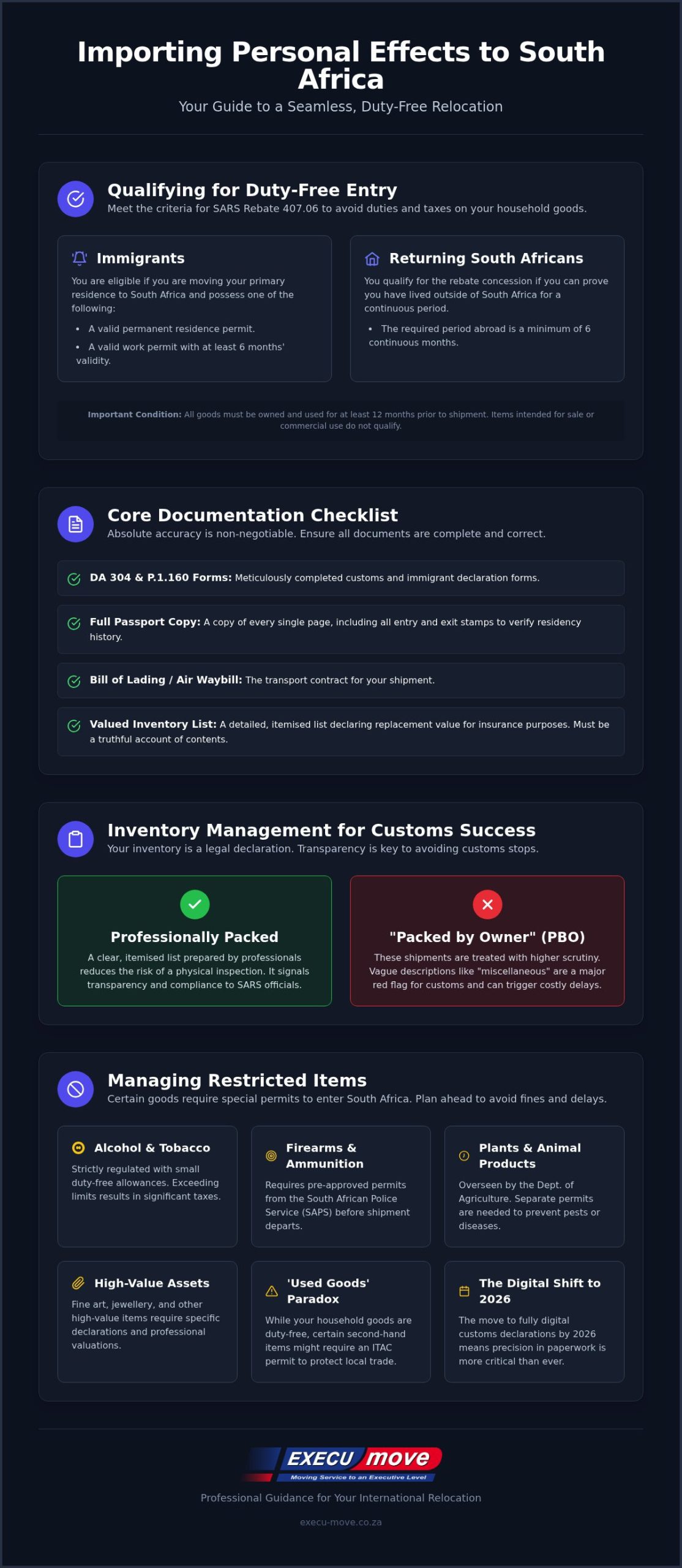
Rebate 407.06 is the most critical element for anyone importing personal effects into South Africa. This specific rebate allows for the duty-free importation of your household goods, provided you meet the legal definitions of a bona fide relocation. Immigrants must hold a valid permanent residence permit or a work permit that is valid for at least six months. For returning South Africans, the rule is strict: you must prove you’ve lived outside the Republic for a continuous period of at least six months to qualify for these concessions.
The Core Document Checklist
Success at the port depends on the absolute accuracy of your paperwork. You’ll need to complete the DA 304 (Customs Declaration) and the P.1.160 (Declaration of Immigrant) forms with meticulous detail. SARS requires a full copy of your passport, including every single page that contains entry or exit stamps, to verify your residency history. Additionally, your Bill of Lading or Air Waybill must be present and match your valued inventory exactly. This list should reflect the replacement value of your goods for insurance purposes while remaining a truthful account of what’s inside the container.
Inventory Management for Customs Success
Your inventory is a legal declaration that SARS officials use to assess risk. There is a significant difference in how customs treats “Packed by Owner” (PBO) shipments versus those that have utilised professional packing and wrapping services. Listing items as “miscellaneous” on your inventory is a major red flag for SARS because it suggests a lack of transparency regarding the container’s actual contents. Providing a clear, itemised list reduces the likelihood of a customs stop. If you’re feeling unsure about these forms, reaching out for professional relocation assistance can provide the steady guidance you need for a smooth transition.
Managing Restricted Items and Avoiding Customs Delays
Categorising your belongings correctly is the first step toward a successful entry. While most household items qualify for duty-free status, you must distinguish between prohibited goods, which are illegal to enter, and restricted items that require special permits. The ‘Used Goods’ paradox often surprises relocators; while your sofa is duty-free, certain second-hand items or specialised equipment might require an ITAC permit to protect local trade interests. High-value assets like fine art or jewellery also require specific declarations and professional valuations to ensure they’re processed correctly when importing personal effects into South Africa.
Commonly Restricted Household Items
Alcohol and tobacco are strictly regulated. These items have small duty-free allowances, and exceeding these limits results in significant taxes and potential delays. Firearms and ammunition represent a complex category, requiring pre-approved permits from the South African Police Service (SAPS) before the shipment even departs. Similarly, the Department of Agriculture oversees the entry of plants, seeds, and animal products. These items often require separate permits to prevent the introduction of foreign pests or diseases into the local ecosystem.
Steam Cleaning and Fumigation Requirements
Agricultural inspectors are particularly vigilant regarding soil and wood-boring insects. Outdoor furniture, garden tools, and bicycles must be meticulously cleaned to ensure no traces of earth or organic matter remain. If pests are detected, your entire shipment could face lengthy quarantine or expensive on-site treatment. Obtaining a professional fumigation certificate is a proactive way to bypass these delays. If you’re concerned about compliance, our fumigation and cleaning services for removals provide the necessary protection for your goods. For a stress-free transition, request a professional assessment of your inventory to identify any restricted items before you pack.
The Logistics of Arrival: Professional Customs Clearance
Once your vessel finally docks at a South African port, the most critical phase of your journey begins. This is where professional coordination becomes your greatest asset. When importing personal effects into South Africa, your removal company acts as your official proxy, interfacing directly with SARS and port authorities to manage the clearance process. We take responsibility for the complex timeline, from the moment the container is offloaded to the final delivery at your new residence. By managing terminal handling fees and port charges proactively, we help you avoid the high costs of demurrage and ensure a steady transition.
The Step-by-Step Clearance Process
The journey through customs starts with the electronic submission of your DA 304 and supporting documentation to SARS. You’ll then receive one of two notifications: a ‘Release’ or a ‘Stop.’ If your shipment is flagged for a stop, it means a physical inspection is required. We attend these examinations on your behalf, providing the necessary expertise to answer questions from customs officials. After the final ‘Release’ is granted, we coordinate the transport logistics to move your belongings from the port to your home, where our team handles the careful unpacking and positioning of your furniture. To make your arrival even more special, you might consider booking a high-end private tour with African Luxe Travel to experience the best of what your new home has to offer.
Choosing a Partner for Your South African Move
Success in importing personal effects into South Africa depends heavily on local knowledge and port-specific expertise. You need a partner who understands the nuances of South African customs and possesses a network of over 2000 global agents for seamless accountability. This global reach ensures that your belongings are protected by international standards from start to finish. If you’re planning an international relocation, having a seasoned expert with national coverage by your side mitigates the anxiety of the unknown. Our team provides the calm efficiency required to turn a complex logistical challenge into a welcoming start in your new home.
Securing a Smooth Transition to South Africa
A successful international move is built on meticulous preparation and professional oversight. By mastering the requirements of Rebate 407.06 and ensuring your inventory is transparent and compliant, you’ve already taken the most important steps toward a stress-free entry. Remember that the process of importing personal effects into South Africa is manageable when you have the right support to navigate digital declarations and agricultural inspections. Our expert customs clearance coordination ensures that your belongings are handled with the highest level of care from the moment they leave your old home until they’re safely unpacked in your new one.
With a network of over 2000 global agents and a commitment to full door-to-door relocation service, we provide the steady hand you need during this significant life change. You don’t have to manage the complexities of SARS and port logistics alone. Request a professional international relocation quote from Execu-Move today and let us bring your world home. We look forward to welcoming you to South Africa with the peace of mind you deserve.
Frequently Asked Questions
Can I import my car along with my personal effects to South Africa?
Yes, you can ship your car, but it follows different rules than your furniture. Most vehicles require an import permit from ITAC and a Letter of Authority from the NRCS. These documents must be secured before shipping begins. If you want to address any minor cosmetic damage before transit, Onsite Car Body Repairs Ltd provides mobile services to ensure your vehicle is in excellent condition. Vehicles don’t qualify for the standard duty-free rebate for importing personal effects into South Africa. Our vehicle transport specialists coordinate this complex paperwork to ensure a compliant entry.
Customs clearance typically takes between 7 and 10 working days after the vessel docks. This timeline depends on SARS processing speeds and whether your container is selected for inspection. We submit all electronic declarations immediately to prevent bottlenecks. Accurate paperwork is your best defence against delays. We monitor your shipment’s status daily to ensure it moves through the port with calm efficiency.
Do I need to be physically present in South Africa when my goods arrive?
You must be physically present in South Africa when your goods reach the port. SARS requires your original passport to verify entry stamps and residency status. This verification is essential for activating your duty-free rebate. We act as your proxy for the physical logistics, but your legal presence is a non-negotiable requirement. We’ll coordinate the final delivery to your residence once customs grants the official release.
What happens if I have new items in my shipment that are less than 12 months old?
Items owned for less than 12 months are subject to full customs duties and VAT. You must declare these new goods separately on your inventory. Transparency is vital. SARS officials look for new items during inspections, and undeclared goods can lead to heavy fines. We help you categorise your belongings correctly, ensuring your used household effects remain duty-free while you stay compliant with current tax laws.
Are there specific requirements for importing pets alongside my furniture?
Importing pets requires specific health certificates and permits from the Department of Agriculture. These rules are strict. You’ll need to coordinate vaccinations, microchipping, and blood tests well in advance of your departure date. We recommend starting this process at least three months before your move. Our pet transport team manages these sensitive arrangements while you focus on importing personal effects into South Africa and settling your family.