
Moving day is easier to manage when the important decisions are made before the first box is lifted. If you’re working out how to prepare your house for movers, start by clarifying what is going, what is staying and which belongings need special attention.
You don’t need to have every detail perfect. The aim is to make belongings, access and instructions clear so the removals team can follow the agreed plan. A few practical steps can also help you keep family routines and daily essentials on track.
Key Takeaways
- Learn how to prepare your house for movers by deciding what is moving and what is staying before the move date.
- Create a room-by-room inventory with destination rooms and clear handling notes.
- Use a checklist for early preparation, the day before and moving day to keep tasks in sequence.
- Make the handover simpler by choosing one household contact and completing a final room-by-room check.
How to Prepare Your House for Movers: Start with a Clear Plan
A move can make every room feel like another decision to manage. You don’t need to organise the whole house at once. First decide what is moving, note anything that needs particular care and choose which preparations you’ll handle yourself. This gives your household and the removals team a shared understanding of what to expect.
The same planning approach works for domestic and international moves. Start with sorting, household arrangements and access to the items being moved. Detailed packing techniques and destination requirements are separate parts of the plan. If you’re arranging a domestic move, include domestic furniture removals alongside the tasks your household will manage.
Decide what is moving before you organise the rooms
Make a separate note of anything requiring particular care, such as a fragile heirloom, an unusually heavy piece or furniture with a specific handling instruction. Record the item and instruction in writing, then point them out during the handover. For bulky or awkward items, note where they are in the home so the team can find them easily.
Choose what you will prepare yourself
List the tasks that fit your schedule, such as deciding what to keep, identifying items that will stay behind and gathering information about special handling. Then decide which tasks you’d prefer to leave to the removals team. Execu-Move provides full packing and wrapping support, which can reduce the packing work your household needs to take on.
Write down who is responsible for each task. For example, one person might manage the inventory while another keeps personal essentials and documents separate. A clear division of responsibilities helps everyone see what has been handled and what still needs attention.
Think of your preparation plan as a working document, not a test of how much you can do yourself. Keep it simple, update it as decisions are made and use it to give the removals team clear, practical instructions. For households organising relocations in other areas, services like supermoversreno.com offer practical models for planning and managing moving day efficiently.
Prepare Your Belongings and Household Information for Movers
Once you know what’s moving, record the details in a format that’s easy to use on moving day. A straightforward inventory connects each item or group of belongings with its destination room and highlights anything that needs extra care.
Create a simple inventory and labelling system
A useful moving inventory is a room-by-room record of items being moved, their destination rooms and any special handling notes. Use the same room names on your list and on box or furniture labels. For example, write “Main bedroom” rather than “upstairs” or “miscellaneous”. Mark fragile or unusually shaped pieces clearly, and use the inventory for any extra context.
Choose labels that are easy to spot and read. If a box belongs in the study, use “Study” consistently on the box and inventory. Avoid labels such as “miscellaneous” when a more precise room name will help the team place the item at the new home.
Keep the inventory easy to update. If plans change, amend the list and remove or cover any label that no longer applies. This helps prevent old instructions from conflicting with the current plan.
Keep essential household information close
Prepare one handover sheet with the household contact’s name and number, room names, special instructions and a short list of items staying behind. Keep personal documents, valuables, medicines and daily essentials with your household rather than among the goods being moved. Place them together in a clearly separate area or bag, and tell the household contact they must stay with you.
For a move abroad, keep your household inventory and handover notes focused on belongings, destinations and handling instructions. Organise customs and other international arrangements as a separate part of the move plan. Execu-Move’s international relocation service supports the furniture-removal side of an overseas move, including customs clearance.
A consistent record makes it easier to share clear information with your moving team. If you’d like professional support with packing and wrapping, explore Execu-Move’s removals and packing support as part of your preparation.
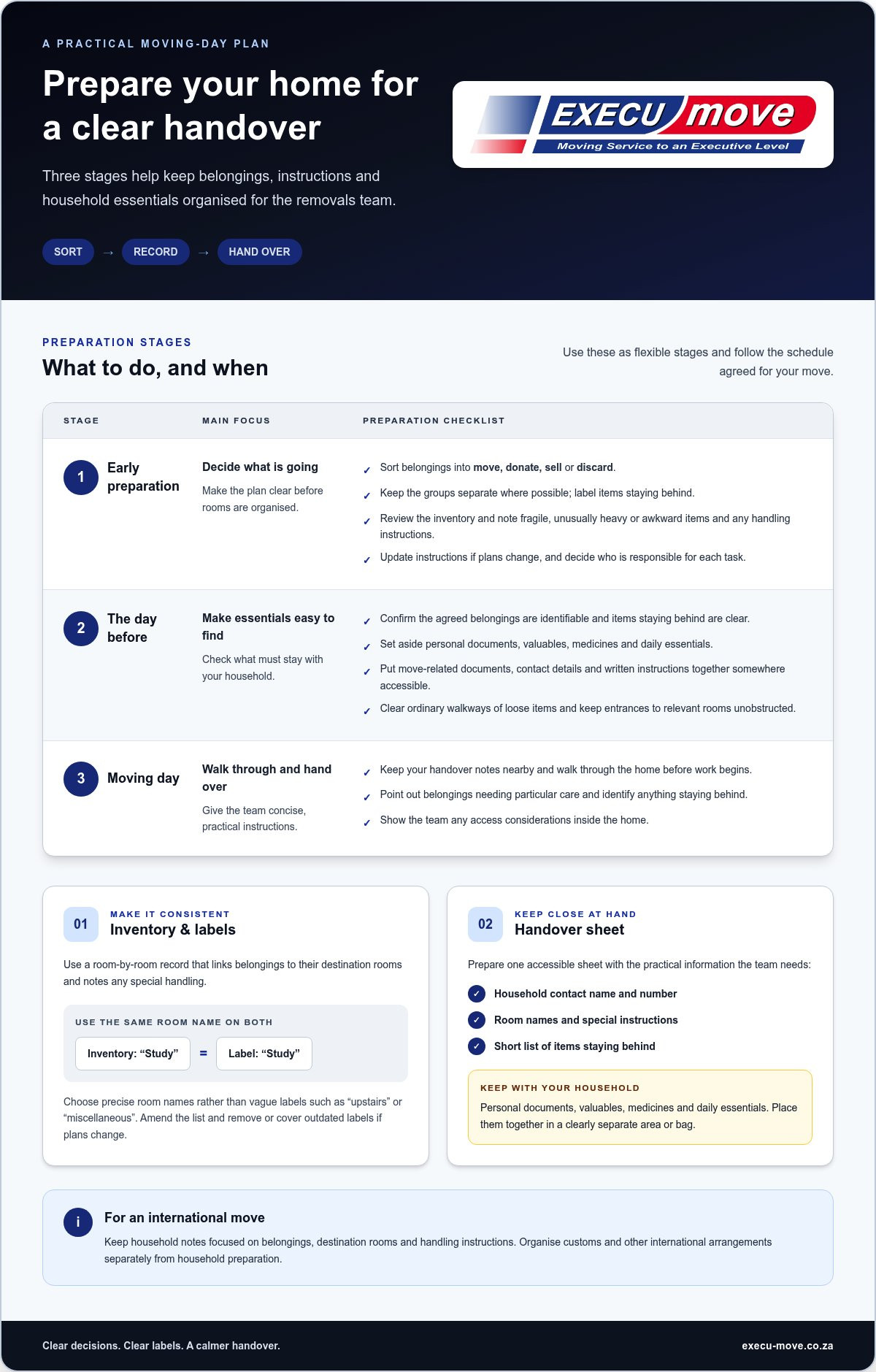
Use This Before-Moving-Day Checklist to Get the House Ready
A short checklist gives you a clear sequence without turning the final days into a rush. Treat the timings as flexible stages, and follow the schedule agreed for your move rather than assuming every household needs the same timeline.
- Early preparation: Finish sorting belongings and keep items being donated, sold or discarded apart from those going with the removals team. Review your inventory, identify fragile or bulky items and update any instructions that have changed.
- The day before: Check that the agreed belongings are identifiable and that personal documents, valuables, medicines and daily essentials are set aside for your household. Put move-related documents, contact details and written instructions together somewhere accessible. Clear ordinary walkways of loose items and keep entrances to the relevant rooms unobstructed.
- Moving day: Keep your handover notes nearby and do a calm walk-through before work begins. Point out anything needing special attention, identify items staying behind and show the team any access considerations inside the home.
The day before the move
Use this check to catch changes, such as a last-minute item that shouldn’t be loaded or an essential bag that needs to stay with the family. Make sure your instructions are concise and easy to find. If several people are helping, tell them where household essentials are and which belongings are not part of the move.
Check that the route through the home is clear of loose items that could obstruct movement. If access to a room, cupboard or storage area needs explaining, add it to the handover notes so it can be shown to the team.
The morning the movers arrive
Walk through the home with the crew leader and point out items that need particular care. Show which belongings are staying behind, and make sure ordinary routes through the home are not blocked. Keep your inventory and handover sheet nearby in case an instruction needs clarification. For a move within South Africa, domestic relocation services can be part of the coordinated plan.
Preparing your house for movers is less about completing every task perfectly and more about making the agreed plan visible. If you’d like support planning your household move, get in touch with Execu-Move.
Moving-Day Handover: Help Your Movers Work with Confidence
A clear handover brings your preparation together. Choose one household contact to answer questions and share instructions. This gives the removals team a reliable point of contact and helps avoid conflicting directions from different family members. The aim isn’t to repeat your whole plan, but to highlight details that could otherwise be missed.
Give clear instructions without slowing the handover
Keep your inventory and notes close at hand. Point out priority items and special handling instructions, then show the crew leader which belongings are staying behind. Keep personal essentials, medicines and important documents separate from the household goods being moved. If another family member has information to add, ask them to share it with the household contact so instructions remain clear and consistent.
Be specific when giving directions. “The framed artwork in the dining room needs extra care” is more useful than “be careful with the fragile things”. If you update an instruction during the handover, make sure the household contact and crew leader both understand the change.
Complete a final room-by-room check
Before the removals team finishes loading, check each room, cupboard and storage area for belongings that may have been overlooked. Confirm that labels are visible and that items intentionally staying behind are easy to distinguish from those going. Check the places where everyday items are often kept, such as bedside tables and coat storage, without adding personal essentials to the goods being moved.
A calm final check gives you an opportunity to point out a missed item or clarify an instruction while the team is still on site. Keep your household contact available to resolve any questions against the inventory.
When professional packing support can simplify preparation
Take the Next Step with a Clear Plan
A move may not follow every detail of the plan exactly. The purpose of learning how to prepare your house for movers is to create a reliable starting point, so your household can adapt without losing sight of the key instructions. Keep your notes accessible and allow time to deal with changes calmly.
Execu-Move can help you plan the support that fits your circumstances, from domestic or international furniture removals to full packing and wrapping. Free quotes are available online or by phone, giving you a practical starting point for discussing your requirements.
Discuss your move with Execu-Move and request a quote. A considered plan can help you approach moving day with greater clarity.
Frequently Asked Questions
Can I leave some items unpacked for the movers?
You can leave items unpacked if that fits the agreed service arrangement, but identify them during the handover. Don’t assume every item will be packed as part of the move. Keep personal essentials, documents and belongings you’re managing yourself clearly apart from household goods for the removals team. For example, place your overnight bag in a separate area and tell the crew it must stay with you.
Should I empty drawers before furniture movers arrive?
It depends on the furniture, what’s inside the drawers and the agreed handling plan. Remove loose, valuable or personal items, such as jewellery, medication or small electronics, and keep them with you. If a drawer contains heavier belongings or you’re unsure whether it should be emptied, discuss it with the moving team before moving day. Don’t assume that all furniture can be handled in the same way.
What should I do with pets while movers are working?
Arrange a calm, secure place for your pets away from busy work areas, taking their needs and temperament into account. Plan what will help your animal remain settled while people are moving in and out. If your pet is travelling separately as part of the relocation, organise that journey independently from the household goods and keep its arrangements clear. Execu-Move also provides pet transport as part of its relocation services.
Do I need to disconnect appliances before moving day?
Appliance preparation depends on the item and its instructions. Consult the manufacturer’s guidance and the agreed moving plan rather than assuming the removals team will disconnect appliances. If preparation is needed, arrange it before moving day and make each appliance’s status clear during the handover. For example, note which items are ready to move and which still need attention, so there’s no confusion about their handling.
What if my house is not fully ready when the movers arrive?
Tell the moving team promptly. Clear communication is more useful than concealing unfinished tasks. Explain what remains, which belongings are ready and whether any priority items need attention. For instance, identify a room that still needs sorting while showing which furniture is ready to be moved. Share the situation clearly so the team can work from the agreed arrangements.