
Have you ever wondered why two families moving from Cape Town to London with similar households can end up with vastly different final invoices? It’s a frustrating realisation that when calculating international moving costs South Africa expats often find that currency volatility and complex shipping surcharges make their budget feel like a moving target. We understand that the pressure of managing container sizes, Vehicle Transport, and Pet Transport while trying to avoid customs fines is enough to keep anyone awake at night.
This comprehensive guide is designed to replace that uncertainty with a clear, itemised roadmap for your 2026 relocation. You’ll gain a thorough understanding of the factors that influence your budget, from basic freight rates to the hidden fees that often catch families off guard. We will provide you with a strategic framework for choosing between sea and air freight, ensuring your belongings arrive safely and your budget remains intact. By the end of this article, you’ll have the confidence to manage every logistical detail with precision and peace of mind.
- Identify the primary drivers of your international moving budget, including how volume, distance, and the 2026 global supply chain impact your final quote.
- Compare the practical advantages of sea freight against air freight to determine if a shared container or a dedicated vessel suits your family’s specific timeline.
- Gain a clear understanding of international moving costs South Africa by accounting for specialised logistics such as Vehicle Transport and Pet Transport.
- Implement strategic saving tips like a thorough volume audit and Full Packing and Wrapping to ensure your move remains cost-effective and secure.
- Learn how to navigate complex customs requirements through established global partnerships that ensure a seamless delivery to your new residence.
Understanding International Moving Costs from South Africa in 2026
Planning a move abroad involves a significant financial commitment. In 2026, the logistics landscape in South Africa is undergoing a period of structural recovery, which directly influences how quotes are structured. While the physical volume of your goods remains the primary factor, external economic pressures and port efficiency now play a larger role in determining the final figure. It’s a complex puzzle where every piece must fit perfectly to avoid unexpected expenses during your transition.
The Primary Drivers of Your Relocation Quote
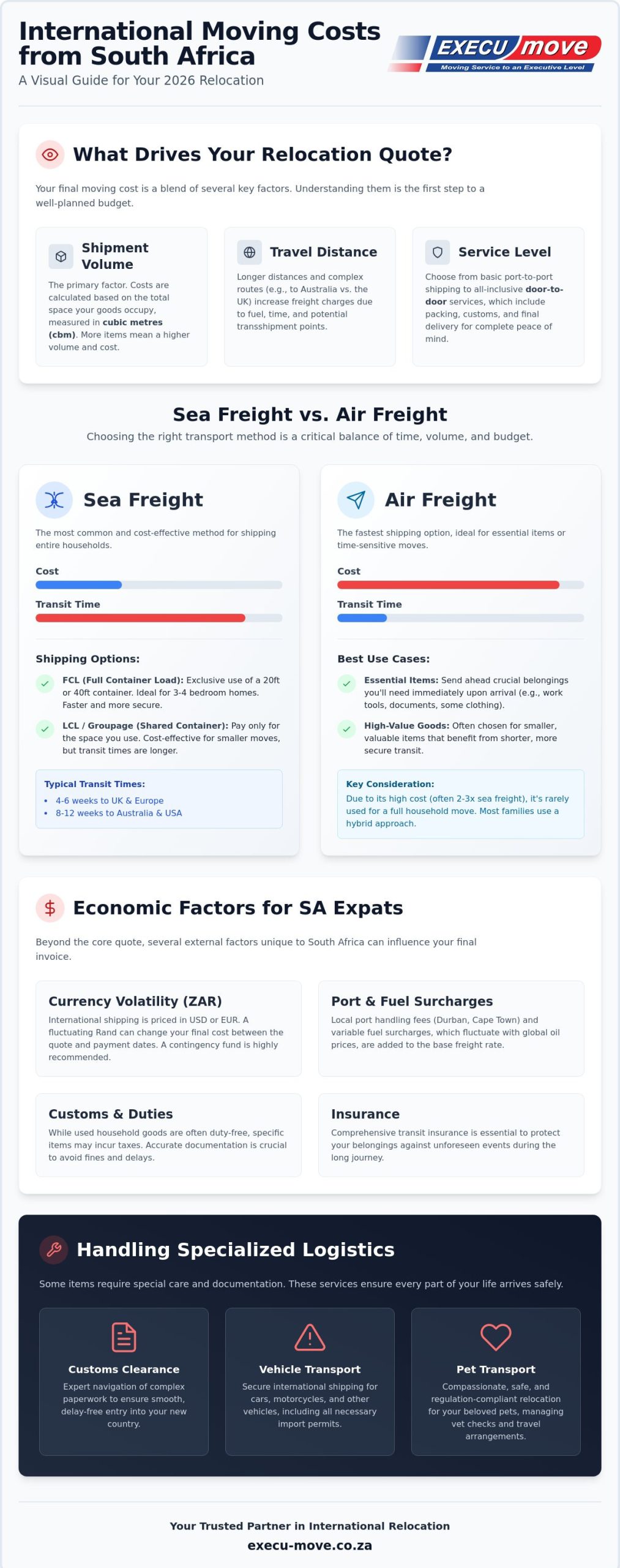
Relocation specialists calculate your quote based on cubic metres (cbm). This measurement represents the total volume your furniture and boxes occupy in a shipping container. When considering International Furniture Removals, the more space you occupy, the higher the freight cost. Distance is equally critical. For instance, shipping to the United Kingdom often follows more direct routes than moving to the United States or Australia, which may involve transshipment points. Service levels also vary. You might choose a basic shipment or opt for a comprehensive tier that includes Full Packing and Wrapping. This choice ensures your items are protected against the rigours of sea transit. Higher service tiers provide a level of security and peace of mind that basic options simply cannot match.
Economic Factors Unique to South African Expats
The South African Rand is known for its volatility. Because international freight is often priced in US Dollars or Euros, a sudden dip in the Rand can increase international moving costs South Africa residents face at the time of payment. We suggest maintaining a healthy contingency buffer to absorb these fluctuations. Beyond currency, you must account for local port handling and terminal charges at South African ports like Durban or Cape Town. As 2026 sees increased investment in rail and port infrastructure, these costs are becoming more predictable, yet fuel surcharges remain a variable that fluctuates with global oil prices. Private sector involvement in the rail network is a major development this year, aimed at improving the efficiency of moving goods to the coast.
Understanding the difference between pricing models is essential for your budget. A port-to-port quote might look cheaper initially, but it leaves you responsible for clearing customs and arranging transport at the destination. Most families find that a door-to-door model provides the best value. It covers the process of personal relocation from your current home in South Africa to your new residence abroad, including Customs Clearance and final delivery. This holistic approach removes the stress of managing multiple third-party contractors in a foreign country, providing a steady hand throughout the journey.
Sea Freight vs. Air Freight: Comparing Core Shipping Methods and Timelines
How quickly do you need your household to arrive at your new front door? This is the first question we ask when helping families balance their relocation budgets. While air freight offers unparalleled speed, it often commands a significant premium that can double or triple your logistics spend. For the vast majority of families, sea freight remains the most practical method for managing international moving costs South Africa while ensuring the safe transit of an entire household.
The choice between these methods depends on your volume and your urgency. Air freight is typically reserved for essential items, such as work equipment or immediate clothing needs, while the bulk of your furniture travels by sea. Regardless of the method you choose, the success of your move relies heavily on meticulous customs clearance and documentation to prevent costly storage fees at the destination port or airport.
Full Container Load (FCL): Exclusive Use and Speed
If you are moving the contents of a three to four-bedroom home, a Full Container Load is usually the most efficient choice. You have the exclusive use of a 20ft or 40ft container, which is sealed at your residence in South Africa and remains unopened until it reaches your new home. This exclusivity provides an added layer of security and significantly faster transit times. Because your goods don’t have to wait for a shared container to fill, you can expect more predictable delivery windows. For example, shipments from Cape Town or Durban to major hubs in the UK or Europe generally take between four to six weeks, while routes to Australia or the USA may extend to eight or twelve weeks depending on port congestion.
Groupage and LCL: Cost-Effective Solutions for Smaller Moves
Do you have a smaller volume of goods that won’t fill an entire container? Groupage, or shared container shipping, allows you to pay only for the space you occupy. This is a highly cost-effective strategy for students, young professionals, or those who have successfully decluttered. The trade-off for these savings is a longer timeline. Your shipment will stay in Secure Storage Solutions until the container is fully loaded with other consignments heading to the same destination. Because shared loads involve more handling at the warehouse, we utilise specialised Full Packing and Wrapping techniques to ensure every item is protected against the increased movement. If you are planning a smaller move, exploring our International Furniture Removals options for groupage can provide the relief your budget needs without compromising on safety.
Beyond the Freight: Accounting for Specialised Logistics and Hidden Fees
Have you accounted for the elements of your move that don’t fit into a standard cardboard box? Many families focus purely on the container freight quote, but international moving costs South Africa expats encounter often involve specialised items that require a bespoke approach. These aren’t just optional extras; they’re critical components of a successful relocation that demand their own logistical planning and budget allocation. Understanding these costs upfront prevents the anxiety of unexpected invoices during the final stages of your journey.
Moving Vehicles and Pets from South Africa
Transporting a car or relocating a beloved family pet involves distinct regulatory frameworks. For your car, you’ll need to choose between Roll-on/Roll-off (RoRo) or containerised Vehicle Transport. We generally recommend containerised options for high-value vehicles to ensure they’re shielded from the elements and handled with maximum security. Similarly, Pet Transport is a highly sensitive field. It requires the coordination of specialised travel crates, import permits, and stringent veterinary clearances. Because these services involve different carriers and government bodies, we bill them as separate line items. This ensures you have a transparent view of where every cent is being spent, allowing for better financial control over your move.
Insurance and Risk Mitigation
Don’t overlook the importance of Marine Transit Insurance. While we handle every item with extreme care, a journey across thousands of kilometres of ocean involves risks beyond any provider’s control. You’ll need to decide between “Total Loss” coverage or a more comprehensive “All-risk” policy. The premium is calculated based on the declared value of your goods, so it’s vital to be accurate. Most insurers require Full Packing and Wrapping by professional teams as a prerequisite for comprehensive coverage. This ensures that your items are prepared to international standards, which is the most effective way to mitigate risk and ensure a successful claim if the unthinkable happens.
Compliance and destination fees also play a significant role in your total budget. Many countries have strict biosecurity laws that may necessitate Steam Cleaning and Fumigation for items like garden tools or outdoor furniture. You should also budget for destination terminal handling charges and potential Customs Clearance fees. Following South African customs regulations for personal effects is essential for a smooth departure, but you must also prepare for the destination’s specific requirements. If your new home isn’t ready upon arrival, Secure Storage Solutions can provide a temporary bridge, though this will add to your monthly costs. Planning for these details early ensures your belongings pass through ports without delay or additional fees.
Strategic Cost Reduction: How to Lower Your Relocation Budget Safely
Is it possible to lower your relocation expenses without compromising the safety of your life’s possessions? The answer lies in strategic planning rather than cutting corners. The most direct way to influence international moving costs South Africa expats encounter is through a rigorous volume audit. Every cubic metre you ship has a price tag attached. By decluttering your home before the surveyors arrive, you reduce the container size needed and lower the associated freight charges. We often find that families who sell heavy or bulky items locally and replace them at their destination save significantly in the long run.
Sometimes, shipping everything at once isn’t the most financiallly sound decision. If you are moving into temporary accommodation abroad, using Secure Storage Solutions in South Africa can be far more affordable than paying for storage in expensive global hubs like London or New York. This approach allows you to ship your goods only when your permanent residence is ready, avoiding double-handling fees and unnecessary port storage charges.
The ROI of Professional Packing and Wrapping
You might feel tempted to pack your own boxes to save on labour costs, but this is a classic false economy. Professional Full Packing and Wrapping is an investment in risk mitigation. Our teams use high-grade materials that meet international biosecurity standards, which is vital for smooth Customs Clearance. More importantly, experts understand packing density. By maximising the space inside every carton and container, we ensure you aren’t paying to ship South African air. This precision also ensures that your insurance remains valid, as many underwriters refuse to cover packed-by-owner consignments due to the high risk of transit damage.
Smart Timing and Quote Comparison
Timing is another lever you can pull to manage your budget. In South Africa, the peak moving season typically aligns with the end of the school year and the festive season in December and January. If your timeline allows, scheduling your move for the shoulder months can lead to more competitive rates and better availability. When you compare quotes, look beyond the bottom line. An estimate-only quote might appear cheaper than an all-inclusive one, but it often excludes port terminal charges or delivery access fees. We believe in transparency, providing a steady hand so you don’t face a bill shock upon arrival. If you’re ready to see how a tailored strategy can work for you, request a professional relocation quote today.
Navigating the Final Mile: Why Expert Customs Clearance and Global Partnerships Matter
Have you considered what happens once your container reaches the destination port? This stage, often called the “final mile”, is where many families face the most significant logistical hurdles. While we have discussed the freight and packing elements, the precision of your Customs Clearance documentation is what ultimately determines if you stay on budget. In 2026, the global shipping environment is more regulated than ever, making the role of a seasoned relocation partner indispensable. When your belongings are held at a port due to a missing form, the daily storage fines can quickly erode your savings.
Customs Clearance and Regulatory Compliance
The export process begins long before the ship leaves South African waters. You must satisfy both SARS and SAPS requirements to ensure a legal departure. For instance, Vehicle Transport requires a specific police clearance certificate to prove the vehicle isn’t stolen or under a financial lien. We assist you in preparing the Household Goods Export Checklist, which is vital for a smooth exit. On the other side of the ocean, you must navigate the specific import rules of your new home. Whether it’s the Transfer of Residence (ToR01) scheme in the UK or the B534 form in Australia, our team handles the “red tape” to avoid the fines and inspections that often catch DIY movers off guard.
The Execu-Move Advantage: Global Reach, Local Care
Our network of over 2,000 global agents is the backbone of our service, providing a steady hand in every major port worldwide. These partnerships ensure that you have a local expert waiting at the destination to coordinate the final delivery to your new front door. Because these agents are part of an established international network, they share our commitment to high-end service standards and meticulous handling. This global reach allows us to proactively manage port demurrage. By ensuring your paperwork is submitted and approved before the vessel even docks, we prevent your goods from sitting in expensive port storage. This level of coordination is the most effective way to protect your budget from the unpredictable nature of international logistics.
Request a comprehensive, obligation-free international moving quote from Execu-Move today
Frequently Asked Questions
- How much should I budget for moving a three-bedroom home from South Africa? While every move is unique, 2026 estimates for a three-bedroom home typically range between R170,000 and R280,000, depending on the destination and the volume of goods.
- How long does sea freight take to reach the UK or Australia? Shipments to the UK generally take four to six weeks, while routes to Australia can take between eight and twelve weeks. These timelines include time for Customs Clearance and final delivery.
- Can I ship my car along with my furniture? Yes, we offer specialised Vehicle Transport services. Shipping a car generally costs between R25,000 and R80,000, excluding any import duties or taxes at the destination.
- Is professional packing really necessary for international moves? Yes. Most marine insurance providers require Full Packing and Wrapping by a professional company to offer comprehensive “all-risk” coverage. It also ensures your goods meet international biosecurity standards.
Summary of International Moving Costs from South Africa
Mastering your relocation budget requires a balance of volume management and regulatory precision. By performing a thorough volume audit and choosing the right container size, you can significantly lower your initial international moving costs South Africa. However, the true value of a professional relocation lies in the “final mile”. Expert customs brokerage and a robust network of global agents prevent the hidden fees and storage charges that often arise from documentation errors.
Moving across the world is a major life transition, but it doesn’t have to be a chaotic one. At Execu-Move, we position ourselves as your knowledgeable guide, providing the stability and expertise needed to move your life forward. From the first box we wrap to the final delivery at your new home, our focus remains on your peace of mind. Contact us today to discuss your 2026 relocation plans and let us provide the personalised, reliable service you deserve.
Securing Your Future with Logistical Precision
Starting a new chapter abroad is a monumental milestone for any family. As we have explored, mastering international moving costs South Africa expats encounter requires more than just comparing simple freight rates. It involves strategic volume management, meticulous packing, and navigating the intricate final mile with regulatory expertise. By auditing your inventory and leveraging professional logistics, you transform a potentially chaotic process into a predictable, well-managed journey.
With over 20 years of international relocation experience, Execu-Move provides the steady hand you need during this transition. Our network of over 2,000 agents worldwide ensures that your belongings are handled with care from your current doorstep to your new home. We manage the full scope of customs clearance and complex logistics, allowing you to focus on your family’s future rather than administrative hurdles.
Get a Free, Tailored International Moving Quote
The world is waiting for you. With the right planning and a trusted partner by your side, your international move can be the seamless and exciting transition it deserves to be.
Frequently Asked Questions
How are international moving costs from South Africa calculated?
The international moving costs South Africa residents pay are primarily based on the total volume of goods measured in cubic metres. Beyond volume, the distance to your destination and the chosen service level, such as Full Packing and Wrapping, influence the total. We also factor in current port handling charges and freight rates which fluctuate based on the 2026 global supply chain. This ensures your quote reflects the most current logistics environment.
Is it cheaper to ship furniture or buy new at my destination?
Deciding whether to ship or buy new depends on the quality and sentimental value of your current furniture versus the replacement cost at your destination. Shipping high-quality, solid wood pieces is often more cost-effective than buying new in currencies like the Pound or Dollar. For lower-value items, a volume audit can help you save on freight costs by reducing the total container space you require. We help you evaluate this during the survey process.
What is the difference between FCL and Groupage for international removals?
Full Container Load (FCL) provides you with the exclusive use of a 20ft or 40ft container, which is ideal for large households and offers faster transit times. Groupage involves sharing container space with other families, making it a budget-friendly option for smaller shipments. While Groupage lowers your individual spend, it does require a longer timeline as the container must be fully loaded before it departs from South African ports.
Do I need marine insurance for an international move?
We strongly recommend comprehensive all-risk marine transit insurance for every overseas relocation. This coverage protects your life’s possessions against the unpredictable risks of sea transit, such as vessel accidents or extreme weather. Most underwriters require professional Full Packing and Wrapping to honour these policies. It is a critical safety net that provides peace of mind during a complex transition across thousands of kilometres of ocean.
How much does it cost to move a pet internationally from South Africa?
The cost of Pet Transport varies significantly based on the species, the size of the animal, and the specific veterinary requirements of the destination country. These services are billed separately from your furniture removal because they involve specialised crates and airline-specific handling fees. We coordinate every detail from vet clearances to permits to ensure your companions arrive safely, although prices fluctuate based on current aviation fuel surcharges and airline routes.
How long does it take for a container to reach the UK or Australia?
Transit times depend on the shipping route and current port efficiency. Generally, a container moving from South Africa to the United Kingdom takes between four and six weeks. Moves to Australia or New Zealand typically take longer, often ranging from eight to twelve weeks. These estimates include the time needed for vessel transit and the initial stages of Customs Clearance at the destination port, though global congestion can influence these windows.
What documents are required for customs clearance when moving from South Africa?
You will need a comprehensive set of documents to satisfy both SARS and SAPS export regulations. This typically includes a detailed packing list, copies of your passport and visa, and a signed customs declaration form. For specific items like cars, Vehicle Transport requires mandatory police clearance. Our team assists you in preparing this paperwork to ensure your shipment passes through customs without the delays or fines associated with incomplete documentation.
Are there hidden costs I should be aware of in an international moving quote?
Unforeseen expenses often arise from destination terminal handling charges, difficult access at your new home, or port demurrage if documentation is delayed. Other potential costs include mandatory Steam Cleaning and Fumigation for outdoor items as required by biosecurity laws in countries like Australia. We prioritise transparency by identifying these potential surcharges early in the process, ensuring you have a predictable, itemised understanding of your total relocation budget.