What protects a fragile belonging best? It needs to stay cushioned and secure, not simply have more wrapping around it. During a move, cartons are lifted and transported, so items can shift or knock against one another if they are not packed carefully. If you’re working out how to pack fragile items for moving, consider each piece’s shape, weight and weak points instead of relying on one method for everything.
Before you start, decide which items need extra attention, whether you have suitable cartons and materials, and how much time you can set aside. This guide explains how to pack everyday breakables, check that they are secure and decide when professional packing support could help. It can also help you fit fragile belongings into your wider household relocation plan.
Key Takeaways
- For how to pack fragile items for moving, start by sorting belongings, checking their condition and preparing a clear work area.
- Wrap breakables individually, secure the wrapping and give extra protection to exposed or delicate parts.
- Choose a suitable carton and fill empty spaces so items stay snug without being compressed or able to rattle.
- Consider full packing and wrapping support if you’re short on time or have unusually delicate, irregular or high-value belongings.
How to pack fragile items for moving: prepare before you wrap
Worried about glasses, ornaments or crockery breaking in transit? An organised start makes packing easier. The key to how to pack fragile items for moving is to plan for each item’s weight, shape and fragility, rather than reaching for the same carton and wrapping method every time.
Work through these steps before packing:
- Sort: Group items by material, shape and weight. Keep delicate pieces separate from heavier belongings that could press against them.
- Inspect: Check for existing chips, cracks or loose parts. Set aside anything unusually delicate or valuable so you can plan its packing separately.
- Gather materials: Have sturdy cartons, clean packing paper, bubble wrap or other cushioning, and strong tape ready. Dividers can help separate glassware when they fit securely inside the carton.
- Clear a work area: Use a stable surface with enough room to handle items carefully and keep wrapping materials within reach.
What packing materials help protect fragile belongings?
Corrugated cardboard gives a carton structure, while packing paper can cover and separate items. Bubble wrap and other cushioning help absorb knocks. The right combination depends on the item and the space around it. The broad roles of packaging materials are outlined in Packaging and labeling. Choose a carton with enough room for protective material, and avoid boxes with damaged panels, crushed corners or weakened seams.
How should you sort fragile items before packing?
Keep glassware together, separate heavy ceramics from light ornaments, and group similar shapes so you can choose suitable cartons and cushioning. Don’t force an awkward or valuable item into a box simply because it seems convenient. Set aside belongings that need special handling and consult the guide to items movers will not pack. If packing is part of a broader household move, Execu-Move’s domestic relocation service includes full packing and wrapping.
How to Wrap Fragile Items: Glassware and More
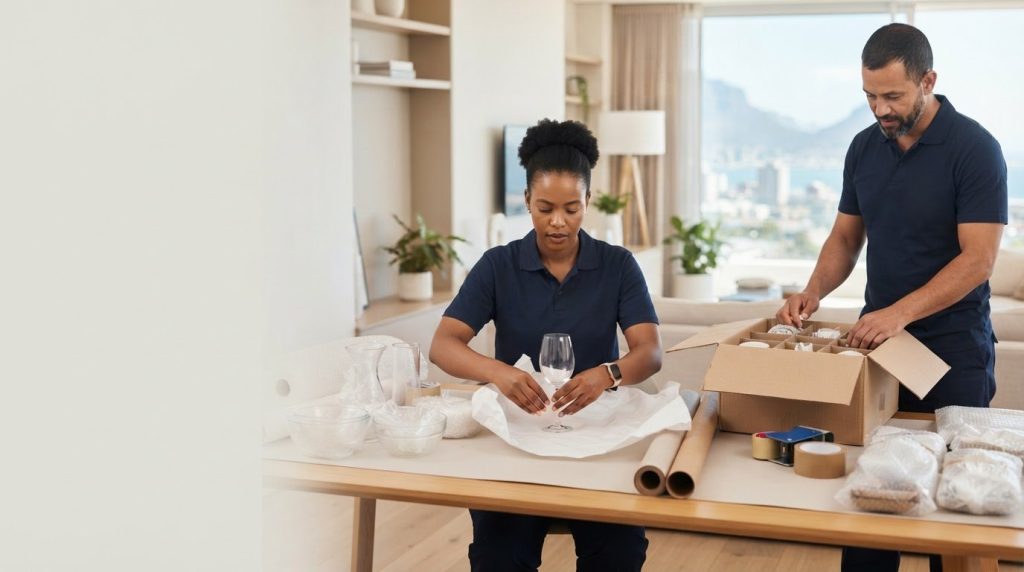
Wrapping each item separately helps prevent fragile belongings from knocking against one another. Cover the whole piece and secure the wrapping so it stays in place. Add protection around exposed parts such as handles, rims and stems. The covering should fit closely without putting pressure on the item.
Separate wrapping and fitted cushioning reduce contact between items and help limit knocks as a carton is handled in transit. Take particular care with protruding parts, which can be more vulnerable to pressure or impact.
How do you pack plates, bowls and glassware?
Wrap each plate, bowl and glass individually. If the carton allows, place plates upright rather than stacking them flat, and support heavier pieces so they don’t press down on lighter ones. Use dividers for glasses or stemware when they fit securely, then cushion the spaces around and between the pieces. Don’t force items into a crowded carton. Pressure can strain edges, rims and stems.
How do you protect hollow and irregularly shaped items?
For a suitable hollow item, such as a small decorative container, loosely place clean, soft packing material inside to support its shape. Wrap handles and rims carefully, and protect projecting details without tightening the covering or pushing against fragile areas. A single wrapping method won’t suit every shape, so plan around an unusually delicate object’s form and weak points.
Before closing the carton, check that each piece is fully covered and that the wrapping hasn’t slipped. For general consumer information about moving documents and damaged goods, see the Federal Motor Carrier Safety Administration (FMCSA) guidance. It offers a broad reference, not South African requirements.
Execu-Move provides full packing and wrapping as part of a household move through its domestic relocation service.
How to box and secure fragile items so they cannot shift
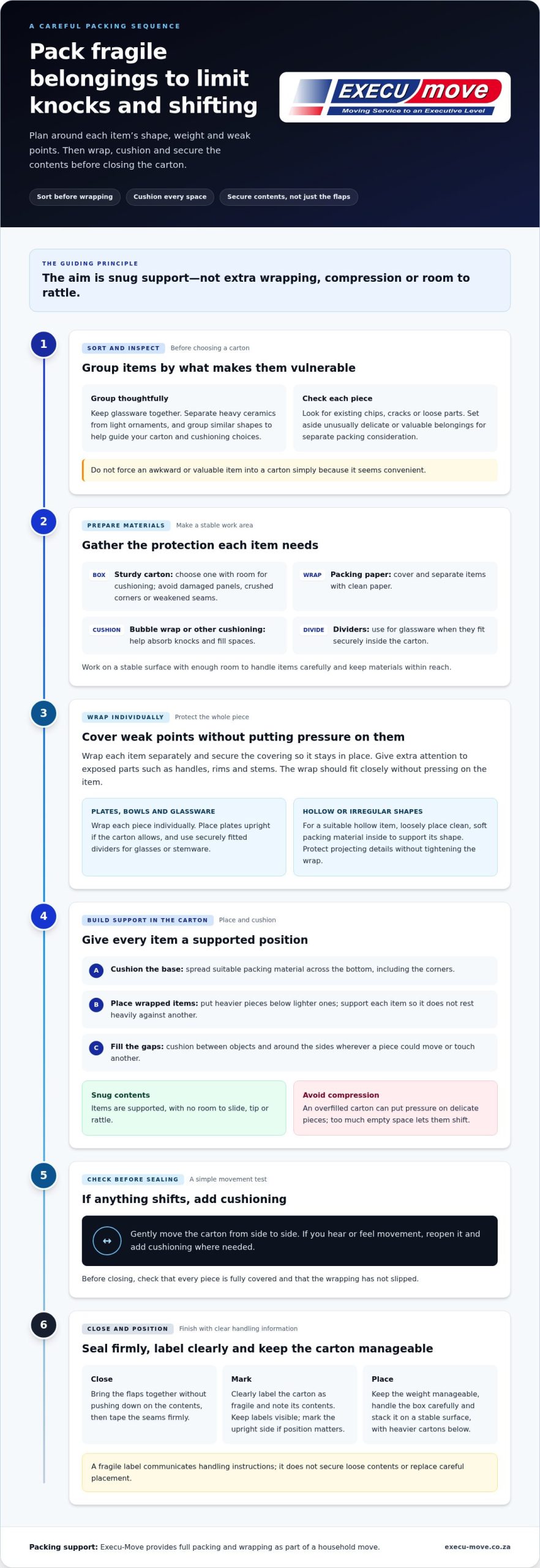
Knowing how to pack fragile items for moving means securing the contents, not just closing the carton. Follow this sequence so each piece has support and the box remains manageable to lift:
- Cushion the base: Add a layer of suitable packing material across the bottom, including the corners.
- Place wrapped items: Set heavier pieces below lighter ones. Arrange each item so it has support and doesn’t rest heavily against another.
- Fill the gaps: Add cushioning between objects and around the sides wherever a piece could move or touch another.
- Close securely: Bring the top flaps together without pushing down on the contents, then tape the carton seams firmly.
Contents should sit snugly, not be compressed. A carton that’s too full can put pressure on delicate items, while too much empty space allows them to shift. Keep the weight manageable so the carton can be lifted and handled safely.
How much cushioning should go around fragile items?
Cushion the base, sides and spaces between objects. Add support wherever there’s room for an item to slide, tip or make contact with another. Before sealing, gently move the carton from side to side and listen or feel for movement. If anything shifts, reopen it and add cushioning where needed.
How should you seal, label and position fragile boxes?
Tape the seams securely, then mark the carton clearly as fragile and note its contents. Keep labels visible, and mark which side should remain upright if an item’s position matters. Handle the box carefully and stack it on a stable surface, with heavier cartons below. A label communicates handling instructions, but it cannot secure loose contents or replace careful placement.
Execu-Move provides full packing and wrapping support to help prepare fragile belongings as part of your move.
DIY vs. Professional Packing for Fragile Items
DIY packing can work well if you have enough time, suitable materials and a manageable number of everyday breakables. The decision is less straightforward when packing competes with work, family responsibilities or other move preparations. Consider not only how to pack fragile items for moving, but whether you can give each item the care and attention it needs.
What should you consider before packing fragile belongings yourself?
Look at your moving schedule and the amount of packing still to do. A few familiar household items may be manageable, while a large collection or pieces with unusual shapes can take more time to protect consistently. Set aside anything unusually delicate or valuable for its own packing plan rather than treating it like standard crockery. For a broader overview of the service, explore the professional packing and wrapping guide.
How can professional packing fit into a relocation plan?
Full packing and wrapping can reduce the preparation your household needs to manage. Execu-Move provides this service for domestic and international furniture removals, so packing can be planned alongside the wider move rather than left as a separate last-minute task. If you’re planning an overseas move, include packing needs in your international relocation planning, especially if delicate belongings need individual consideration.
For a domestic move, consider how much time you can set aside and whether you have suitable materials for your belongings. For an international relocation, treat packing as one part of coordinating the household move from preparation through transport. In either case, choosing support for some or all of the packing can make the workload more manageable.
Execu-Move can include full packing and wrapping in your relocation plan, whether you’re moving domestically or internationally.
Make fragile-item packing part of your move plan
Before packing begins, decide which belongings need your attention first and how much time you can give them. Setting aside pieces that need extra consideration helps you plan around your household’s moving schedule instead of leaving delicate items until the final days. It also makes it easier to decide whether you’re comfortable packing them yourself or would prefer professional support.
There’s no single approach that suits every household. Your belongings, available time and relocation arrangements all shape how to pack fragile items for moving. Choose a practical plan and leave enough time to prepare without rushing.
If you’d like support with this part of your relocation, request a quote from Execu-Move for full packing and wrapping as part of your move.
Frequently Asked Questions
Can I pack fragile items in a regular moving box?
Yes, a regular moving carton can work if it’s in good condition and has enough space for protection around the contents. For example, don’t put a fragile serving dish into a carton already crowded with kitchen items. Match the carton to what you’re packing and keep its weight manageable to carry. Plan separately for pieces with unusual value or fragility.
Should plates be packed flat or upright when moving?
Plates are generally better placed upright, provided the carton’s layout supports them and they’re properly cushioned. Keep plates of similar size together rather than wedging a small plate among larger ones where it could tilt. The surrounding packing should hold them steady without pressing hard on the edges. If the box cannot accommodate them securely, choose another arrangement or carton.
How do I stop glassware from breaking in a moving box?
Wrap glasses individually and use dividers that sit securely in the carton. Keep similar pieces together, such as tumblers with tumblers, so their shapes are easier to support. A glass should not be able to tip into a neighbouring space, and the carton shouldn’t be so full that pieces are squeezed together. These checks are central to how to pack fragile items for moving.
Can I use towels or clothing to pack fragile items?
Clean towels or clothing can cushion suitable household items, particularly when you’re packing a few everyday breakables. Choose soft fabric without hard details that could press against the item, and make sure it stays in place rather than bunching into one corner. Fabric is not a substitute for a well-fitted carton or individual protection for delicate glassware and pieces with vulnerable edges.
When should I use professional packing for fragile belongings?
Consider professional packing if the workload is difficult to fit around your moving schedule or if you have delicate pieces that are awkward to protect consistently. Execu-Move offers full packing and wrapping for household relocations, coordinated with domestic and international furniture removals. This lets you include packing in the wider move plan instead of managing every carton yourself.