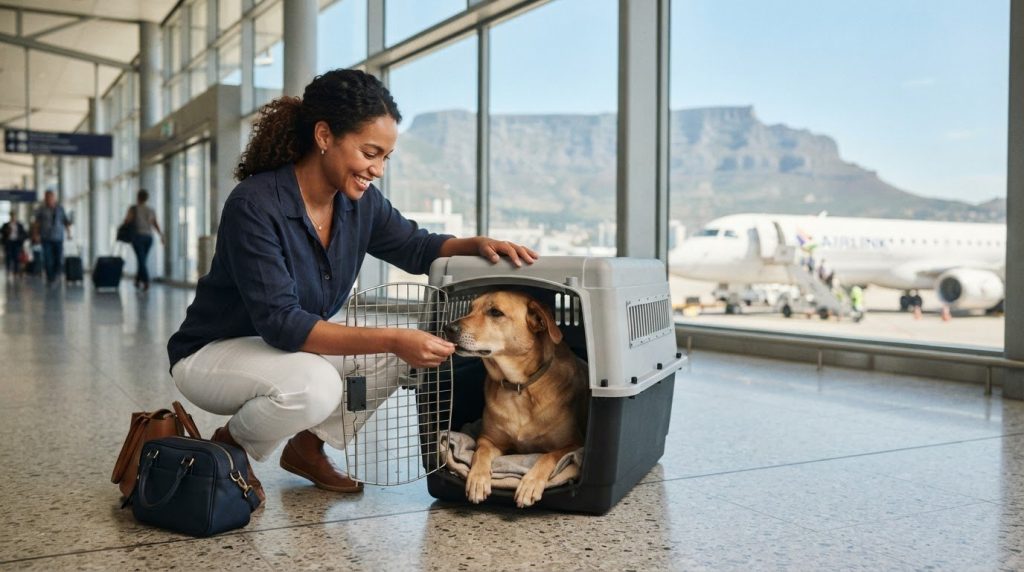
A large dog can fly, but may not be allowed in the cabin. Airline and aircraft rules, including approved carrier dimensions, determine the options, and some flights don’t allow pets in the cabin. To prepare your dog for a flight, first check the airline’s requirements and help your dog feel calm and secure in the carrier.
It’s understandable to worry about how your dog will cope with a long journey, unfamiliar noises and changes to routine. Preparing in advance can make the experience more manageable for both of you.
This guide explains how to practise with a carrier, check airline and destination requirements, and discuss anxiety or motion sickness with your veterinarian. It also covers what to consider before booking, so you can plan your dog’s journey with greater confidence.
Key Takeaways
- Introduce the carrier gradually and make it a familiar, comfortable place before travel day.
- Review airline, aircraft and destination rules before booking, including carrier dimensions and required health documents.
- Discuss your dog’s age, breed and health with your veterinarian, especially before considering travel medication.
- Plan ahead for anxiety or motion sickness by practising travel routines and asking your veterinarian about suitable ways to help.
How to get your dog comfortable in a flight carrier
Choose a carrier that meets the airline’s requirements and gives your dog room to stand, turn and lie down. Help your dog get comfortable with it through gradual practice at home before travel day.
How do you choose an airline-approved travel crate and train your dog to use it? Compare the carrier with the airline’s requirements, then introduce it in short, positive sessions. Practise until your dog can enter and remain inside calmly.
-
Choose a Compliant Travel Carrier
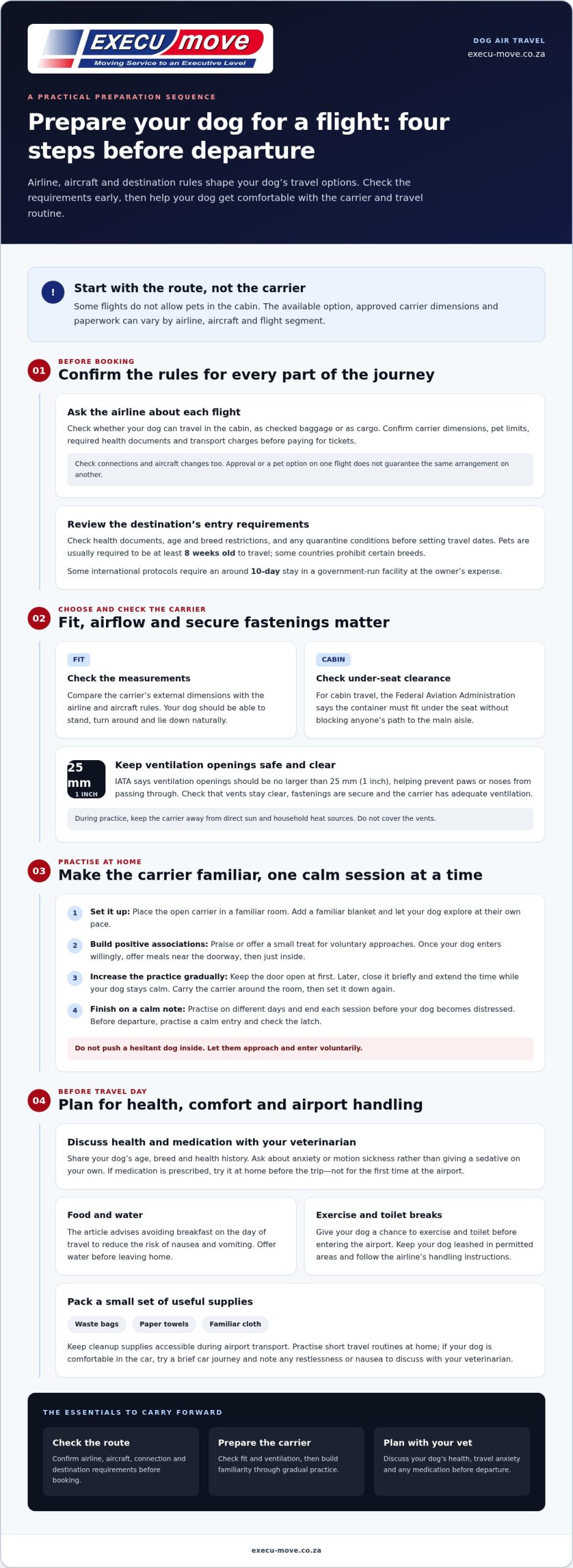
Before buying a carrier, compare its external dimensions with the airline and aircraft requirements for your route. Check that your dog can stand, turn around and lie down naturally inside it. For cabin travel, the Federal Aviation Administration says the container must fit under the seat without blocking anyone’s path to the main aisle. Don’t choose by weight alone; test the fit with your dog inside.
-
Acclimate Your Dog to the Carrier
Place the open carrier in a familiar room and let your dog explore at their own pace. Add a familiar blanket and reward each voluntary approach with praise or a small treat. Once your dog enters willingly, offer meals near the doorway, then just inside. Keep the door open at first, and don’t push a hesitant dog inside. These positive experiences help the carrier feel familiar before travel.
-
Check Carrier Ventilation and Temperature
Check that vents stay clear when the carrier rests on the floor or is held by its handles. According to IATA, ventilation openings should be no larger than 25 mm (1 inch), helping prevent paws or noses from passing through. The carrier also needs adequate ventilation, secure fastenings and room for your dog to move. During practice, keep it away from direct sun and household heat sources, and don’t cover the vents.
- Practise closing the door briefly, then gradually extend the time while your dog stays calm. Carry the carrier around the room and set it down again. Repeat the steps on different days, ending each session before your dog becomes distressed. Before departure, practise a calm entry and check that the carrier latch is secure.
Should I ask my veterinarian for a dog sedative for travel?
Ask your veterinarian before giving your dog medication for flying. Prepare for the trip by planning food, water, exercise and toilet breaks, then practise the travel routine at home.
- Check your dog’s age, breed and destination rules before making travel plans. Pets are usually required to be at least 8 weeks old to travel. Some countries prohibit certain breeds, often including dogs labelled as dangerous or bully breeds. Share your dog’s breed, age and health history with your veterinarian and review the destination requirements before booking.
- Discuss anxiety medication with your veterinarian rather than giving your dog a sedative on your own. Your veterinarian can consider your dog’s health and travel circumstances when advising you. If medication is prescribed, try it at home before the trip to see how your dog reacts. Don’t make the first dose part of the airport routine.
- Plan food and water for travel day. Avoid feeding your dog breakfast that day to reduce the risk of nausea and vomiting. Offer water before leaving home, and pack cleanup supplies such as waste bags, paper towels and a familiar cloth. Keep these items accessible during airport transport.
- Give your dog a chance to exercise and toilet before entering the airport. A familiar walk near home can help establish a calm routine before departure. Pack waste bags for any toilet break, and keep your dog leashed in permitted areas. Follow the airline’s instructions for handling your dog and supplies during the journey.
- Practise short travel routines before flying. Start with a calm carrier session, then try a brief car journey if your dog is comfortable travelling by car. Keep each practice manageable and reward calm behaviour. Note any signs of restlessness or nausea, then discuss them with your veterinarian before the flight.
Researching airline and destination requirements before booking
Check pet policies before buying tickets, and arrange airline approval as part of booking. There isn’t one fixed list of South African airlines that allow dogs in the cabin, as checked baggage or as cargo. Rules vary by airline and aircraft, and some flights don’t permit cabin pets.
-
Check Cabin Requirements and Paperwork
Ask the airline which pet options are available for each flight, including cabin, checked baggage or cargo. Confirm carrier dimensions, pet limits and required health documents before paying for tickets. Most airlines require a veterinarian-completed health certificate for a dog travelling with its owner. Some limit cabin pets, so availability on one flight doesn’t guarantee availability on another.
-
Compare Airline Policies, Sizes, and Fees
Compare the rules for every leg, including connections and aircraft changes. Record permitted carrier measurements and whether each airline accepts pets in the cabin, as checked baggage or as cargo. Ask about charges for your dog’s transport and include every flight segment in your travel budget. Don’t assume the same pet option, carrier size or fee applies across airlines.
-
Choose a Compliant Carrier or Crate
Choose a carrier after checking requirements for your route and your dog’s travel option. The Federal Aviation Administration says a cabin pet container must fit under the seat without blocking anyone’s path to the main aisle. IATA updated its pet container guidelines in January 2026. Compare the airline’s current requirements with the carrier’s dimensions before booking.
- Review the destination’s entry rules before setting travel dates. Check for required health documents, age or breed restrictions, and quarantine conditions. Some international protocols keep animals in a government-run facility for around 10 days at the owner’s expense. Account for these requirements when planning the flight and arranging veterinary paperwork.
Managing anxiety and motion sickness
Practise calm routines and watch for signs of nausea before departure. A predictable airport plan can reduce rushed handling and help you spot where your dog may need support.
- Build up to the airport routine in small stages. Pair a settled moment in the carrier with familiar cues, such as a quiet voice or blanket. Practise approaching, pausing and entering without rushing. If your dog becomes distressed, end the session calmly and try again later.
- Track your dog’s reactions during practice trips. Restlessness, repeated swallowing or vomiting in a car are useful details to share with your veterinarian. Note when each sign starts and what happened beforehand. These observations can help your veterinarian assess whether motion sickness, anxiety or another factor may be involved.
- Ask your veterinarian for advice based on your dog’s health and travel history. Mention any previous nausea, panic or unusual reactions during transport, and share existing treatment. Don’t give human medication or change a prescribed dose yourself. Follow your veterinarian’s directions for any prescribed travel medication.
- Keep airport handling steady and controlled. Give your dog a toilet break before entering the terminal, then follow staff instructions during screening. One described screening method requires a leash at least 4 feet long. Keep your dog securely leashed where permitted, and don’t open the carrier in a busy area.
- Plan connections before leaving home. For a journey with flight connections, leave at least 2 hours between flights to reach an outdoor relief area and return through security. The Federal Aviation Administration requires pets travelling in the cabin to remain in their carriers throughout the flight. Plan relief breaks before boarding.
If your dog’s flight is part of an overseas move, discuss your relocation plans alongside the practical arrangements for your journey.
Execu-Move: International Furniture Removals
Execu-Move can coordinate your household move while you prepare your dog’s flight separately. For an international relocation, International Furniture Removals and Full Packing and Wrapping can help organise the movement of your home’s contents. If your plans change or belongings need to be held during the transition, Secure Storage Solutions can also support your moving arrangements.
For a move within South Africa, Domestic Furniture Removals can take care of the household transport. Keep your pet’s airline booking, travel documents and carrier preparation on a separate checklist, and coordinate the furniture move with your relocation schedule.
Contact Execu-Move to discuss the moving arrangements that suit your relocation.
Make space for the next stage of your move
Preparing for your dog’s journey is also a good time to organise the rest of your relocation. Keep your pet’s flight arrangements and household move on separate checklists, with one shared timeline for key dates and decisions. This lets you plan both alongside each other without losing track of either.
Execu-Move can assist with International Furniture Removals or Domestic Furniture Removals, with Full Packing and Wrapping as part of your moving plans. Whether you’re moving within South Africa or overseas, decide which household tasks you’d like handled and when they need to be organised. Then keep your attention on your dog’s comfort and travel preparations.
With a clear plan, learning how to prepare your dog for a flight becomes one part of a wider, more manageable transition. Contact Execu-Move about your move to discuss the arrangements that fit your plans.
Frequently Asked Questions
Can I fly with a large dog?
Yes, but a large dog may need an arrangement beyond the cabin. Plan the entire journey, including ground transport to the airport and collection after arrival, so there’s no unplanned gap between travel stages. Before confirming your plans, decide who will handle each transfer and how your dog will reach the final destination.
Can you fly with a dog in the cabin?
Some flights accommodate dogs in the cabin. Consider whether your dog can stay settled amid unfamiliar sounds, close seating and changes to routine. At home, practise short periods around ordinary household noise, such as a television at low volume, and observe your dog’s response. If your dog struggles to settle, discuss other travel arrangements with your veterinarian before finalising your plans.
How do I prepare my puppy for a long flight?
Plan your puppy’s journey around rest, toilet breaks, meals and handling, from departure through arrival. Ask your veterinarian about your puppy’s readiness and any health or development concerns. Keep a familiar item, such as bedding with a known scent, available if the airline permits it. Allow time after arrival for your puppy to rest and adjust to new surroundings.
How do you fly with a dog?
Map the trip in stages: leaving home, airport arrival, check-in, flight, connections, arrival procedures and the final transfer. Write down who is responsible for the dog at each stage and where essential documents will be kept. Keep those records with you, not packed with household belongings. A clear handover plan helps everyone involved follow the travel arrangements.
How much does it cost to fly with a dog?
The cost depends on the airline, route and travel arrangement. For an accurate estimate, request the pet charge for every flight segment and ask when it must be paid. Include destination requirements that may involve additional expenses, such as quarantine where applicable. Compare the full cost of each itinerary, not just the passenger ticket.
How will I move through the security checkpoint at the airport?
Keep your dog under control and follow screening staff’s directions throughout the checkpoint. Have the lead ready and travel papers accessible, and organise your belongings so you can manage them without rushing. If your dog is unsettled in busy places, tell staff before screening begins. Their instructions can help you pass through the process calmly while maintaining control of your dog.