Choosing between roll-on roll-off vs container car shipping depends on your vehicle and priorities. Consider whether the car runs, its value, the protection you want and how shipping fits into your relocation. Neither method is right for every vehicle owner in South Africa.
Shipping a car overseas involves more than choosing a vessel option. Consider how you’ll hand over the vehicle, who will receive it at the destination and how its transport fits around your own move. These details can help you decide whether RoRo or container shipping better suits your plans.
This guide explains the practical differences so you can make an informed choice. Start by identifying what matters for your circumstances, then plan the full journey, from preparing the car to arranging its collection. Understanding the trade-offs can help you coordinate the next steps.
Key Takeaways
- Compare more than the headline freight cost: your vehicle’s condition, value and protection needs can change which option offers better value.
- RoRo can suit a vehicle that runs and can be driven aboard, while container shipping can accommodate a vehicle that doesn’t.
- Consider how the vehicle will reach the departure port and be collected at destination, as port arrangements affect the practical effort involved.
- Container transport offers a more enclosed journey, but the added protection comes with trade-offs to weigh before choosing.
Choosing a shipping method by budget and vehicle value
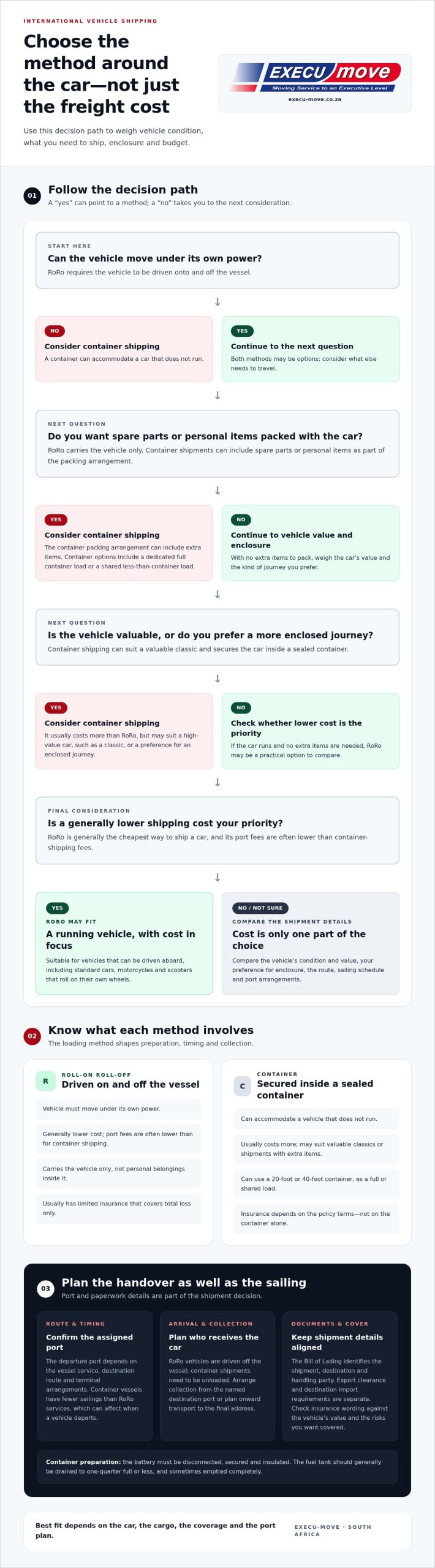
RoRo is generally the cheapest way to ship a car, and its port fees are often lower than container-shipping fees. Container shipping usually costs more but may suit a valuable classic, such as a 1968 Mustang. In the roll-on roll-off vs container car shipping decision, weigh the vehicle’s value and condition against the cost and level of enclosure you prefer.
Start with whether the vehicle runs. A RoRo vehicle must move under its own power so it can be driven onto and off the vessel. A car that cannot do this can travel in a container. RoRo can also carry motorcycles and scooters that roll on their own wheels, so it is not limited to passenger cars.
Next, consider how the vessel organises its load. RoRo ships separate vehicles according to type and handling needs, with specialised decks for heavier vehicles. Some modern vessels are more than 860 feet long, have nine internal decks and can carry 6,000 cars per sailing. These arrangements allow different vehicle types to be handled on suitable decks.
South African export clearance and the destination country’s import requirements are separate parts of an overseas shipment. The applicable steps depend on the vehicle and destination, so don’t assume one set of customs documents covers every move. A Bill of Lading identifies the shipment, destination and handling party. Keep its details consistent with your vehicle and booking records.
RoRo carries the vehicle only, so personal belongings cannot be shipped inside it. Container shipping can include spare parts or personal items as part of the packing arrangement.
| Option | Budget | Vehicle condition | Suitable for |
|---|---|---|---|
| RoRo | Generally lower | Runs and can be driven aboard | Standard cars, motorcycles and scooters |
| Container | Generally higher | Can accommodate a non-running car | Valuable classics and shipments with extra items |
For a roadworthy vehicle and a tighter budget, consider RoRo. For a non-running or high-value car, consider a container. These practical trade-offs are central to roll-on roll-off vs container car shipping.
What Is Container Car Shipping?
RoRo carries a vehicle on a vessel’s vehicle deck, while container shipping secures it inside a sealed container. The key differences are how the car is loaded, enclosed and prepared for its sea journey.
How Container Car Shipping Works
For container shipping, the vehicle is positioned and secured inside a shipping container before the container is sealed. Shipments can use a 20-foot or 40-foot container, arranged as a dedicated full container load or shared less-than-container load. This enclosed method can carry a car that doesn’t run, unlike RoRo, which requires the vehicle to be driven aboard.
Preparation matters. The battery must be disconnected, secured and insulated. The fuel tank should generally be drained to one-quarter full or less, and sometimes emptied completely. Spare parts or personal items may also be packed inside a container. RoRo works differently: the vehicle is driven onto the vessel, secured on board and driven off at the destination. Loading is simple and quick, but RoRo carries the vehicle only.
Transit Times and Insurance Coverage
From South Africa, transit time depends on the route, sailing schedule and handling at the departure and destination ports. RoRo has regular sailings on international routes, while container vessels have fewer sailings. This can affect how soon a vehicle departs, even before the sea journey begins. Port processing and the destination also affect the overall journey.
RoRo shipping usually has limited insurance that covers only total loss. Container transport does not determine the insurance protection by itself: the policy terms define which events and losses are covered. Compare the coverage wording with your vehicle’s value and the risks you want insured. Don’t assume that an enclosed container provides insurance.
For a wider relocation plan alongside vehicle transport, explore international relocation planning.
Port delivery and collection options
There isn’t one South African departure port for every RoRo or container shipment. The port depends on the vessel service, destination route and terminal arrangements for the booking. Use the port named for your vehicle’s sailing to plan its delivery.
RoRo and container services use different loading arrangements, so port options depend on which terminals handle the selected service. The vehicle’s destination matters too: the route needs a suitable arrival port, followed by any onward transport to the final address. A shipment to an inland destination, for example, includes a separate journey from the arrival port.
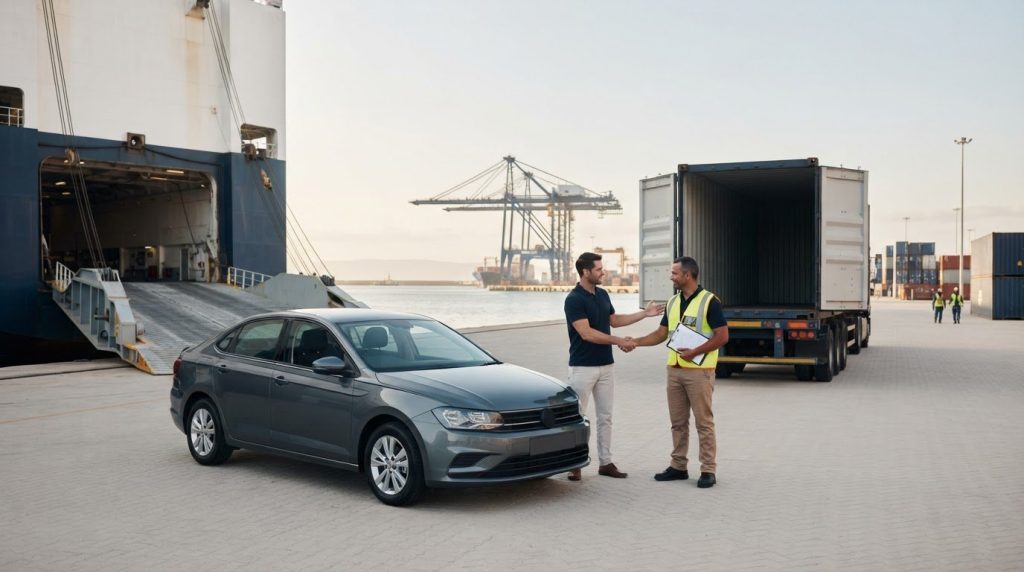
Coordinate departure handover with the port and sailing specified in the shipment arrangements. For RoRo, the vehicle must be presented for loading onto the vessel. For container transport, the car must be loaded into its container as arranged before the container goes to the vessel. Allow time to get the vehicle to the named port and align delivery with the sailing schedule.
At the destination, plan who will take possession of the vehicle and how it will reach its next address. RoRo vehicles are driven off the vessel, while container shipments need to be unloaded. These steps affect collection arrangements, especially if the person receiving the car won’t be travelling to the port.
The Bill of Lading records the shipment, destination and handling party. Keep its details accessible when coordinating collection, and give the receiving person the relevant shipment information.
- Before departure: Use the port and sailing assigned to the vehicle’s route to plan delivery.
- At arrival: Arrange collection from the named destination port or plan onward transport.
- For either method: Keep the Bill of Lading details available for handover coordination.
In practice, plan port arrangements around the shipping method: RoRo involves driving the vehicle on and off the vessel, while container transport involves loading and unloading at the ports.
Container shipping advantages and disadvantages
A sealed container shields a vehicle from weather and handling during the sea journey. This can matter for a classic car whose finish or condition makes exposure a concern. RoRo vehicles travel on enclosed decks and are secured with wheel straps, but remain exposed to sea air. Container protection is an advantage, not a guarantee against damage.
Container transport can also accommodate vehicles that cannot move under their own power. It can include spare parts or personal items, unlike RoRo, which carries the vehicle only. This flexibility can help when a relocation involves a car and related belongings. Keep any items organised and documented as part of the shipment.
There are trade-offs. Container shipping generally costs more than RoRo, and container vessels have fewer sailings on international routes. This can limit departure options compared with RoRo’s regular sailings. Include port delivery and collection in your plan, since container loading and unloading add steps around the sea crossing.
When weighing damage, theft or delay risks, compare the protection and handling involved rather than assuming either method removes risk. A container shields the vehicle from weather and handling; RoRo vehicles are secured on enclosed decks but are exposed to sea air. Theft protection depends on the documented cover, while sailing frequency can affect departure timing.
- Consider a container for a valuable car, a non-running vehicle, or permitted personal items travelling with it.
- Weigh the trade-off between added enclosure and higher cost, plus fewer container sailings.
- Review the paperwork for the vehicle, any included belongings and the insurance protection applying to the shipment.
The practical takeaway: choose container shipping when enclosure or loading flexibility matters more to you than cost and sailing frequency. For a vehicle-transport plan that accounts for the car and its journey, discuss your vehicle transport requirements.
Execu-Move: International Furniture Removals
Execu-Move’s International Furniture Removals can coordinate the household move alongside your overseas vehicle shipment. If you’re relocating from South Africa with furniture and personal effects as well as a car, planning both parts together can help organise packing, transport and arrival arrangements.
Full Packing and Wrapping supports the preparation of household belongings, while Secure Storage Solutions can help if your move-out and delivery dates don’t align. If you’re moving within South Africa before an international departure, Domestic Furniture Removals may also be relevant. These services address the household side of relocation; the RoRo or container decision still depends on your vehicle’s condition, value and shipping needs.
Contact Execu-Move to discuss furniture-removal arrangements for your relocation.
Plan your vehicle shipment as part of the move
Your car’s shipping method is one part of a wider relocation plan. Consider how its handover and arrival fit around your travel, household move and first days at the destination. A clear sequence makes it easier to coordinate vehicle transport with the rest of your arrangements.
The right roll-on roll-off vs container car shipping option depends on your vehicle and priorities. If you’re also moving household belongings, Execu-Move can support that part of your relocation with international or domestic furniture removals and Full Packing and Wrapping. Coordinating these arrangements can help you plan the move as a whole rather than treating each shipment as a separate task.
For guidance on vehicle transport as part of your relocation, contact Execu-Move about car shipping. A practical discussion can help you map out the next steps with greater clarity and move forward at your own pace.
Frequently Asked Questions
What is RoRo?
RoRo means “roll-on/roll-off”: vehicles are driven aboard a vehicle carrier and secured for sea transport, then driven off at the destination. Unlike container transport, the car isn’t enclosed in a separate shipping container. This method suits a roadworthy vehicle that can move under its own power, with loading arranged around the vessel and port handover.
Which Should You Choose?
Choose based on your vehicle’s condition and value, and on what matters most to you. For example, a roadworthy car used for everyday transport may suit RoRo if keeping transport costs lower is important. A vehicle with particular protection needs, or one that cannot be driven, may point towards a container. Compare the practical trade-offs with port arrangements and your planned arrival date.
How much does RoRo car shipping cost compared with container shipping from South Africa?
RoRo is generally cheaper, while container shipping usually costs more. The price depends on the shipment and is provided after a quote request. Factors include the route, vehicle dimensions, shipping method, port handling and whether the container is dedicated or shared. Compare the full shipment arrangements, not just the sea freight, when assessing value.
How should a car be prepared for RoRo shipping versus container shipping?
For either method, document the car’s condition before handover, for example by taking clear photographs of the exterior and interior. For RoRo, make sure the vehicle can be driven for loading and unloading, and remove personal belongings. For container transport, follow the preparation instructions for the battery and fuel, and arrange any permitted items before the container is sealed.
When is container shipping better than RoRo for a car?
Container shipping can suit a non-running vehicle or a car whose owner prioritises protection from weather and handling. It can also accommodate spare parts or personal items, subject to the shipment arrangement. For example, if a vehicle needs workshop attention before it can run, container loading avoids RoRo’s requirement that it be driven on and off the vessel.