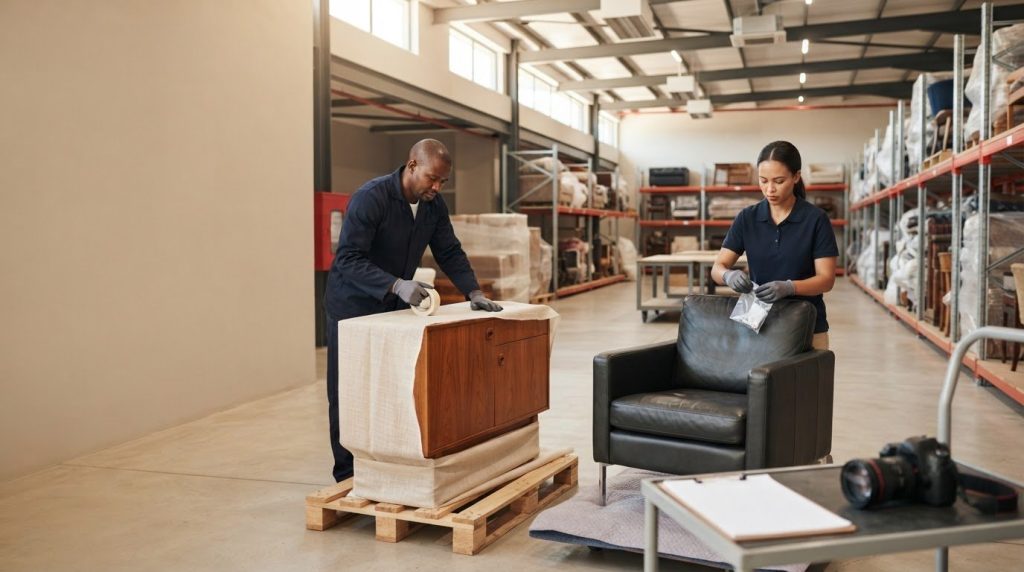
Furniture can be clean and carefully wrapped yet still be poorly prepared for long-term storage. The details matter: whether each piece is completely dry, whether its covering suits the material, and whether it is positioned to avoid trapped moisture or unnecessary pressure. If you’re preparing furniture for long term storage, it helps to know that wood, upholstery, leather and bulky pieces need different kinds of care.
Good preparation protects furniture appropriately and makes it easier to identify and handle later. This guide covers how to clean and dry different materials, protect them from dust and scratches, reduce pressure on delicate pieces, and create a clear inventory. It also explains why breathable wrapping and space between items can support airflow.
Whether you’re storing a few pieces during a transition or arranging storage as part of an international relocation, an item-by-item approach makes the process easier to manage. Execu-Move offers secure storage and professional packing and wrapping as part of its relocation services.
Key Takeaways
- Preparing furniture for long term storage starts with matching cleaning and protection to each item’s material and care instructions.
- Remove detachable components only when safe, and keep their fittings together in a clearly labelled bag.
- Use a simple inventory and condition notes to make stored items easier to identify and track.
- Keep assembly instructions with your records so furniture is easier to reassemble when it leaves storage.
Why preparing furniture for long-term storage needs a careful plan
Furniture may have practical or sentimental value, so it’s worth taking time to prepare it before storage. A steady process can reduce avoidable dirt, moisture and handling issues, although no preparation method can guarantee that every item will remain unchanged. Assess each piece, clean it according to its material and care instructions, let it dry fully, then protect it and record its condition. Furniture can be made from a range of materials, as the general overview of furniture illustrates.
Start with an item-by-item condition check
Before cleaning or wrapping, note visible scratches, stains, loose fittings and existing damage. Take clear photographs and write a short condition note for each item. Identify the main materials and any detachable parts, such as a table leaf or chair legs, so you can plan suitable care. Set aside pieces that need repair or specialist attention rather than covering them and putting them into storage without a closer look.
What can go wrong when preparation is rushed?
Dust and residue left on a surface can become harder to remove, while moisture trapped beneath a cover may contribute to musty odours or surface changes. Heavy items placed on delicate furniture can leave marks or strain joints. The type and likelihood of damage depend on the material, the item’s existing condition and the storage environment, so the risks vary from one piece to another.
Furniture should be clean and completely dry before it’s covered, because trapped dirt and moisture can cause avoidable problems during storage. Allow enough time for cleaning and drying before wrapping. A measured approach helps you prepare each piece carefully and creates a useful record for handling it later.
How to clean and prepare wood, upholstery and leather furniture
Use the furniture’s care instructions to guide your cleaning method. Materials and finishes respond differently to cloths, pressure and cleaning products, so avoid treating every piece in the same way. The Museum Collections Storage Guidelines offer further reference on caring for furniture materials.
Prepare wooden and leather furniture with care
For wooden furniture, remove dust and light residue with a soft, suitable cloth. Work gently around joins, carved details and decorative finishes, where rough rubbing could leave marks. Avoid soaking the surface or applying an unfamiliar product. If a piece has a delicate or unusual finish, follow its care instructions rather than experimenting.
Leather also needs material-specific care. Follow the guidance for the item’s finish, and don’t assume a method suitable for one leather piece will suit another. If you’re unsure how to treat a mark, avoid strong cleaners or abrasive techniques and seek advice suited to the material.
Clean upholstered furniture and cushions
Vacuum fabric surfaces carefully, paying attention to seams, folds and crevices where crumbs and debris can collect. Treat marks only according to the upholstery care guidance. Scrubbing or using an unsuitable method may affect the fabric or spread the stain. Check removable cushion covers and follow their care instructions too.
Choose a cleaning approach that respects each item’s construction, from the outer fabric to stitched details and cushion covers. If you’re preparing several pieces as part of a household move, Execu-Move’s domestic relocation service includes full packing and wrapping.
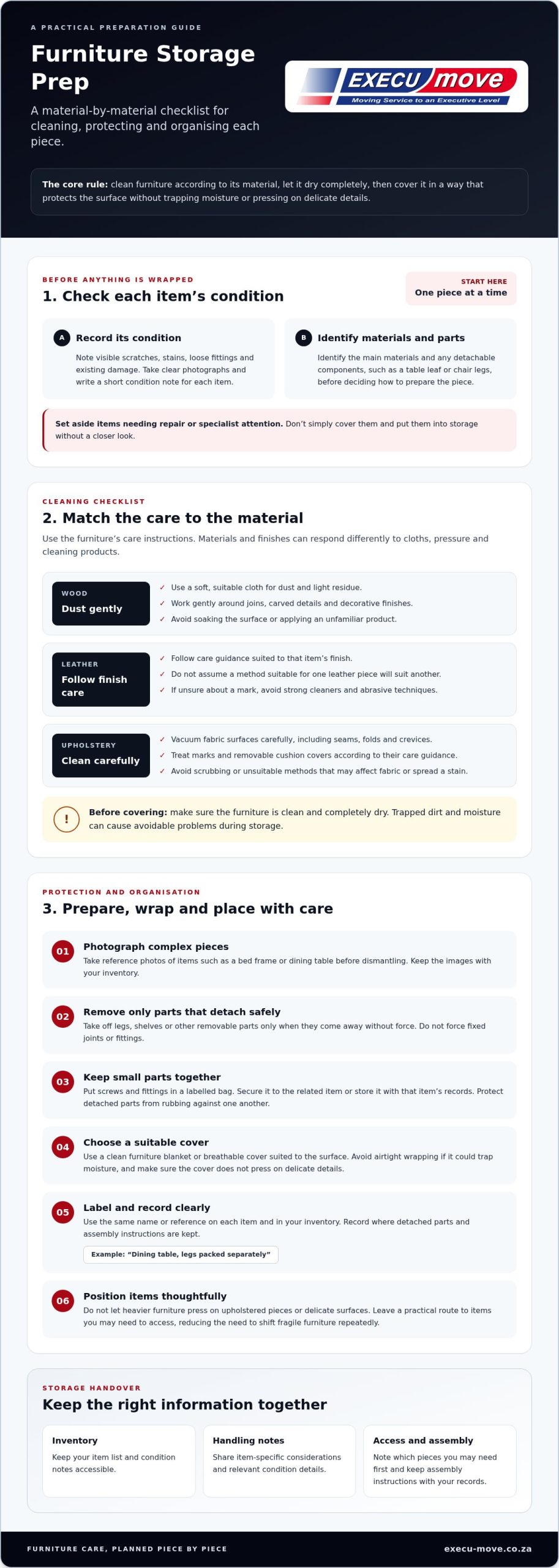
How to dismantle, wrap and organise furniture for storage
A consistent sequence makes furniture easier to protect, identify and handle later. Before taking anything apart, check that its components are designed to come off safely. Don’t force fixed joints or fittings: dismantling the wrong part can cause damage or make reassembly harder.
- Photograph and prepare. Take reference photos of complex pieces, such as a bed frame or dining table, before dismantling. Keep the images with your inventory so you can find them later.
- Remove safe-to-detach parts. Take off legs, shelves or other removable components only if they come away without force. Place screws and fittings in a labelled bag, then secure it to the related item or store it with that item’s records. Protect detached pieces from rubbing or scratching one another.
- Choose a suitable cover. Use a clean furniture blanket or breathable cover suited to the surface. Avoid airtight wrapping if it could trap moisture against the item. Make sure furniture is dry before covering it, and arrange the cover so it protects without pressing on delicate details.
- Label and record. Give each item a clear label and use the same name or reference in your inventory. Note where detached parts and assembly instructions are kept. A label such as “dining table, legs packed separately” is more useful than a general mark.
- Place items with care. Don’t let heavier furniture press on upholstered pieces or delicate surfaces. Leave a practical route to items you may need to access, so fragile furniture doesn’t have to be shifted repeatedly.
This item-by-item workflow makes preparing furniture for long term storage more manageable, particularly when several pieces have separate components. If packing and storage are part of a larger move, Execu-Move can coordinate professional packing, removals and secure storage. Discuss your furniture storage and moving needs.
How to hand over furniture for long-term storage with confidence
A clear handover connects your preparation with the storage process. Keep your inventory and condition notes accessible, share item-specific handling information, and identify pieces you may need to access first. These records provide a shared reference for the furniture being placed into storage.
Use your records during handover
Have your storage record available when the furniture is handed over, so you can refer to it if questions arise. Point out relevant condition notes or handling considerations, and indicate which furniture you expect to need first when storage ends. Keep a copy of the inventory and supporting assembly information somewhere accessible, rather than relying on documents packed with the furniture.
Use the handover to clarify how the storage plan fits the timing and sequence of your move. Clear communication helps keep your expectations aligned with the arrangements for handling and storage. It also gives you a chance to confirm that the inventory reflects the items being stored.
When professional packing and storage support may help
Coordinating furniture preparation alongside a household move can be demanding. Execu-Move’s professional packing and wrapping service can support furniture preparation as part of a domestic move, and its secure storage can hold belongings during a transition. Bringing packing, removals and storage together can make the wider move easier to coordinate.
If you’re arranging a move that includes storage, contact Execu-Move to discuss storage and relocation support. A considered handover gives you a practical starting point for the next stage of the move.
Plan your next move with greater confidence
Before furniture goes into storage, decide what you’ll need when it comes out. A clear record and a thoughtful plan can make the transition back into your home or next destination more straightforward. If the move has several stages, consider how preparation, packing and storage fit together rather than treating each as a separate task.
Preparing furniture for long term storage is easier to manage when you have a clear process and support with the wider logistics. Execu-Move coordinates local and international furniture removals, with secure storage and Full Packing and Wrapping available as part of its relocation services.
Whether you’re planning a move within South Africa or an international relocation, Execu-Move can help coordinate the packing, removals and storage involved. Explore secure storage and relocation support with Execu-Move.
Frequently Asked Questions
Can furniture be stored long term without being damaged?
There’s no way to guarantee that furniture will remain exactly the same in storage. Consider whether an item’s age, finish or construction makes it particularly sensitive, and arrange specialist assessment if needed. When it comes out of storage, inspect it before use, especially moving parts such as drawer runners or hinges, which may need attention after being unused.
Should furniture be wrapped in plastic for long-term storage?
Plastic is not a one-size-fits-all cover. A sealed layer may be unsuitable if dampness is present, so consider the item’s material and care guidance before using it. If plastic has been used during handling, remove it when the furniture is in a suitable place for inspection. Check for signs of condensation before choosing how to protect the piece next.
How should I prepare furniture if it already has mould?
Don’t put mould-affected furniture into storage with unaffected belongings. Keep the item separate while you assess the extent of the problem, and avoid brushing or rubbing the area, which could spread residue. If the affected area is substantial, the mould returns, or the material is delicate, seek suitable specialist advice before attempting treatment or arranging storage.
Do I need to dismantle furniture before putting it into storage?
No, it depends on the item. Flat-pack furniture may be intended for disassembly, while older or intricate pieces can have joints that are difficult to put back together correctly. Check the manufacturer’s instructions where available, and consider whether dismantling could affect the item’s stability. If you’re uncertain about a complex piece, keeping it assembled may be more practical.
What should I do if furniture smells musty after storage?
Pause before using the item, particularly if the smell is strong or returns after airing. Check nearby belongings and the area where the furniture was kept to help identify whether the odour is isolated or more widespread. If you find visible mould or the smell persists, avoid masking it with fragrance and seek advice suited to the material and the extent of the issue.