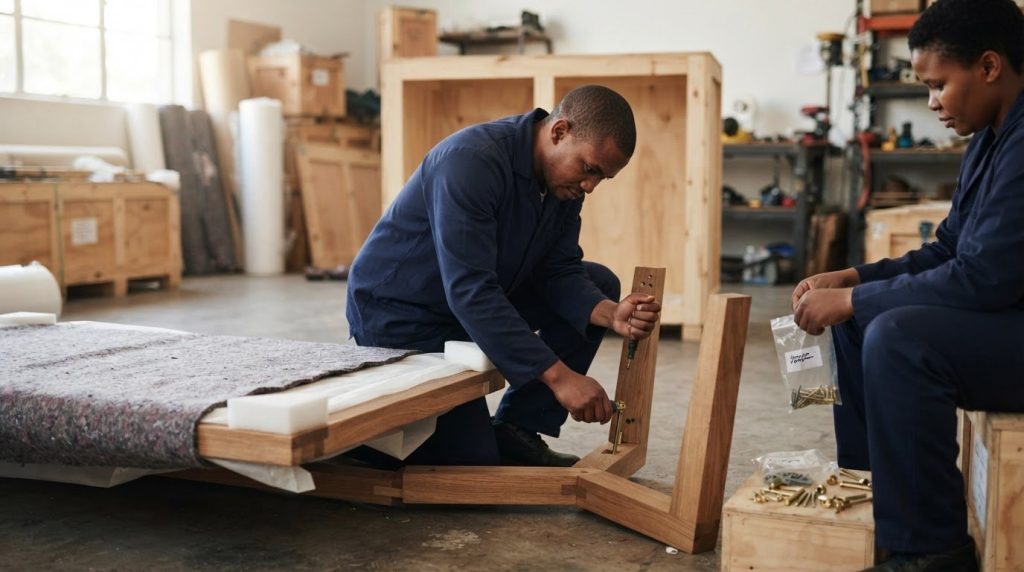
Safe overseas furniture shipping starts with careful packing, not just a sturdy box. Preparing furniture for international shipping means cleaning and drying each piece, dismantling removable parts, cushioning delicate surfaces and documenting the contents. Keep screws and fittings in labelled bags so reassembly is easier at the other end.
It’s natural to worry about scratches, missing parts or customs delays when furniture travels across borders. A clear preparation plan helps protect each item and keep important details organised. This guide explains how to dismantle furniture, choose protective materials, label and photograph belongings, keep spare parts together, and prepare for the destination country’s customs requirements.
You’ll also learn how to prepare fragile materials such as glass, wood and stone, and what to record in your inventory. Follow the steps in order to make packing more manageable and help your furniture travel securely.
Key Takeaways
- Disassemble removable parts where practical, and keep each set of screws and fittings in a clearly labelled bag with the matching furniture.
- Choose protective packing and a shipping method suited to the furniture’s size, materials and fragility; air and sea freight have different handling and space considerations.
- Photograph existing condition and create an inventory before packing so you have a clear record of the items being shipped.
- Review the destination country’s customs requirements for used household goods and wooden items, and prepare the supporting documents before dispatch.
Disassembling furniture and keeping spare parts
Remove parts that can be safely dismantled, then keep their hardware with the matching furniture. A clear inventory and careful packing make reassembly more straightforward.
-
Disassemble the Furniture
Start with removable pieces such as bed frames, table legs, shelves and modular sections. Follow the furniture’s existing joints, and stop if a piece resists rather than forcing it. Keep glass panels separate where possible. Dismantling large furniture can save shipping space and make handling easier, while leaving fixed or delicate parts attached can prevent unnecessary strain.
-
Organize and Label Hardware
Place screws, bolts and small fittings in separate bags for each item. Label each bag clearly with the furniture name and the part it belongs to, such as “dining table legs”. Keep the bags together in a labelled box or secure them to the matching piece without damaging its finish. Don’t combine hardware from different items.
- Record each item in your inventory as you dismantle it. Note which parts were removed, where they belong and which fittings are packed separately. For a bed frame, list the headboard, side rails and slats as distinct pieces. This gives you a practical reference when unpacking and helps keep each item’s components together.
- Clean furniture before packing, then let it dry fully, especially before sea shipment. Dirt can complicate customs checks, while moisture trapped beneath wrapping can cause mildew, odour or finish damage. Check joints and surfaces as you clean. Complete any needed repairs before packing so loose parts aren’t concealed beneath protective materials.
- Photograph furniture before wrapping, including existing marks and parts separated during dismantling. Match each photograph to the item’s inventory entry. Keep the record and labelled hardware accessible while packing, rather than burying them inside a wrapped piece. This helps distinguish pre-existing wear from damage noticed after delivery.
How to Prepare Furniture for International Shipping?
Choose a South African shipping company familiar with destination customs and household-goods paperwork. If arranging international shipping insurance, review the policy’s coverage, exclusions and claims process so you understand how it addresses transit damage, loss and other incidents.
-
Choose a Shipping Method
Match the freight method to your shipment’s size and timing. A full-container load uses dedicated container space, while consolidated shipping combines your goods with other shipments. Air freight is generally faster and suits smaller or time-sensitive consignments; sea freight suits larger household shipments. Door-to-door describes a delivery service, not a freight method, so clarify which collection, handling and destination services are included.
-
Choose Packing Materials
Choose sturdy boxes slightly larger than their contents, with reinforced bottoms and padding to fill gaps. Use moving blankets on broad furniture surfaces, foam or bubble wrap around delicate components, and corrugated cardboard or corner protectors on edges. Protect glass separately with rigid material. Avoid putting plastic wrap directly against polished wood, leather or delicate finishes.
-
Label the Boxes
Write the destination details and room or category on each box, such as “Bedroom, bedside table”. Add “Fragile” where suitable, particularly for glass components, and keep labels visible on more than one side. Match box descriptions to the inventory and packing records. This helps identify contents during handling and distinguish delicate cartons from general household goods.
- Choose a freight forwarder or shipping company that can explain the route, packing scope, customs paperwork and destination services in writing. Ask for the quotation to set out freight charges, potential duties and insurance or liability conditions. Record each item’s accurate value and retain photographs, inventory and proof of shipment for potential claims. For coordinated international household moves, review the international relocation service.
Why careful preparation matters for bulky shipments
Shipment dimensions, weight and volume limits depend on the freight method and available space. Air freight considers chargeable weight and dimensions; sea freight considers volume, container space and service terms.
- Measure each large piece and provide its packed dimensions and weight for the shipment assessment. Include unusual shapes, such as a wide sofa or tall cabinet, because they affect freight-space planning. A clear inventory linked to those measurements helps describe the shipment accurately and identify handling needs before collection.
-
Photograph Furniture Condition
Photograph each item before wrapping, including close-ups of existing scratches, chips, loose joints or worn upholstery. Capture the whole piece from several angles and save each image beside its inventory entry. This creates a useful record of its condition before transit. At delivery, photograph any visible damage promptly and keep the images with the relevant shipment records.
-
Create a Furniture Inventory
List each item by description and room, then link it to its packing record and photographs. Include separate components, such as a table top and its legs, so the assessment accounts for the complete furniture piece. Update the document if the shipment contents change. This record helps identify items at delivery and supports a clear review if something is missing.
-
Prepare Customs Documents
Prepare customs paperwork that describes the shipment consistently with its inventory. Requirements vary by destination and may include personal-effects documentation or details about wooden items. For example, identify a wooden bookcase by its use and material rather than listing it simply as “household goods”. Keep copies of the final inventory and supporting documents together for customs clearance.
- Keep the shipment reference available and use the freight tracking information provided. This helps with delivery planning, especially when bulky pieces need clear access at the receiving address. On arrival, compare delivered items with the inventory before discarding packaging. Record any visible damage promptly and keep photographs and shipment documents together.
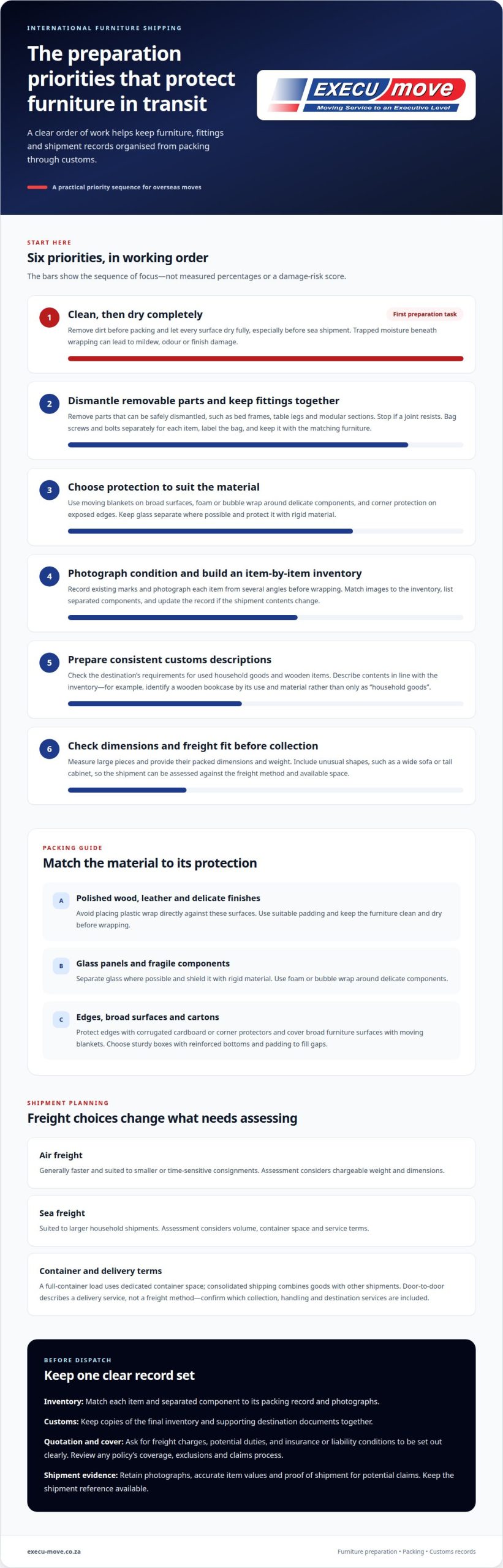
Destination customs regulations and documentation
Before overseas furniture leaves South Africa, make sure its packing and paperwork meet the destination’s customs requirements.
-
Check Destination Customs Requirements
Identify the destination country’s rules for used household goods, wooden furniture and plant-based materials. Requirements vary by country and can depend on residency status, ownership history and supporting documentation. Some destinations restrict certain wood types or require fumigation to reduce wood-pest risks. Don’t assume used furniture automatically qualifies for duty-free entry; confirm how the destination treats your shipment.
-
Prepare Accurate Descriptions and Valuations
Describe each item plainly, including its material and use. For example, record “used wooden dining table” rather than “household goods”. State its accurate value on the applicable customs paperwork and keep the description consistent with your inventory. Understating value can lead to penalties or customs delays. Clear records also help customs distinguish personal effects from other goods.
- Arrange suitable protection for valuable or fragile pieces before collection. A custom wooden crate can provide added protection for selected high-value furniture, glass components or delicate finishes. Share the item’s dimensions, construction and vulnerable areas when planning the crate. Rigid protection is particularly useful for a marble or stone surface, which is heavy and brittle.
- Plan for possible customs duties and taxes at the destination. Charges and duty-free eligibility depend on local regulations, residency status, ownership history and the documents supplied. A customs broker can assist with clearance and paperwork, while accurate descriptions and declared values give them useful information. Keep copies of the inventory, valuation details and shipping records together.
- Gather destination-specific forms and supporting documents before the furniture arrives. Check whether the country requires personal-effects documentation, details about wooden items, or evidence of ownership. Keep digital and paper copies of the final inventory and customs paperwork, and ensure the shipment description matches both. For help coordinating international furniture removals and customs documentation, contact Execu-Move.
Execu-Move: International Furniture Removals
Execu-Move coordinates international furniture removals for South African households moving overseas, bringing packing, transport and relocation planning together. Turn to the team for professional support preparing furniture, protecting delicate items and organising your move from origin to destination.
Execu-Move’s Full Packing and Wrapping service can help when furniture needs careful preparation, while Secure Storage can support plans involving a gap between departure and move-in. The right arrangement depends on your shipment, destination and timing. Share your inventory, destination details and packing needs to plan the move around your furniture and circumstances.
For help planning an international furniture move, contact Execu-Move.
Plan Your Furniture’s Next Chapter
Give your move a clear starting point by bringing together your destination, preferred timing and priorities. Consider which pieces are essential on arrival and whether any furniture needs special handling. These decisions can help shape a practical plan around your household’s needs.
Think about how the move fits into your wider transition. For example, coordinate furniture delivery with your new home’s access arrangements and move-in schedule. If plans are still taking shape, note what is settled and what may change, so those details can guide the next discussion.
Use what you’ve learned about preparing furniture for international shipping to start planning with confidence. Contact Execu-Move to plan your shipment and discuss the next steps for your move.
Frequently Asked Questions
Are There Any Specific Packaging Techniques for Overseas Shipping?
Yes. Pack the load to prevent movement and pressure points during transit. Place heavy furniture low, with lighter, more delicate pieces above it, and don’t use fragile items to fill gaps. For example, keep a glass panel away from a heavy cabinet’s edges. In a container, stable placement matters as much as the protective layers around each item.
How should furniture be cleaned and prepared for international shipping?
Clean furniture thoroughly, including less visible areas such as undersides, drawer interiors and the space beneath removable cushions. Remove personal items from drawers and compartments before the shipment is assessed. If cleaning reveals a loose joint or damaged surface, record its condition and arrange the repair before packing. This gives you a clearer record of the item’s state at dispatch.
How do you disassemble and protect furniture for overseas transport?
Follow the furniture’s assembly instructions and dismantle only parts designed to come apart. Before packing, secure doors and drawers so they can’t swing open during handling, and keep removable shelves from rubbing against the frame. For a cabinet, protect the interior fittings as well as the exterior. Avoid forcing joints or removing fixed parts that could weaken the structure.
What packing materials and crates are best for shipping furniture internationally?
Choose protection according to each piece’s shape, finish and fragility. For a carved or unusually shaped item, a purpose-made crate can provide a rigid outer barrier. The interior should hold the furniture steady without putting pressure on delicate details. Reusable moving blankets can also protect large surfaces, while separators between stacked pieces help prevent contact during handling.
What customs documents are required to export furniture from South Africa?
There isn’t one universal document list for every destination. The destination’s customs process determines which supporting records accompany the shipment. Keep the inventory and transport paperwork together, and include personal-effects documents where required. If claiming an allowance for used household goods, ownership history and residency information may be relevant. Ensure the documents consistently describe the same shipment and owner.
What import duties, taxes, and restrictions apply to furniture in destination countries?
Import duties, taxes and restrictions depend on the destination’s rules and the shipment’s circumstances. Material can matter: some countries restrict particular wood types or regulate plant-based materials. A used item may also be assessed differently depending on residency status and ownership history. Identify materials such as solid wood, veneer or cane accurately, since a broad description may not show what the item contains.