
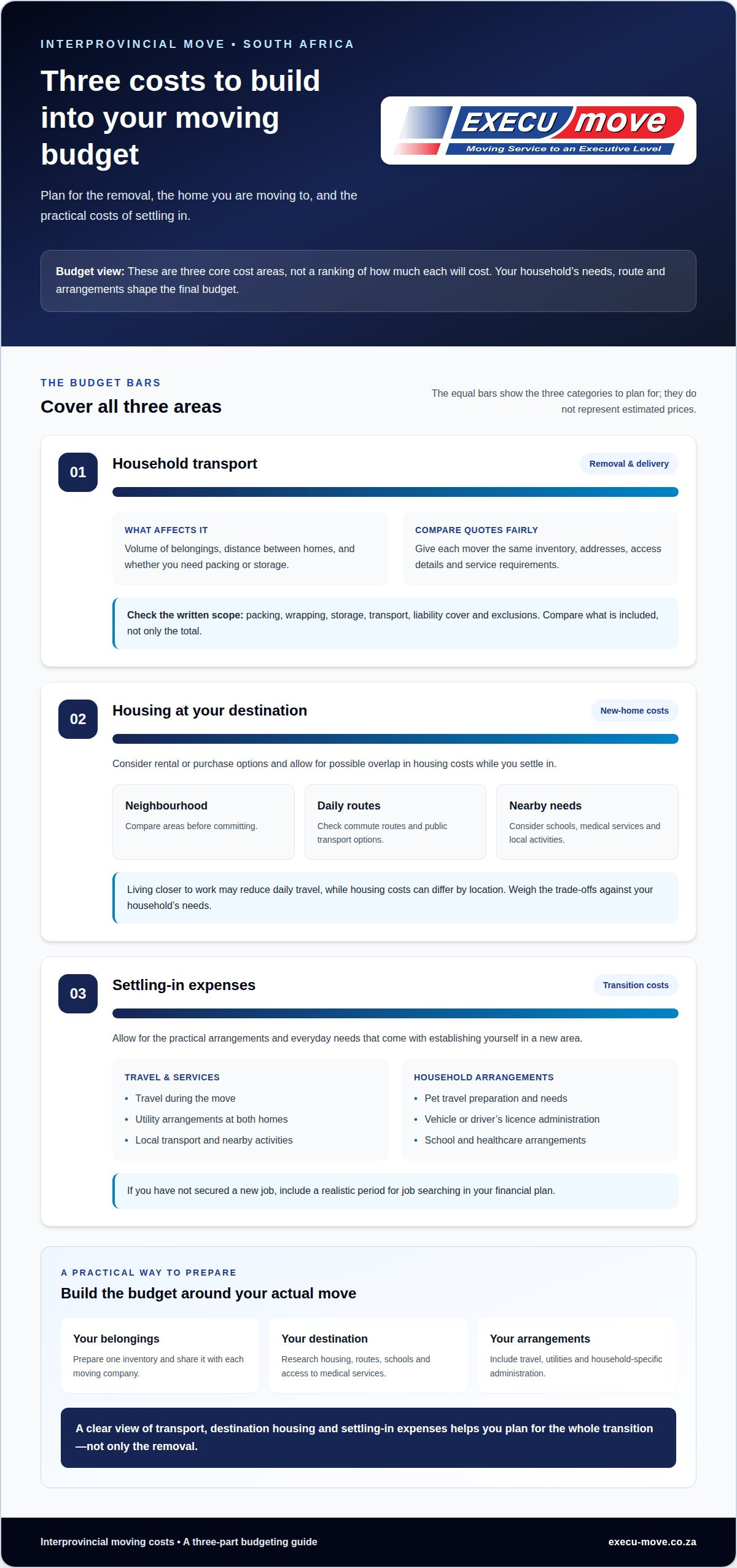
The main costs of an interprovincial move are transporting your household, arranging accommodation at your destination, and covering practical expenses during the transition. Coordinating a move between two provinces in South Africa is easier when you budget for all three, rather than focusing only on the removal.
Your moving costs depend on factors such as the volume of belongings, the distance between homes, and whether you need packing or storage. Housing costs may overlap while you settle in, so allow for travel, utility arrangements, and other move-related expenses too.
This guide explains how to plan for these costs, what to check at both homes, and which people and organisations to notify. A clear timeline helps keep the details in order and makes it easier to focus on a smooth move.
Key Takeaways
- Build your relocation budget around transport, housing and the costs of settling into a new area.
- Use a final checklist to organise important documents, belongings and checks at your new home.
- Plan address updates and mail redirection so important correspondence can reach you after the move.
- Map out who needs to be notified, and see how professional removal, packing and storage support can simplify the transition.
1. What are the Top 3 Costs to Consider When Moving Provinces?
Budget for three main areas: household transport, housing at your destination, and settling-in expenses. When coordinating a move between two provinces, weigh these costs against your household’s needs rather than treating each as an isolated figure.
Research the destination before committing to a neighbourhood. Compare rental or purchase options, commute routes, nearby schools, and access to medical services. For example, living close to work may reduce daily travel but come with different housing costs.
Local transport, recreation, and employment also affect your budget. Check routes to work, public transport options, and nearby activities such as parks or sports facilities. If you haven’t secured a new job, allow a realistic period for job searching in your financial plan, and consult resources like the Job Hunt Mode Blog for application advice and employer hiring insights.
Pet requirements depend on the animal and transport arrangements. Before moving, ask your veterinarian about suitable travel preparation, and keep your pet’s health records accessible. Plan for food, water, and safe travel on moving day.
For vehicle registration and driver’s licence requirements, contact the relevant licensing authority in your new province. Ask which documents and steps apply to your situation, and include related administration and travel costs in your budget.
Arrange a long-distance move once your dates, destination, and inventory are clear. Timing depends on the route and arrangements. Protect your belongings and payment by checking the mover’s business details and getting the agreed services in writing.
If you have children, contact prospective schools about enrolment, records, and term dates. Ask your medical aid scheme how the move may affect your cover, providers, and access to care in the new area.
2. Final checks of documents, belongings and the new home
Keep essential paperwork together in a clearly labelled folder, separate from packed cartons. Include identity documents, lease or sale paperwork, school records, medical aid details, and the moving inventory. Carry the folder with you rather than loading it onto the removal vehicle.
Before packing, photograph valuable or fragile items and record any existing marks or damage. Label boxes by room and contents, such as “kitchen, glassware”. Keep keys, chargers, medication, and children’s essentials accessible for travel and the first night. A written inventory helps you track belongings during loading and delivery.
A practical moving checklist should cover documents, keys, labelled belongings, utility arrangements, and access at both homes. Finish with a walkthrough of cupboards, garages, and outdoor areas to catch anything left behind.
Protect belongings with suitable wrapping and sturdy cartons. Cushion fragile items and mark their boxes clearly. Read the liability cover or insurance terms carefully, including exclusions, required documentation, and how to report damage. Keep photographs, inventory records, and relevant correspondence together.
Keep the handover and transport schedule aligned with a clear moving plan. Before leaving, take meter readings where relevant, secure windows and doors, and return keys as agreed. At the new home, test essential services and keep access details close at hand.
3. Address changes and mail redirection
Make a master list of organisations that hold your residential or postal address. Include your bank, employer, insurer, medical aid scheme, municipality, and service providers. Update each record with your new address and expected move date. Keep identity documents and proof of your new address accessible, as organisations may request them.
For important post, contact the South African Post Office to ask about mail redirection for your circumstances. Provide the correct old and new addresses, and establish how correspondence will reach you during the transition. Redirection may help with letters already in circulation, but it doesn’t update your address with individual organisations. Notify those senders directly rather than relying on forwarding alone.
Use a written tracker to give each update a clear status:
- Record the organisation and the department or contact person.
- Note the date you submitted the change and any reference received.
- Keep a copy of confirmation emails or messages.
- Check that later statements or notices show the new address.
Also update delivery details for online retailers, subscriptions, and regular services. Change the delivery address on a retailer account before placing another order, for example. Tell your employer where to send documents, and advise your municipality when arranging final accounts or services at either property.
For vehicle or driver’s licence records, contact the relevant licensing authority about address updates and required documents. Keep your vehicle paperwork with your moving documents. A checklist of institutions, submission dates, and confirmations helps you track each change and avoid missing a bank statement or important notice.
4. Contacts to notify when relocating
Start with people and organisations whose services affect moving day or your first week. Tell your employer your new address and confirm where to send payroll or employment documents. Notify your landlord, property agent, or conveyancer about access, keys, and final handover arrangements. Share your new address with close family so they can reach you during the transition.
Contact your children’s current and prospective schools about transfer records, enrolment, term dates, and transport arrangements. Tell your medical aid scheme and regular healthcare providers, such as your GP or dentist, that you’re moving provinces. Ask how to find providers near your new home and arrange any records or repeat prescriptions you need.
Use a contact tracker to record who you notified, when, and what action remains. Include:
- Your bank, insurers, and investment or pension providers.
- Your municipality and electricity, water, internet, and security providers.
- Your employer, schools, medical aid scheme, and healthcare providers.
- Subscription services, online retailers, and regular delivery services.
Contact your vehicle insurer before the move to update your garaging address and discuss any policy changes. Tell your veterinarian if your pet is travelling, and arrange records or travel advice before departure. If you’re relocating a vehicle, coordinate its transport dates with your own travel plans.
Use an official account or a known contact channel for each update. Keep confirmation emails or reference numbers with your moving documents. This gives you a clear record if a bill, school notice, or insurance communication still goes to your previous address.
Keep your move schedule and household arrangements aligned with professional relocation support.
How Execu-Move Can Help With Your Move
Execu-Move helps organise the practical parts of an interprovincial move. Share your origin and destination, preferred dates, household contents, and access details. This information helps define the removal requirements and determine whether packing or storage should be included.
For household moves within South Africa, domestic furniture removals can support the transport of furniture and household belongings between provinces. A clear inventory helps describe what needs moving, from beds and dining tables to boxed personal items. Note large or delicate pieces, such as a piano or glass cabinet, when discussing the move.
If packing every room feels difficult alongside work or family commitments, Execu-Move’s full packing and wrapping service can prepare your belongings for transport. Your instructions guide how rooms and priority items are handled. Let the team know which essentials you’ll need immediately after arrival so they can be considered during planning.
Move dates and property access don’t always align. Execu-Move’s secure storage solutions can bridge the gap between leaving one home and being ready to receive your belongings at the next. Discuss the timing and which items need storage, such as furniture that won’t yet fit in your new home.
To prepare for a quote, gather your addresses, move dates, inventory, access information, and any packing or storage requirements. These details give the moving team a practical basis for understanding the work involved. Execu-Move can discuss the arrangements for your household move and help you plan around your priorities.
Contact Execu-Move to discuss your move and request a quote.
Plan your next move with a clear starting point
Coordinating a move between two provinces is also a chance to shape how you want your next chapter to begin. Set your preferred move date, identify timing constraints, and decide which parts of the move you’d like handled professionally. A clear starting point makes it easier to plan the practical arrangements for your household.
Execu-Move provides domestic and international furniture removals, along with full packing and wrapping. Whether you’re moving within South Africa or planning an international relocation, the support can be tailored to your belongings, schedule, and needs. You don’t need every detail settled before starting a conversation. Discuss your move with Execu-Move to clarify the next steps.
Take the next step at a time that suits you. Contact Execu-Move about your move to discuss your relocation and request a quote. With a considered plan in place, you can look ahead to settling into your new home with greater confidence.
Frequently Asked Questions
What are the Top 3 Costs to Consider When Moving Provinces?
The three broad budget areas are the household move, housing, and settling-in expenses. Separate one-off payments from ongoing costs to make your budget more useful. For example, record a deposit or connection charge separately from monthly rent or service bills. This shows which costs fall before moving day and which continue after you arrive.
Where Should I Update My Address After Moving to a New Province?
Update every account that uses your home address for statements, notices, or service records. If an account is in another family member’s name, that person may need to submit the change. Use the same address format each time, including unit or complex details where relevant, to help prevent duplicate or mismatched records.
Who Should I Inform After Moving to a New City or Province?
As well as notifying formal organisations, tell anyone who may need to reach you or help with access during the transition. For example, ask a trusted person to collect a misdelivered letter or pass on a message if you’re travelling. If you live in a managed complex, advise the relevant building contact about your departure and arrival arrangements.
How much does it cost to move household goods between provinces in South Africa?
There is no single standard price for every interprovincial household move. Costs depend on the shipment and services required, so a tailored quote is the practical way to establish your price in South African rand. Provide accurate move details and review the quote’s scope before making arrangements.