
Communicating an office move to employees works best after the decision is confirmed but before major planning is finalised. Explain why the move is happening, where the new office will be, the broad timeline and what is known about its effect on teams. Then provide regular updates as details take shape.
A move can bring welcome changes, but it may also raise practical concerns about commuting, work arrangements and the new office. Clear, honest communication helps employees understand what to expect and gives them a chance to ask questions before the transition begins.
This guide explains what to include in the announcement, how to keep updates useful and how to respond to staff concerns. It also covers practical ways to support employees before, during and after moving day, so the transition feels considered rather than abrupt.
Key Takeaways
- Build a phased communication plan, from the first announcement through progress updates and final moving-day logistics.
- Use a mix of channels, such as team meetings and internal updates, so information reaches employees in different roles.
- Create a clear way for staff to raise concerns and find answers about commuting, workspace and work arrangements.
- Plan practical support for the transition, then gather feedback after the move to identify what needs attention.
1. Announcement messaging and key details
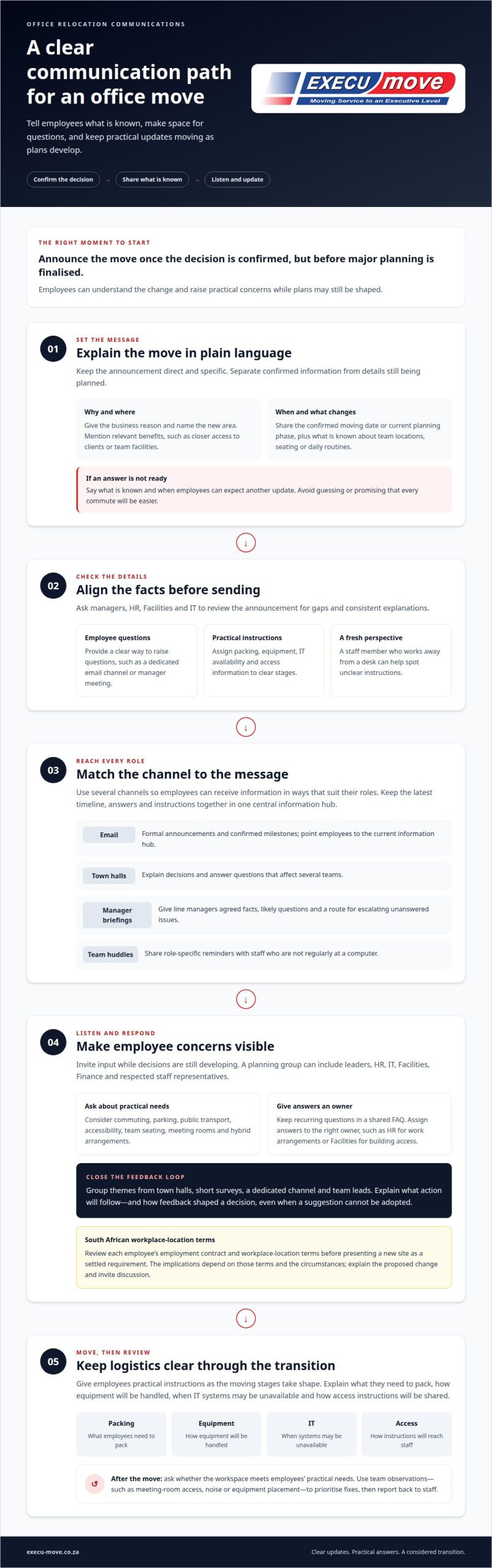
An office relocation announcement should explain why the move is happening, where the new office will be and what will change for employees. Include the expected timeline, key phases and likely effects on each team. Give employees a clear way to raise questions, such as a dedicated email channel or manager meeting.
Share the announcement once the decision is confirmed, but before major planning is finalised. This gives staff time to understand the change and offer practical feedback while plans can still be shaped. Employees might, for example, flag a transport concern or a team requirement that planners had not considered.
Keep the message direct and specific. Include details such as:
- Reason: Explain the business reason for moving, using plain language rather than corporate slogans.
- Location: Name the new area and describe relevant benefits, such as closer access to clients or team facilities.
- Timeline: Share the confirmed moving date or current planning phase, then identify when further updates will follow.
- Team impact: State what’s known about work locations, seating plans, or changes to daily routines.
For packing, IT, access and moving dates, assign each detail to a clear stage. Explain what employees need to pack, how equipment will be handled, when IT systems may be unavailable and how staff will receive access instructions. If a detail is still being planned, say what is known and when to expect an update.
Honest wording builds credibility. Avoid promising that every commute will be easier or that disruption can be avoided. Instead, explain what has been assessed and identify practical support being considered, such as travel guidance or flexible arrangements.
Before sending the announcement, ask managers, HR, Facilities and IT to review it for gaps. A staff member who works away from a desk can also spot unclear instructions. This review helps ensure employees hear a consistent explanation, rather than conflicting answers from different teams.
2. How Do You Communicate with Employees About an Office Move?
Use several channels so employees can receive updates in ways that suit their roles. Email works for formal announcements, while team huddles and town halls give staff time to ask questions. Keep the latest timeline, answers and practical instructions together on a central intranet page or shared document.
Involve employees before every decision is final. A planning group can include leaders, HR, IT, Facilities, Finance and respected staff representatives. Invite employees to comment on issues such as meeting-room needs, team seating or access arrangements. Their input can reveal practical concerns that planners might otherwise miss.
Choose each channel for a clear purpose:
- Email: Send confirmed milestones and direct employees to the current information hub.
- Town halls: Explain decisions and answer questions that affect several teams.
- Manager briefings: Give line managers consistent information for team discussions.
- Team huddles: Share role-specific reminders with staff who aren’t regularly at a computer.
Brief managers before asking them to update their teams. Provide agreed facts, likely questions and a route for escalating unanswered issues. If a seating plan is still being developed, explain when the next decision will be made rather than guessing. Keep updates regular and useful, rather than sending a message whenever a minor detail changes.
Assess engagement by reviewing feedback, not just message delivery. Note recurring questions from town halls, short surveys, a dedicated channel and team leads. Group themes, such as commuting or hybrid work, and explain what action will follow. Tell employees how their feedback shaped a decision, even when their suggestion cannot be adopted.
Coordinated planning helps align staff communications with the practical stages of an office move. Discuss office relocation planning as the timeline and employee needs take shape.
3. Employee concerns relocation
An office move can affect daily routines as well as work. Employees may worry about longer commutes, parking, public transport, accessibility, team seating or changes to hybrid arrangements. Record these concerns in a shared FAQ and assign each answer to an owner, such as HR for work arrangements or Facilities for building access.
Use practical examples to anticipate questions. Explain how employees will learn their desk locations, where visitors should enter and what facilities are available. If commuting routes may change, share the location and travel-planning information employees need to assess their journeys. Do not assume the new site suits everyone equally.
In South Africa, review each employee’s employment contract and workplace-location terms before presenting a new site as a settled requirement. The implications depend on those terms and the circumstances. Explain the proposed change and invite discussion instead of assuming every employee’s position is the same.
Without proper consultation, concerns about travel, access, seating or working arrangements may remain unresolved. Uncertainty can undermine trust, encourage resistance and leave practical issues undiscovered until plans are harder to adjust.
Make it easy to ask questions through a manager, private meeting or dedicated feedback channel. Record recurring themes without identifying employees unnecessarily, and respond with an action or clear explanation. For example, if several staff members ask about secure bicycle storage, Facilities can confirm the plan or say when an answer will be available.
Keep answers consistent across the FAQ and team briefings. Managers need the same current information, and employees should know where updates will appear. If an answer changes, update the shared resource and tell affected teams directly. This helps prevent outdated information from circulating.
After the move, ask employees whether the new workspace meets their practical needs. Team leads can raise issues such as meeting-room access, noise or equipment placement. Use their observations to prioritise fixes and report back to staff.
4. Employee support during the move
Support should cover the work itself, not just announcements. Before moving day, explain which equipment and files employees should pack, what stays at their desks and how labelled items will reach the right team. Clear responsibilities reduce confusion and help staff prepare without guessing.
Plan work continuity with IT and team leaders. Tell employees how equipment will be disconnected, moved and reconnected, and what to do if they need access during the transition. Managers can, for example, plan temporary work priorities around system downtime and identify urgent tasks before packing begins.
- Travel: Share the new address and practical travel-planning information for employees assessing changed commutes.
- Work arrangements: Explain any flexible arrangements available during packing, moving and initial setup.
- Orientation: Use a floor plan, photographs or a virtual tour to show entrances, team areas and shared facilities.
- Help: Give staff a clear contact for questions about their belongings, equipment or first day at the new site.
A dedicated move support team can coordinate questions across HR, IT and Facilities. This gives employees a clear route to help and allows managers to focus on team needs. If staff are packing their own files or equipment, provide simple instructions and enough time to complete the task.
After the move, line managers should check in with teams and record issues such as missing equipment, room access or workspace layout. A short employee survey can reveal patterns that individual conversations may miss. Share the actions being taken, then arrange a modest welcome event when the new office is ready for staff.
Use feedback to improve support, not simply to close the project. Repeated questions about meeting rooms, for example, may point to unclear signage or booking instructions. Thoughtful follow-up helps employees settle in and gives the organisation practical lessons for future relocations.
Execu-Move: Office and Corporate Relocations
Execu-Move coordinates office and corporate relocations for businesses planning local or international moves. Bring in the team when you need practical support aligning the physical move with your employee communication plan, from packing arrangements to moving-day coordination.
Services include domestic and international furniture removals, as well as full packing and wrapping. These services can help organise office furniture and belongings as part of a planned relocation, while your internal teams manage staff updates, IT arrangements and workplace access.
Share your move requirements and key dates to discuss the support your relocation needs. Contact Execu-Move to talk through your office move.
Set Your Team Up for a Strong Start
Moving day is a milestone, not the finish line. Treat the first weeks in the new office as a chance to understand how the space works for your teams. Regular manager check-ins and a shared channel for practical feedback can bring small issues to light early.
Separate immediate operational fixes, such as access or equipment, from longer-term feedback about collaboration, meeting spaces or team routines. Assign each concern to an owner and tell employees what action will follow. Visible follow-through helps staff see that their experience matters beyond moving day.
This ongoing approach makes communicating an office move to employees part of a considered transition, rather than a one-off announcement. It also gives the organisation a stronger foundation for settling into the new workplace.
If you’re planning an office relocation, contact Execu-Move for moving support to discuss your requirements and next steps. With thoughtful planning and clear follow-through, your team can begin the next chapter with confidence.
Frequently Asked Questions
How Do You Communicate with Employees About an Office Move?
Make information relevant to each employee’s day-to-day responsibilities. Reception staff, for example, may need guidance on directing visitors, while client-facing teams need to know how appointments will work during the transition. A role-based summary can clarify these impacts better than one general message. Keep the language practical and explain unfamiliar terms such as “decant”, the staged movement of people or equipment.
What’s the message?
State the decision plainly and explain what employees need to know about its effect on their work. For example: “The office relocation has been approved. Your team will receive guidance on how client appointments will operate during the transition.” Distinguish settled decisions from topics still being developed, so employees do not mistake a proposal for a final arrangement.
When should employees be told about an office move?
Tell employees before they need to act because of the relocation. If staff must update client directions or change where they collect equipment, for instance, communicate before those tasks are due. This helps avoid last-minute instructions and ensures affected teams receive relevant information without sending operational details to everyone too early.
How to communicate an office move to employees effectively?
Make every message easy to understand on a phone or printed page. Put the key action first, define workplace terms and distinguish tasks employees must complete from information they only need to know. Label a section “Action required” when staff need to do something. Ask someone outside the planning group to identify instructions they could interpret in more than one way.
How to create an office relocation communication timeline?
Add a clear version date to the timeline and show how changes will be identified. A simple change log can state what was updated, who is affected and where to find the current version. Link each employee action to its operational dependencies, such as equipment being ready before staff set up their desks. This makes revised plans easier to follow and helps prevent outdated copies from circulating.
How to address employee concerns about commute, parking, and transport after an office move?
Separate general travel information from personal circumstances. Explain site access details, then let employees raise individual constraints privately, such as a shift start that limits transport choices. Share common themes without identifying individuals. If an arrangement changes, explain who is affected and when the updated information applies instead of assuming one solution suits every commuter.