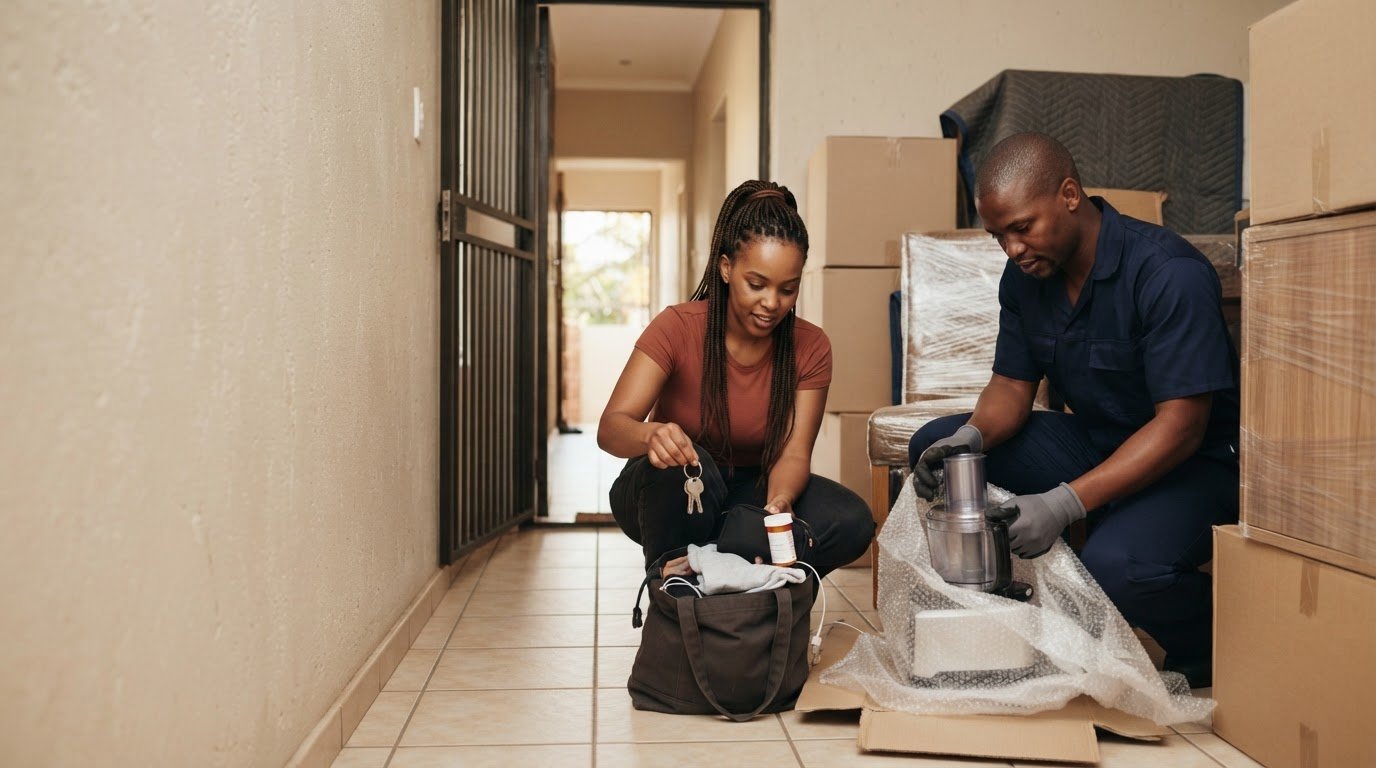
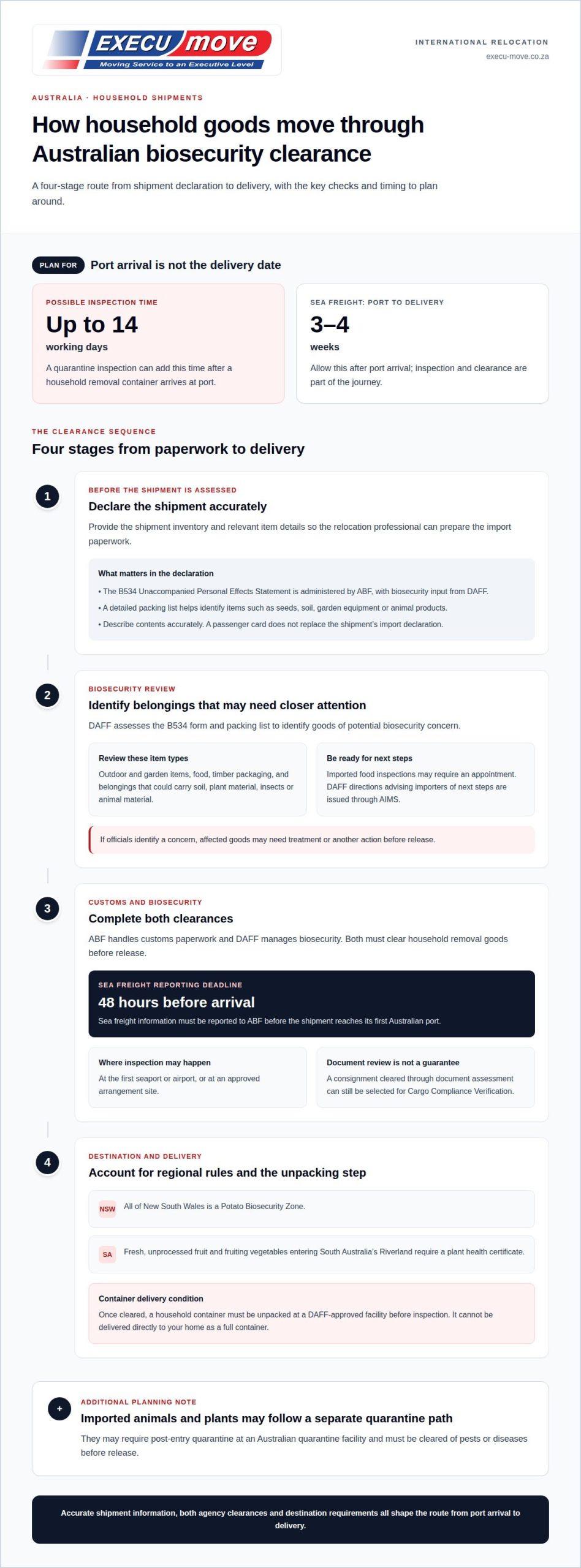
A quarantine inspection for moves to Australia can add up to 14 working days after a household removal container arrives at port. For sea freight, allow 3-4 weeks from port arrival to delivery, as inspection and clearance are part of the journey before your belongings reach your home.
It’s natural to want a clear arrival date when planning an international move. Australian biosecurity clearance involves more than checking a container: officials assess documents, may inspect goods, and can require further action before releasing items that raise biosecurity concerns.
This guide explains how household shipments pass through Department of Agriculture, Fisheries and Forestry (DAFF) and Australian Border Force (ABF) clearance, what can affect inspection time, and how to prepare. It also covers when imported animals or plants may require post-entry quarantine, so you can plan for what happens after arrival.
Key Takeaways
- Plan for both biosecurity and customs clearance: household goods are released only after DAFF and the Australian Border Force have cleared them.
- Accurate shipment documents help officials identify items that may need closer inspection, treatment or other action.
- Declare items that could carry soil, plant material, pests or animal products, as biosecurity concerns can affect a shipment’s release.
- Imported animals and plants may need post-entry quarantine and must be cleared of pests or diseases before release.
Why Biosecurity Inspection Matters When Moving to Australia
Australia’s biosecurity checks help manage the risk that imported goods could introduce pests, diseases or other materials that may affect plants, animals and agriculture. Household belongings are included, even if they have been used for years and are shipped as personal effects rather than for sale. Every consignment of unaccompanied personal effects entering Australia is subject to biosecurity control.
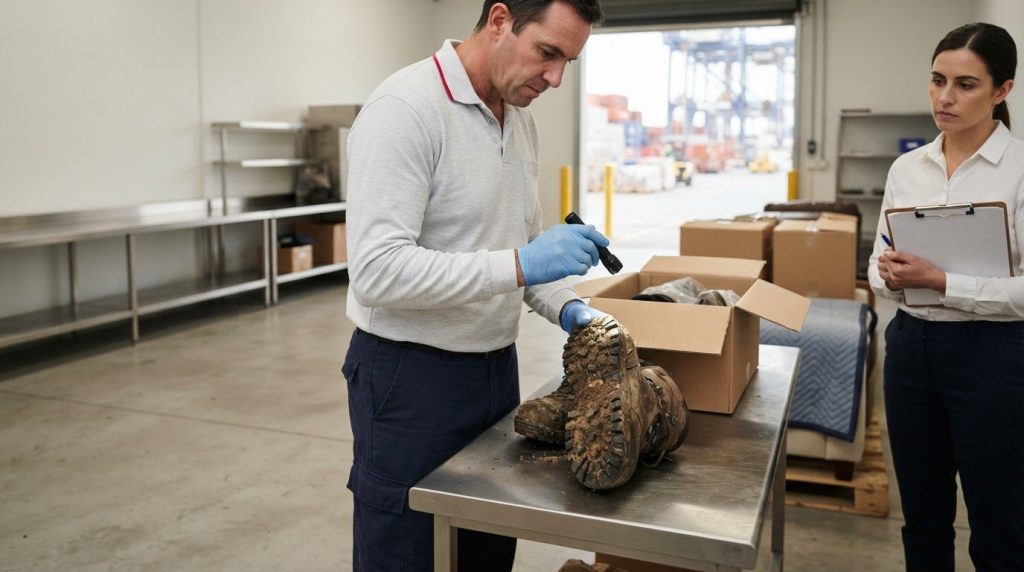
For people planning a quarantine inspection for moves to Australia, the practical takeaway is that ordinary belongings may need attention if they carry traces of soil, plant matter or insects. Outdoor furniture, gardening equipment, footwear and sporting gear can attract scrutiny if dirty or used outdoors. Even familiar items that seem harmless at home may harbour pests or disease-causing material.
Food and packing materials also matter. Fresh fruit and vegetables are prohibited from being imported into Australia as personal effects for international shipping. Pallets and crates used to ship household goods are subject to timber-packaging rules known as ISPM 15. These requirements help ensure the shipment and its packaging do not create a biosecurity risk.
A quarantine inspection for moves to Australia is not just a formality before delivery. Imported goods must meet all import conditions before officials release them from biosecurity control. If they identify a concern, affected goods may require treatment or another action, delaying access to your belongings and changing delivery arrangements.
Clear shipment information helps officials identify goods that need closer attention. A detailed packing list and complete declaration show what is travelling, while precise descriptions reduce uncertainty about a box or crate. Declare items honestly rather than assuming used or familiar belongings are exempt from inspection.
Taking biosecurity seriously helps protect Australia’s natural and agricultural environment and supports an orderly clearance process. Careful preparation also helps coordinate the handover from the port to delivery, so you can plan your arrival with realistic expectations.
Australia’s Biosecurity Clearance Process for Household Shipments
For a household shipment from South Africa, Australian Border Force (ABF) handles customs paperwork, while the Department of Agriculture, Fisheries and Forestry (DAFF) manages biosecurity. Your relocation professional coordinates documents, inspection arrangements and the delivery sequence.
-
How a relocation professional helps declare potential biosecurity risks
Provide the shipment inventory and relevant item details so the relocation professional can prepare the import paperwork. The B534 Unaccompanied Personal Effects Statement is administered by ABF, with biosecurity input from DAFF. The professional uses the packing list to identify items such as seeds, soil, garden equipment or animal products that may need to be declared. Describe contents accurately; a passenger card should not replace the shipment’s import declaration.
-
Identify Belongings Subject to Inspection
Review the inventory with the relocation professional, paying particular attention to outdoor and garden items, food, timber packaging and belongings that could carry soil, plant material, insects or animal material. DAFF assesses the B534 form and packing list to identify goods of potential biosecurity concern. Imported food inspections may also require an appointment. DAFF directions advising importers of next steps are issued through AIMS.
- Follow the clearance sequence. ABF and DAFF must both clear household removal goods before release. Sea freight information must be reported to ABF 48 hours before the shipment reaches its first Australian port. Biosecurity inspection may take place at the first seaport or airport, or at an approved arrangement site. A consignment cleared through document assessment can still be selected for Cargo Compliance Verification.
- Plan for destination rules and delivery. State controls can affect goods in transit: all of New South Wales is a Potato Biosecurity Zone, while fresh, unprocessed fruit and fruiting vegetables entering South Australia’s Riverland require a plant health certificate. Once cleared, a household container must be unpacked at a DAFF-approved facility before inspection. It cannot be delivered directly to your home as a full container.
How to Prepare for Quarantine Inspection and Manage Delays
A quarantine inspection for moves to Australia can take longer if officials identify goods that need closer assessment. Execu-Move helps coordinate shipment information and cleaning before packing, keeping preparation and inspection arrangements aligned.
-
How a relocation professional checks restrictions on seeds and plant products
Provide a detailed inventory of seeds, plants, wooden items and dried plant products. Your relocation professional can use these descriptions to identify relevant import conditions and treatment requirements listed in BICON. Don’t assume sealed packets or dried materials are automatically permitted. Restrictions depend on the product and its origin, so precise descriptions are more useful than broad labels such as “plant goods”.
-
How a relocation professional coordinates post-entry quarantine and regional inspections
Identify imported animals or plants early in the planning process, as they may require post-entry quarantine at an Australian quarantine facility. They must be cleared of pests or diseases before release. In Tasmania, plant and animal examinations take place at all entry points, including ferry terminals and airports. Destination details help your relocation professional account for regional inspection arrangements alongside the main import clearance.
- Allow time for inspection and possible treatment. DAFF inspection can add up to 14 working days after a household removal container arrives at port. Some goods require treatment before import, while others may require treatment on arrival. If goods don’t meet import conditions, they must be treated if possible, exported or destroyed at the importer’s expense. Inspection fees are usually charged, with costs depending on the action required.
- Prepare outdoor items before packing. Ask your relocation professional to record used outdoor equipment, wooden furniture and garden tools, then coordinate cleaning before shipment. Removing visible soil and plant material helps prepare these items for inspection. Fees may cover inspector attendance, administration, warehousing, and unpacking and repacking; inspection charges are usually calculated in half-hour units.
Execu-Move
Execu-Move helps South African households plan the moving arrangements for a shipment to Australia, from packing belongings to coordinating delivery logistics. Australian authorities make biosecurity decisions, but an organised move helps keep shipment information, packing and timing aligned.
For a move overseas, International Furniture Removals provide the framework for transporting household belongings from South Africa to Australia. Clear planning matters when officials may assess a packing list and direct goods for inspection. The shipment must still meet Australia’s import conditions before release.
Full Packing and Wrapping helps organise household goods for transport. A considered packing process makes it easier to distinguish everyday belongings from outdoor or garden items that may need particular attention. It also supports careful handling of furniture and personal effects during the international journey. Specific declarations and biosecurity requirements still apply to the goods being shipped.
Your moving arrangements can be shaped around the household’s wider plans:
- International Furniture Removals support the overseas movement of household belongings.
- Full Packing and Wrapping helps prepare furniture and effects for transport.
- Secure Storage Solutions can provide a place for belongings if shipment and arrival plans do not align.
- Domestic Furniture Removals can support a South African move before or after an international relocation.
Storage may be useful if inspection or clearance affects when belongings can be delivered, or if your accommodation is not ready when you arrive. It gives you another option to consider while keeping shipment planning distinct from Australian authorities’ inspection and release decisions.
Share your intended destination, household requirements and moving schedule with Execu-Move when planning your relocation. This helps shape removal and packing arrangements around your circumstances, while keeping the inspection process and the role of Australian authorities clear. A well-planned move can make logistics easier to manage, even though biosecurity clearance remains a separate step.
For support with your move from South Africa to Australia, contact Execu-Move.
Frequently Asked Questions
What Documents Do I Need?
For a move to Western Australia, complete the Declaration for movement of personal goods into WA with the removals company. It covers destination-specific quarantine details and is separate from general Australian import paperwork. Describe declared items clearly, especially plants, seeds, soil, food, animal products and outdoor equipment, so the receiving state can assess materials that may need attention.
What Items Are Prohibited?
Western Australia has specific prohibitions that can affect household goods and food. Honey cannot enter unless certified on a Health Certificate. Bees, hive products and used equipment are prohibited except by permit, and raw walnuts in their shells aren’t permitted. These examples apply to Western Australia, so check the destination state’s rules when deciding whether an item can travel with your belongings.
Which Items Are Restricted?
Some items are subject to conditions rather than a blanket prohibition. In Western Australia, commercially packaged edible seeds may be brought in up to 5kg, subject to the listed entry conditions. Processed wood and timber products without bark are permitted. These examples show why the product’s form and packaging matter: a processed timber item may be treated differently from material that could carry pests.
What quarantine and biosecurity inspections are required when moving household goods to Australia?
Inspection arrangements can depend on the shipment’s origin and type. Containers arriving from a Country Action List location are inspected on the wharf, as is break bulk cargo. These checks differ from an assessment based on documents alone, so a shipment’s route can affect where inspection takes place before the goods continue to delivery.
What items are prohibited or restricted when importing personal effects into Australia?
Destination-specific controls can apply within Australia. For example, uncertified citrus and stone fruit are prohibited from entering Western Australia’s Ord River Irrigation Area from 1 April to 30 November each year. This is a regional restriction, not a general rule for every Australian destination. Consider the final delivery location as well as the country of import when reviewing plant products.
What documents are required for an Australian household goods quarantine inspection?
For a destination in Western Australia, forward the completed quarantine declaration to the Department of Primary Industries and Regional Development. Other supporting paperwork depends on the goods and the import conditions listed in BICON. Keep any state-specific declaration separate from general shipment documents: it supports the destination’s quarantine assessment but does not replace the paperwork for Australian import clearance.