For a long-distance move in South Africa, start planning 10 to 12 weeks ahead, particularly if you’re moving during peak summer months. A little lead time gives you room to organise the move, prepare your belongings and make a practical plan to finish moving without leaving everything to the final days.
It’s understandable if dates, packing and travel arrangements already feel like a lot to manage. A clear sequence can make the process calmer: start with the big decisions, keep everyday essentials close on moving day, then unpack in an order that helps you settle in safely.
This checklist explains what to tackle first, what to pack in an essentials bag, and how to approach the first checks and unpacking at your new home. You’ll also find guidance for a shorter planning window, so you can focus on the tasks that matter most when time is limited.
Key Takeaways
- Pack medication, toiletries, a change of clothes, important documents, chargers, keys and wallet separately so they stay accessible on moving day.
- Prepare appliances and travel arrangements before departure, and keep final-week tasks focused on essentials, packing and confirmations.
- At your new home, make safety checks before unpacking room by room, starting with the items you need for the first night.
- Use a clear South African moving-day sequence for access, keys, the final walkthrough and settling in, adapting it to your building and move dates.
First-night and moving-day essentials
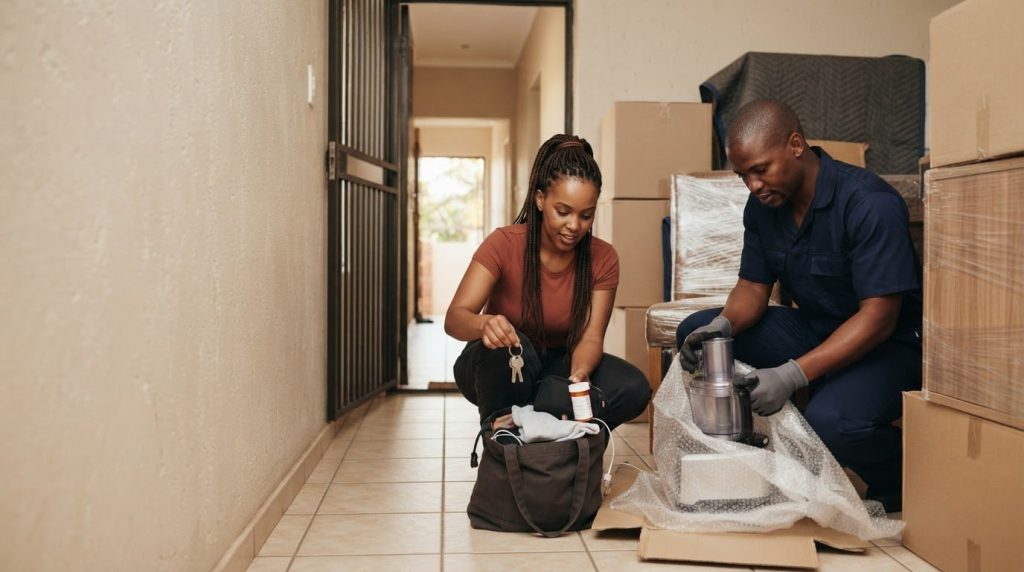
Pack a separate essentials bag the day before moving. Include medication, toiletries, clothes, documents, chargers, keys, a wallet and basic necessities. Keep it with you, not in a carton loaded onto the moving vehicle. That way, you can reach important items while boxes are being unloaded.
Prepare a labelled box or bag for the first evening. Add bedding, towels, drinking water, simple snacks, a phone charger and items needed for children or pets. Keep each person’s medication and essential documents together. A change of clothes and basic toiletries make the first night easier if unpacking takes longer than expected.
- Set aside keys and access details. Keep house keys, gate remotes and building access information together for arrival.
- Pack cleaning basics separately. Keep cloths, bin bags and a small amount of surface cleaner accessible for quick tasks.
- Protect important paperwork. Carry identity documents, moving records and property paperwork in a secure folder.
- Keep chargers and a torch handy. These help you use your phone and inspect rooms if lighting is limited.
- Photograph meter readings where relevant. A dated record can help you organise household account changes after arrival.
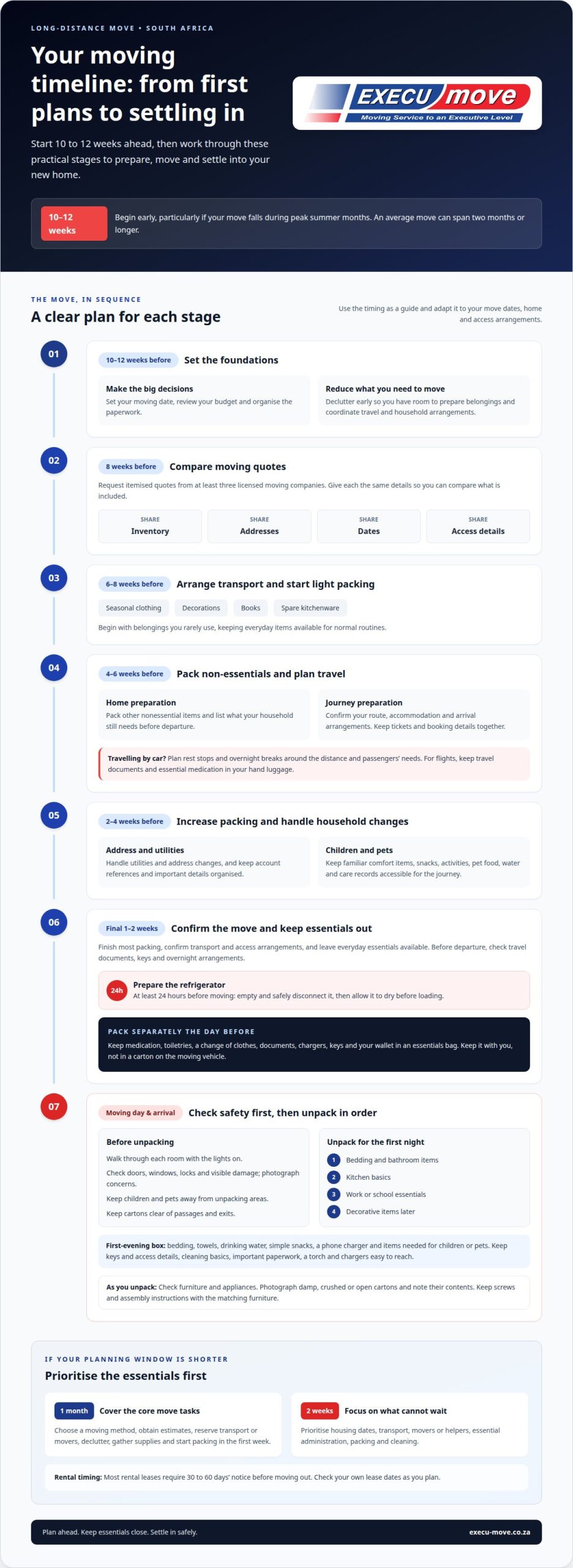
To compare moving companies, request itemised quotes from at least three licensed moving companies eight weeks before moving. Give each the same inventory, addresses, dates and access details, then compare what each quote includes.
After moving in South Africa, update your residential and contact details directly with each organisation you use. Start with your bank, employer, insurer and municipal account, then update subscriptions and delivery profiles.
Update documents and services linked to your old address, including insurance policies, account profiles, employment records and medical aid details. Keep a simple list and mark each change when completed, so essential correspondence reaches your new home.
How Far in Advance Should You Plan a Long-Distance Move?
Start planning a long-distance move 10 to 12 weeks ahead, especially during peak summer months. Use the first stage to set your moving date, review your budget, declutter, and organise paperwork. An average move can span two months or longer, so early decisions leave room to coordinate travel and household arrangements.
At 6-8 weeks, arrange transport and begin packing belongings you rarely use. Seasonal clothing, decorations, books and spare kitchenware can be boxed without disrupting daily routines. Around 4-6 weeks before moving, pack other nonessential items and list anything the household still needs before departure.
Plan travel alongside the home move. Confirm the route, accommodation and arrival arrangements, then keep tickets and booking details together. For a long drive, plan rest stops and overnight breaks around the distance and passengers’ needs. For flights, keep travel documents and essential medication in your hand luggage.
- Defrost the refrigerator at least 24 hours before moving. Empty it, disconnect it safely and allow time for it to dry before loading.
- Prepare children for the journey. Explain the travel plan, keep familiar comfort items accessible, and pack snacks, activities and a change of clothes.
- Plan pet travel in advance. Keep familiar food, a lead or carrier, water and care records accessible during the journey.
- Use the final 1-2 weeks for confirmations. Finish most packing, confirm transport and access arrangements, and leave everyday essentials available.
If children or pets are travelling with you, assign one adult to travel needs and another to arrival details. This divides tasks such as supervising a child, managing a pet’s routine and meeting the moving team. Before departure, check that travel documents, keys and overnight arrangements are ready.
A One-month plan can still cover choosing a moving method, obtaining estimates, reserving transportation or movers, decluttering, gathering supplies, and starting to pack in the first week. For a Two-week move, prioritize housing dates, transportation, movers or helpers, essential administrative tasks, packing, and cleaning. Two months before moving is suitable for decluttering, gathering supplies, researching movers, and organizing paperwork, rather than packing everyday belongings. Most rental leases require 30 to 60 days’ notice before moving out.
Handle utilities and address changes and increase packing 2-4 weeks before moving. Finish almost all packing a week before moving, and consider whether you could live out of a suitcase for a week.
Unpacking and safety checks at the new home
Before opening cartons, walk through each room with the lights on. Check doors, windows, locks and visible damage, then photograph any concerns. Keep children and pets away from unpacking areas and stacked boxes. Place cartons against clear walls, not in passages or beside exits. This first check helps you spot problems before furniture blocks access.
Unpack in a practical order: bedding and bathroom items, then kitchen basics, followed by work or school essentials. Assemble beds before unpacking decorative items. Check furniture and appliances as you unpack them. If a carton is damp, crushed or open, photograph it and note its contents before handling the items further. Keep screws and assembly instructions with the matching furniture.
- Check access points. Test each door and window, and keep keys in one known place.
- Inspect essential fittings. Look for visible leaks beneath sinks and damage around plugs before using appliances.
- Clear walkways. Flatten empty cartons and move packing material away from stairs and entrances.
- Set up one usable room. A made bed, charged phone and working light help organise the next tasks.
For electricity and water, identify the relevant municipality, landlord or managing agent based on your property arrangements. Arrange account changes or service activation with the responsible party, and keep account references and meter details together. For internet, contact your chosen provider with the new address. Installation timing depends on the connection available there.
Before handing over your old home, remove your belongings, clean the rooms and complete a final walk-through. Record any existing damage, return keys and remotes as agreed, and keep a copy of the handover details. Check cupboards, storage areas and outdoor spaces so nothing is left behind.
Once essential rooms are usable, unpack gradually and update remaining accounts. A room-by-room list helps you track open cartons, identify missing items and keep your new home orderly.
What are the steps to finish a move in South Africa?
Close out the move in a clear sequence: manage your arrival, record the property’s condition, complete handovers and track outstanding tasks. Before moving into a flat, get the building’s access instructions from its manager. Ask about lift and loading-area reservations, parking, permitted moving hours and required documents. These arrangements affect where the vehicle can stop and how belongings enter the building.
- Confirm access arrangements. Share entry instructions with everyone involved, and keep access devices ready for arrival.
- Inspect the new property. Record visible marks, damaged fittings or maintenance issues before furniture covers them.
- Review delivered belongings. Match items against your inventory and record missing or damaged pieces with clear descriptions.
- Keep shared spaces clear. Move cartons away from corridors, stairs and exits so residents can pass safely.
- Complete the old-property handover. Remove remaining belongings, inspect cupboards and outdoor spaces, and return keys or remotes as arranged.
- Track the remaining tasks. List account updates, unpacking priorities and follow-ups, then mark each item when complete.
Keep the handover record, relevant correspondence and photographs together. For a rental, note the condition of each room and retain a copy of the handover details. In an apartment building, record shared-area concerns separately from marks inside your unit. Clear notes make it easier to raise specific issues with the property contact.
Once the main move is complete, review your list for unresolved tasks. For example, note a delivery that still needs arranging or a household account that remains linked to your previous address. Assign a next step to each item, such as contacting the relevant organisation or setting aside time to finish unpacking. This helps keep small tasks from disappearing into daily routines.
If coordinating access, delivery and household logistics feels difficult, contact the relocation team for moving assistance.
Execu-Move
Execu-Move coordinates domestic and international furniture moves, from careful packing and wrapping to delivery at your new home. If your move-in date and delivery date don’t align, secure storage can bridge the gap while you organise the next stage.
Turn to Execu-Move when a long-distance relocation, household packing or temporary storage adds complexity to your plans. With transport, packing and storage coordinated, you can focus on settling into your new home.
For help planning your move, contact Execu-Move.
Make the New Address Feel Like Home
A move is complete in practical terms when essential arrangements are settled and daily life can take shape. Keep one running list of unresolved tasks, such as deciding where important household items belong or setting a routine for mail and deliveries. Choose manageable next steps rather than trying to organise every room at once.
The key is to plan ahead, keep important items accessible, inspect the home thoughtfully and record outstanding tasks. These habits can help you finish moving with a clearer sense of what is done and what still needs attention. As you settle in, adjust your priorities to suit your household, work commitments and how you use each room.
If professional help would make a future relocation easier to coordinate, contact Execu-Move to plan your move. Take the next step at a pace that works for you, and give your new home time to feel familiar.
Frequently Asked Questions
So how far in advance should you start planning a move?
For a long-distance move, begin planning 10 to 12 weeks ahead, especially if moving during peak summer months. Use that lead time to settle the moving date, transport arrangements and household priorities. If your timeline is shorter, first secure the move dates and transport, then organise essential paperwork and focus packing on items you can manage without daily.
What does “finish moving” mean?
It means completing the practical transition, not necessarily unpacking every carton immediately. You’ve reached this stage when essential belongings are accessible, important handovers are complete, and outstanding tasks have owners and next steps. For example, you might still have books boxed, but know where they belong and have dealt with keys, delivery records and priority household arrangements.
What should I check when unpacking and inspecting a new home?
As you unpack, compare fragile or valuable items with your inventory and note any damage or missing pieces. Keep furniture parts and assembly instructions together, and leave carton labels visible until you’ve confirmed the contents. If you find a problem, take clear photographs and record the item, carton label and room. This creates a useful record for follow-up.
What risks should I watch for when finishing a move?
Watch for trip hazards from loose wrapping, open cartons and furniture in walkways. Heavy boxes can also make lifting difficult, so avoid carrying loads that obstruct your view. Keep keys, documents and medication separate from general cartons. During handover, overlooked cupboards or storage spaces can leave belongings behind, while unclear notes can make damage or missing items harder to track.