
The right move isn’t to take everything you love or leave everything behind. When deciding what to keep when moving abroad, compare each item’s shipping cost with the cost of replacing it, then consider its sentimental value and fit with your new home and plans. Keep what earns its place through everyday use or personal meaning.
It’s natural to feel attached to familiar furniture, family heirlooms and the small things that make a place feel like home. An international move is also a chance to consider what you’ll genuinely use, what you can replace easily and what you’d regret leaving behind.
Use a practical framework to make these choices. Balance shipping and replacement costs, assess sentimental belongings, sort items into keep, store or let-go groups, and connect each decision to your relocation goals. The aim is a considered move, not a rushed clear-out or a shipment filled with things that won’t suit your next chapter.
Key Takeaways
- Use your relocation goals and expected lifestyle to decide which belongings will genuinely support your next chapter.
- Choose heirlooms for their personal meaning and practical place in your plans, while keeping essential family documents close at hand.
- Compare shipping costs with replacement costs, and consider how each choice affects your savings and settling-in budget.
- Sort belongings into items to transport, store or let go, so your shipment suits your new home rather than your old one.
Clarifying reasons and goals for relocating
Start by identifying the main reason for your move: work, study, retirement, family ties or a lifestyle change. Each can point to different priorities. Specialist equipment or a particular work setup may affect what belongs in your shipment. If you’re moving to study, course materials and a reliable laptop may matter more than decorative items.
Turn your reason for moving into practical goals before sorting your possessions. Write down what you need to do in your first months, such as start work, set up a home office, support children’s routines or explore a new career. Then connect each goal to the belongings that will help. This gives your decisions a purpose beyond keeping what feels familiar.
Consider the international demand for your skills and the kind of work you expect to do. A professional accepting a role with a set uniform or supplied equipment may need fewer work-related possessions. Someone establishing a home-based practice may value tools they already use. These examples show why the same item can be essential for one move and unnecessary for another.
Friends and family can shape your plans, too. Moving near relatives may make it easier to leave shared household items behind, while living far from close friends could make photographs or a meaningful gift more important. Include relationships, routines and responsibilities in your goals, not just work or housing.
Finally, set a review point. After choosing your destination and understanding your likely living arrangements, revisit the list against your goals. A planned international relocation becomes easier to organise when each possession supports a clear purpose, rather than being kept by habit.
Taking sentimental belongings and family heirlooms
Choose heirlooms for their meaning and place in your future home. A family photograph, handwritten recipe book or child’s keepsake may matter more than a bulky item with little personal value. Consider whether each object will help you maintain family traditions in your new country.
Work and relationships also shape the decision. A work move may bring long hours and limited housing, while joining a partner or relatives can make familiar objects especially comforting. If family ties are a priority, choosing a destination closer to loved ones may make visits easier and influence which shared belongings you bring.
Keep essential paperwork separate from shipped possessions. Passports should be valid for at least six months beyond the intended period of stay. Carry birth and marriage certificates, legal paperwork and insurance documents in your hand luggage, rather than packing them with household goods.
Household goods leaving South Africa require export documentation for customs clearance, while the destination country sets its own import requirements. A duty exemption for used belongings isn’t automatic. Eligibility and conditions depend on the destination’s customs rules.
The destination country determines which household items are prohibited or restricted. Check each item against its customs requirements before including it in a shipment, especially anything that may face import controls.
Document and insurance requirements for personal effects vary by destination and shipment. Keep your passport and family documents with you, and retain relevant insurance paperwork separately. Don’t assume an insurance document replaces customs documents. A familiar blanket, framed photograph or small keepsake can offer a meaningful connection to home while you settle in.
Before deciding what to ship, set aside hoarded items, broken items and items with no sentimental or cash value for disposal. Compare shipping costs with the cost of replacing belongings in your destination country. Check healthcare eligibility there and consider insurance for a waiting period before public healthcare access begins; a 2-4 week stay can reveal everyday life.
Assessing shipping costs against replacement costs
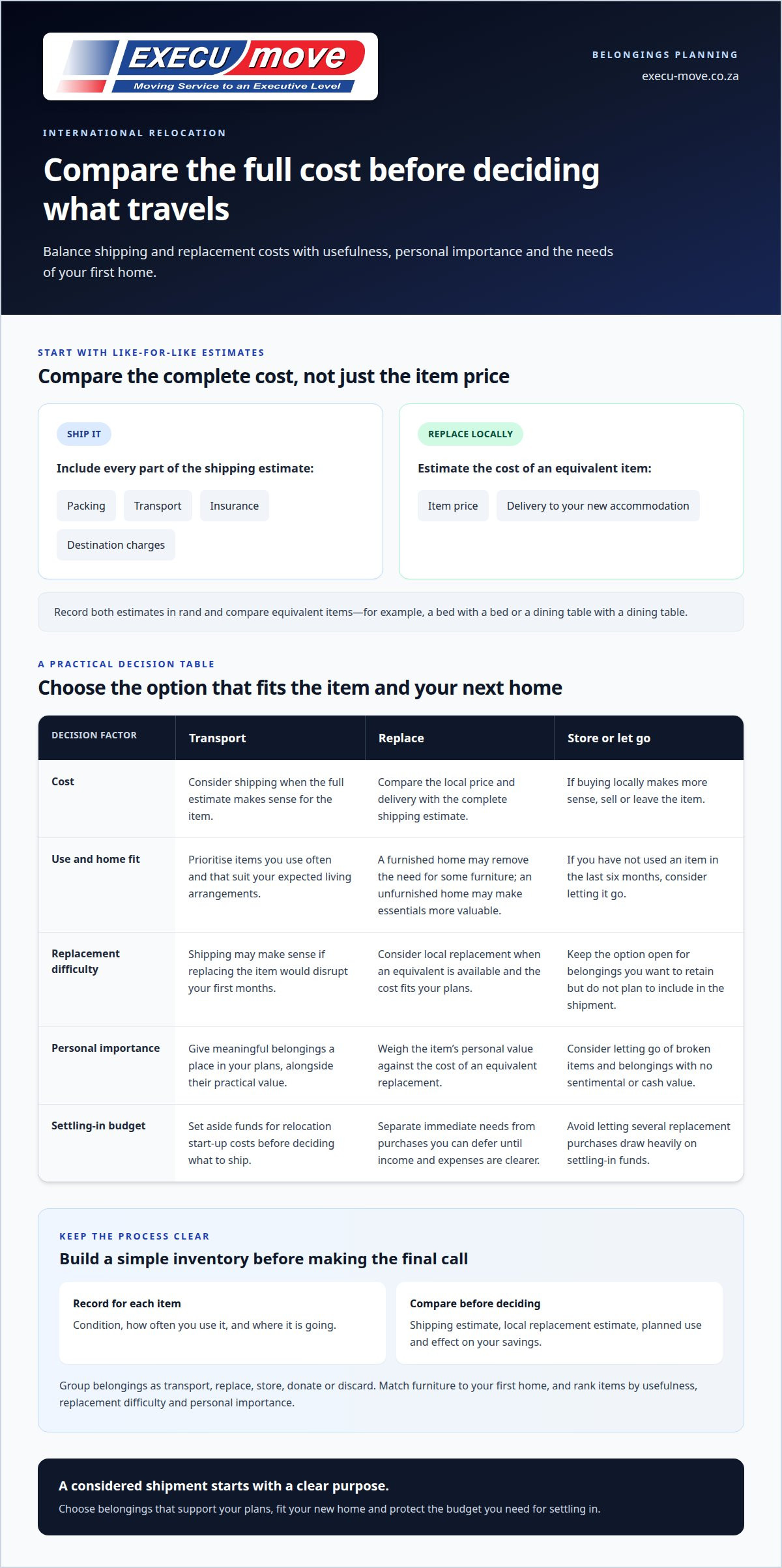
Compare the complete shipping estimate with the cost of buying equivalent items at your destination. Include packing, transport, insurance and any destination charges in the shipping total. For replacement, include the item’s price and delivery to your new accommodation. Record both estimates in rand and compare similar items, such as a bed with a bed or a dining table with a dining table.
Assess furniture carefully. Whether shipping furniture is cost-effective depends on the shipping cost and the cost of replacing it after arrival. A compact desk you use daily may still be worth taking if it suits your new home, while a large lounge suite may not justify the transport cost or space.
Set aside funds for relocation start-up costs before deciding what to ship. These may include initial accommodation, deposits, local transport and household basics. A replacement item may seem affordable on its own, but several purchases can draw heavily on the money you need for settling in.
Estimate living costs at your destination based on your expected housing, commute and daily routine. A furnished apartment, for example, may remove the need for a bed, while an unfurnished home could make essential furniture more valuable. Separate immediate needs from purchases you can defer until your income and expenses become clearer.
Finally, rank belongings by usefulness, difficulty of replacement and personal importance. For each item, compare the shipping estimate, local replacement estimate, planned use and effect on your savings. If buying locally makes more sense, sell or leave the item. If replacing it would disrupt your first months, consider shipping it. This measured approach helps you protect a budget that will support your new life.
Bringing belongings or starting fresh
Start with an inventory, grouping belongings as transport, replace, store, donate or discard. Record each item’s condition, how often you use it and where it’s going. If you haven’t used something in the last six months, consider letting it go. Broken objects and items with no sentimental or cash value rarely deserve space in an overseas shipment.
Match furniture to your first home. If your accommodation is furnished, you may not need beds, wardrobes or sofas. For an unfurnished home, identify the essential pieces you’ll need immediately, then check whether larger items suit the rooms and layout. If your long-term plans are uncertain, storing selected furniture, photo albums or personal keepsakes can give you time to decide.
Keep clothing practical. Pack what you’ll need for the first few months, then add items after settling into your home and job. Vacuum packing can reduce the space used by clothes and bedding. Sell appliances or entertainment equipment that won’t suit your new home. Give usable books, clothes and shoes to friends or charity.
A clear inventory makes deciding what to keep when moving abroad more manageable. Describe each item plainly and note whether it will be transported, stored or passed on. Separate essentials from belongings you can replace after arrival, and keep sentimental pieces distinct from everyday household goods.
Starting fresh can work well if you’re moving into furnished accommodation or taking a short-term assignment. Transporting selected possessions may make more sense when familiar items support your routines or hold lasting meaning. Deciding what to keep when moving abroad is easier when your inventory reflects the home and daily life you’re moving towards, rather than preserving every object from your current one.
Execu-Move
Execu-Move helps South African households turn a keep, store or leave decision into a practical moving plan. Once you’ve selected belongings for your next home, International Furniture Removals can support transporting chosen household goods overseas. A focused selection gives your move a clear scope, rather than carrying every item from your current home by default.
Some belongings need careful preparation before they travel. Execu-Move’s Full Packing and Wrapping helps prepare the household goods you’ve chosen to bring. It can form part of a plan for furniture, family pieces and everyday essentials, while your shortlist distinguishes them from anything you intend to sell, donate or leave behind.
Your plans may also change between departure and settling into permanent accommodation. Execu-Move’s Secure Storage Solutions can suit belongings you want to retain but aren’t ready to move into your new home. For example, furniture may need to wait while you finalise your accommodation. Storage offers an alternative to rushing a decision about possessions with practical or personal value.
If you’re moving within South Africa before departure, Execu-Move’s Domestic Furniture Removals can support that earlier transition. The right plan depends on which belongings you’re taking, packing or keeping aside. A clear inventory grouped by destination and purpose gives you a useful starting point for planning the move.
In summary, let your relocation goals guide your shortlist, compare transport with replacement, and set aside belongings that need more time. Shape the move around your next home rather than automatically transferring everything you own. Execu-Move’s removals, packing and storage solutions can support those choices as your plans take shape.
Frequently Asked Questions
How do I decide what to keep, sell, donate or discard when moving abroad?
Give each item a clear outcome based on its condition, usefulness and personal meaning. For example, sell a working appliance that won’t suit your new home, donate usable clothing you no longer wear, and discard damaged goods that can’t be repaired. For an item you’re unsure about, take a photograph and note why you might want it later. This can help you decide without keeping every object.
What household items are worth shipping internationally rather than replacing abroad?
Items that are difficult to replace in the same form may be stronger candidates for shipping, such as custom-made furniture, specialist tools or a musical instrument suited to your needs. Consider whether the item fits your destination home and can be used there. Standard household goods may be easier to replace locally, especially if your new accommodation already includes them. Assess each item on its own merits.
Should I store belongings in South Africa or ship them overseas?
Storage in South Africa can suit belongings you expect to use again but don’t need at your destination yet, such as furniture kept for a planned return. Shipping may be more practical for possessions you’ll use regularly in your new home. Before choosing storage, consider how you’ll access the items and whether their future purpose is clear. Avoid storing belongings simply because making a decision feels difficult.
If you’d like help planning your move, contact Execu-Move.
Destination-country customs rules and duty exemptions for used household goods
South African household goods require export documentation, and the destination country sets its own import requirements. A duty exemption for used belongings isn’t automatic. Eligibility and conditions depend on that country’s customs rules.
Risks of shipping electronics, appliances and furniture overseas
Electronics may not be compatible with the destination’s voltage, and appliances or entertainment equipment may not suit your new home. Compare the cost of shipping furniture with the cost of replacing it, taking into account the furniture itself, your destination and your accommodation.