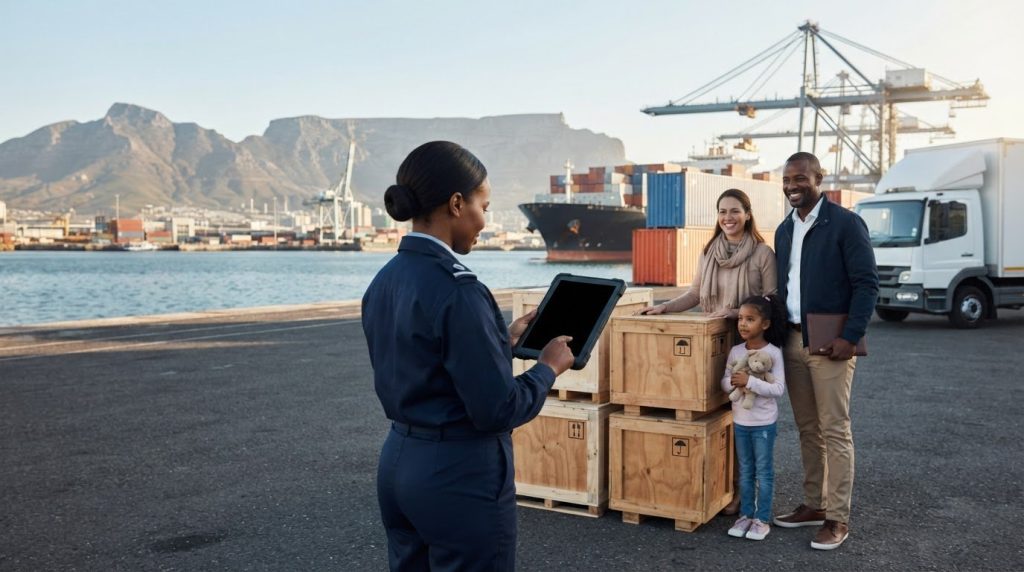
Your shipment reaching the destination port doesn’t mean it’s ready for delivery. If you’re wondering what to expect when your shipment arrives overseas, expect several steps before your belongings reach your home: arrival handling, customs clearance, release and arrangements for final delivery.
It’s understandable to want a clear delivery date while your household goods are in transit and you’re settling into a new home. Timing and paperwork vary by destination, and customs may request information or an inspection before releasing a shipment. Knowing the stages helps you prepare without assuming every move follows the same schedule.
This guide covers what may happen between port arrival and delivery, what information or decisions you may be asked to provide, and how to prepare for the handover. You’ll also find practical steps to take if clearance takes longer than expected, so you can stay informed and respond calmly if plans change.
Key Takeaways
- Knowing what to expect when your shipment arrives overseas helps you follow each handover, from arrival and clearance to release and delivery planning.
- Customs requirements vary by destination. Confirm which documents or information apply to your specific shipment.
- Before delivery, check the proposed time, your contact details, access arrangements and who will be available to receive the goods.
- Keep in touch with your relocation coordinator, respond promptly to requests and ask what to do if clearance or delivery plans change.
What happens when your overseas household shipment arrives in South Africa?
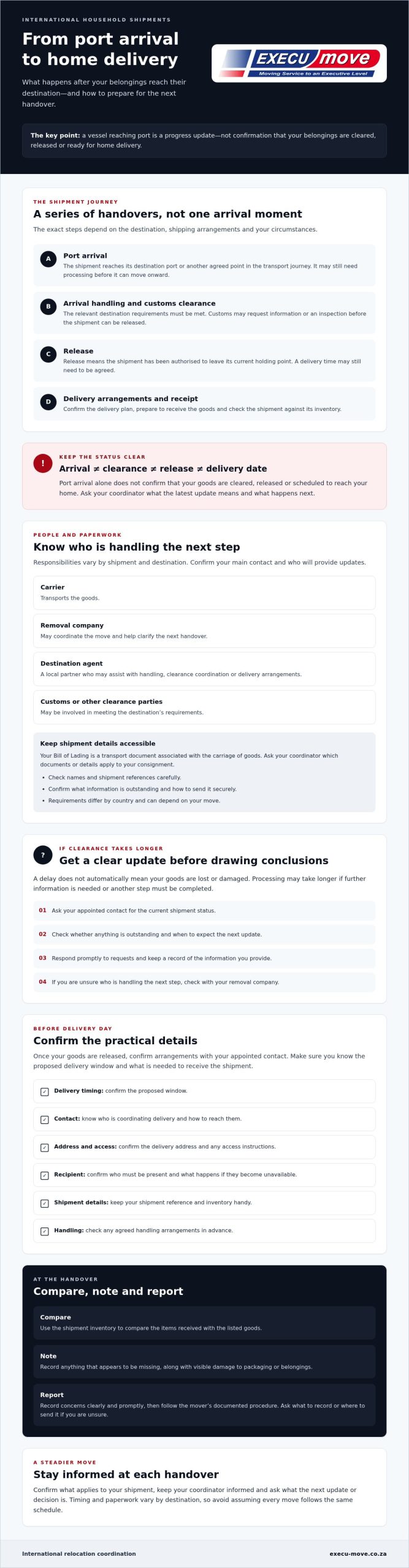
Don’t expect your belongings at home as soon as a vessel reaches port. Arrival is one stage in a sequence: the shipment is handled at its destination, clearance is completed, the goods are released, delivery is arranged and the shipment is received. The exact steps depend on the destination, shipping arrangements and your circumstances.
What does “arrival” mean for an international shipment?
Arrival usually means the shipment has reached its destination port or another agreed point in the transport journey. While the maritime leg relies on specialized vessel agencies like Adimar Shipping, Inc. to manage canal transits and port calls, the cargo itself must still be processed and cleared before it can move onward. Clearance is the process of meeting the relevant customs and other destination requirements. Release means the shipment has been authorised to leave its current holding point, although delivery arrangements may still need to be confirmed. Port arrival alone doesn’t confirm a home-delivery date.
The Bill of Lading is a transport document associated with the carriage of goods. Keep your shipment paperwork accessible, and ask your coordinator which documents or details are needed for your consignment.
Who may be involved after the shipment reaches its destination?
The carrier transports the goods, while a removal company may coordinate the move. A destination agent is a local partner who may assist with handling, clearance coordination or delivery arrangements. For time-sensitive documents or urgent items that must travel separately from bulk freight, specialist courier providers like SpeedLink Transport Limited can handle dedicated, express deliveries. Customs or other relevant clearance parties may also be involved. Responsibilities vary by shipment and destination, so confirm who your main contact is and who will provide updates.
Execu-Move coordinates international furniture removals and customs clearance, working with a worldwide agent network. Ask your coordinator to explain the next handover and identify whom to contact for an update. Learn more about international relocation services.
How customs clearance and release affect your shipment’s next steps
Arrival doesn’t necessarily mean your household goods can move straight to your new home. Customs clearance is the process of meeting the destination country’s requirements for imported goods. Clearance may need to be completed before the relevant parties authorise the shipment’s release for onward delivery. Requirements differ between countries and can depend on your move, so confirm the process for your specific shipment.
What information or documents might the recipient be asked to provide?
Document and information requests vary by destination and shipment. Your coordinator or appointed clearance contact can tell you what applies and whether anything is outstanding. Keep requested paperwork accessible, check names and shipment references carefully, and confirm how to send the information securely. The U.S. Customs and Border Protection overview of customs clearance and release explains a US process, not South African or universal requirements. For details about Execu-Move’s international relocation services, consult the company’s service information and confirm shipment-specific customs requirements with your coordinator.
What should you do if clearance takes longer than expected?
A delay doesn’t automatically mean your goods are lost or damaged. Processing may take longer if further information is needed or another step must be completed. Ask your appointed contact for the shipment’s current status, any outstanding requirements and when to expect the next update. Respond promptly to requests and keep a record of the information you provide. If officials select your shipment for checking, this guide explains how to handle a customs inspection of your goods.
If you’re unsure who is handling the next step, check with your removal company. Execu-Move coordinates international furniture removals and customs clearance. You can contact the team about your shipment for guidance specific to your move.
How to prepare for delivery when your overseas shipment is released
Once your goods are released, confirm the delivery arrangements with your appointed contact. Release does not always mean a delivery time has already been agreed. Before setting aside the day, make sure you know the proposed window and what you need to do to receive the shipment.
What should you confirm before delivery day?
Check the delivery window, the name and contact details of the person coordinating delivery, and any access arrangements the delivery team needs to know about. Confirm who must be present to receive the goods and what to do if that person becomes unavailable. If particular handling arrangements were agreed, check them in advance rather than relying on assumptions.
- Keep your shipment reference and inventory details handy.
- Confirm the delivery address and any access instructions with your contact.
- Ask how a changed delivery plan or unavailable recipient will be handled.
What should you check when your goods are delivered?
Use the shipment inventory to compare the items received with the listed goods. Note anything that appears to be missing, as well as visible damage to packaging or belongings. Record your concerns clearly and promptly, then follow the mover’s documented procedure for reporting them. If you’re unsure what to record or where to send it, ask the delivery contact before the handover process is complete.
A clear point of contact can make these final arrangements easier to manage. Execu-Move coordinates international furniture removals and works with destination agents to support shipment handovers. Explore international relocation services when planning an overseas move.
How an experienced relocation partner can guide the arrival process
What should you ask your relocation coordinator?
Confirm who will provide updates from the destination and how to send any requested documents or details. Ask how you’ll be informed about clearance status, release and delivery planning, and whom to contact if an update is unclear. It’s also useful to know whether your removal company or a destination agent is handling each handover, so you can direct questions to the right person.
When should you contact a relocation company for support?
Get in touch if you’re unsure about the shipment’s status, don’t understand a request or need clarity on the next step. Your coordinator can explain what information is required for your specific move and how updates will be shared. Destination procedures vary, so follow shipment-specific guidance rather than assuming another mover’s process applies.
Execu-Move coordinates international furniture removals and customs clearance, working with a network of over 2,000 agents worldwide. The network supports coordination between the removal company and destination agent, while responsibilities and processes depend on the shipment. Knowing what to expect when your shipment arrives overseas is easier when you know who is managing each stage and where to direct questions.
If you’re planning an overseas move or need help understanding shipment coordination, contact Execu-Move about your international move to discuss your requirements or request a quote.
Stay prepared for each shipment handover
Knowing what to expect when your shipment arrives overseas means recognising that arrival, customs clearance, release and home delivery are separate steps. Port arrival isn’t the same as readiness for delivery, and destination requirements can differ. Keep your shipment details accessible, respond to information requests, and confirm who will receive the goods and how to record any concerns at delivery.
If plans change or a status update is unclear, contact your relocation coordinator to find out what is outstanding and what happens next. A consistent point of contact can help you follow the process without assuming every shipment moves through identical steps.
Execu-Move coordinates international furniture removals and customs clearance, supported by a worldwide agent network of over 2,000 agents. To discuss coordinating your move or request a quote, contact Execu-Move about your international move. With clear information and practical preparation, you can approach your shipment’s arrival with greater confidence.
Frequently Asked Questions
What happens when an overseas household shipment arrives?
After reaching its destination, a household shipment may need to be handled and cleared through customs before it can be released for delivery. The carrier, removal company, destination agent and relevant clearance parties may each have a role, depending on the move. Once release is confirmed, delivery arrangements can be made and the goods received. The exact sequence and requirements depend on the destination and shipment.
How long does customs clearance take for a household shipment?
There isn’t one timeframe for every shipment. For sea freight entering South Africa, clearance for a shipment with no issues typically takes three to five business days; an inspection can add a further two to five days. These are indicative timings, not a delivery promise. Document checks, destination procedures and shipment-specific circumstances can affect progress, so ask your coordinator for the current status and next update.
Do I need to be present when my overseas shipment is delivered?
Confirm with your delivery contact whether you or an authorised person must be present to receive the goods. The arrangement can depend on the delivery plan and destination. If you can’t attend, ask in advance whether someone else may receive the shipment and what information or authority they’ll need. Also clarify how to handle a change to the agreed recipient or delivery window.
What should I do if items are missing or damaged when my shipment arrives?
Compare the delivered goods with your shipment inventory, and promptly note any missing items or visible damage. Record what you observe clearly and follow the mover’s documented process for reporting concerns. If you’re unsure what to document, whom to notify or when to report it, contact the delivery representative or your relocation coordinator as soon as possible. Keep relevant shipment details and correspondence together.
Can I track my household shipment while it is overseas?
Ask your relocation coordinator how updates are provided for your particular shipment. Tracking options and the detail available can vary by carrier and transport arrangements, so don’t assume a household removal has the same tracking tools as a parcel. Keep your shipment reference available when requesting an update, and ask who will confirm key handovers, clearance progress, release and delivery planning. Knowing what to expect when your shipment arrives overseas starts with clear communication.