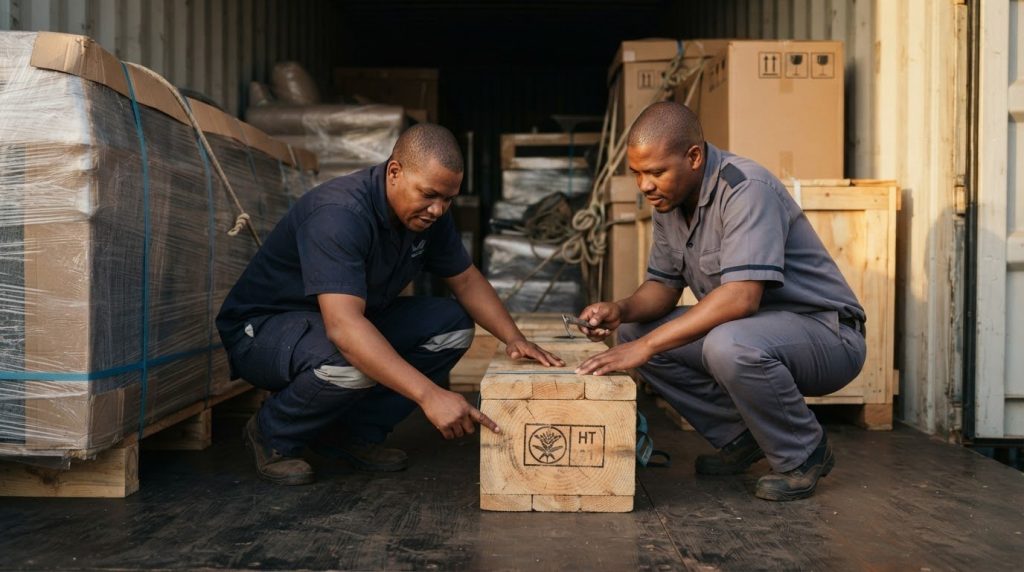
A container does not automatically need fumigation just because it is crossing an ocean. For South African households, fumigation requirements for international moves depend on the destination and the materials used to pack belongings. ISPM 15 regulates raw-wood packaging in international trade, and heat-treated wood must reach 56 °C for 30 continuous minutes throughout the wood, including its core.
It’s understandable to assume that kiln-dried wood is automatically compliant, or that every shipment needs its own fumigation certificate. Neither is a safe assumption: a kiln-dried label alone does not prove ISPM 15 compliance, and fumigation certificates are not required for every ocean shipment.
This guide explains what fumigation involves, how the ISPM 15 mark and treatment methods work, and why container treatment is different from treating wooden packing materials. You’ll also learn when kiln drying qualifies and what destination-specific rules can mean for an international household move, so you can plan the packing and shipping process with greater clarity.
Key Takeaways
- Separate treatment of wooden packing materials from fumigation of the container itself; they address different biosecurity concerns.
- Look for the IPPC mark and its treatment code on regulated wood packaging, rather than relying on a kiln-dried label alone.
- Destination rules shape which treatments and documents apply, so identify your destination early in the moving process.
- For household shipments, professional packing and fumigation support can help coordinate treatment and documentation as part of the move.
Why Fumigation Requirements Matter for International Moves
When household goods cross borders, wooden pallets, crates and boxes can carry pests or plant diseases. Fumigation and other approved treatments help manage that risk. Fumigation requirements for international moves matter because packing methods suitable for a local move may not meet the destination country’s import rules.
ISPM 15 sets guidelines for treating raw-wood packaging used in international trade. It applies to regulated solid-wood packaging, not to every item in a household shipment. Treatment requirements are therefore linked to the packing materials and destination, rather than simply to the fact that a container is travelling by sea. Some destinations may also have biosecurity measures separate from wood-packaging compliance.
For example, a timber crate used to protect furniture is different from a cardboard carton. Packaging made entirely from wood 6 mm thick or less is exempt from ISPM 15, and wood-derived products such as cardboard and particle board do not need a fumigation certificate under the guidance reflected in the available facts. These distinctions help explain why a shipment may include materials with different treatment and documentation needs.
Understanding the requirements early can help keep packing, treatment and shipping documentation aligned. It also prevents a common misunderstanding: treating the container and treating wooden packaging are separate questions. Container fumigation addresses an enclosed space, while ISPM 15 treatment applies to regulated wood packaging. A fumigation certificate is not required for every international ocean shipment, and it is not interchangeable with an IPPC mark or a phytosanitary certificate.
For a household move, the practical points are:
- Identify whether packing includes regulated solid wood, such as pallets, crates or boxes.
- Keep the destination in view, since import requirements vary by country.
- Distinguish packaging treatment from any separate requirement to fumigate a container or enclosed space.
To make fumigation requirements for international moves more manageable, identify the destination’s rules and the packing materials involved. Planning these details early helps reduce uncertainty around the shipment and its documentation.
Understanding Fumigation Requirements and Treatment Methods
Treatment, packaging marks and shipment certificates document different controls. Knowing which does what matters if freight is inspected or requires customs clearance.
Treatment and Phytosanitary Certificate Differences
Treatment manages pests; a phytosanitary certificate documents plant-health status. They serve different purposes and are not interchangeable. Some destinations require both types of evidence. Without a required fumigation certificate, the shipment cannot document that treatment and may be held for inspection or further treatment, affecting clearance.
Fumigation Certificates and Shipment Documents
A fumigation certificate records completed treatment, especially for goods packed with wood. It typically lists the purpose, fumigant, temperature range, treatment duration and date. Treatment records should identify the fumigant, enclosure and treatment provider. Fumigated cargo should be ventilated before transit continues.
ISPM-15 Compliance Requirements
ISPM 15 sets treatment requirements for regulated raw-wood packaging used in international trade. Pallets, crates and solid-wood boxes may need approved treatment and the IPPC mark. Packaging made entirely from wood 6 mm thick or less is exempt. A kiln-dried label alone does not establish compliance, so packing documentation and marks matter at inspection.
Heat-Treatment Temperature and Duration
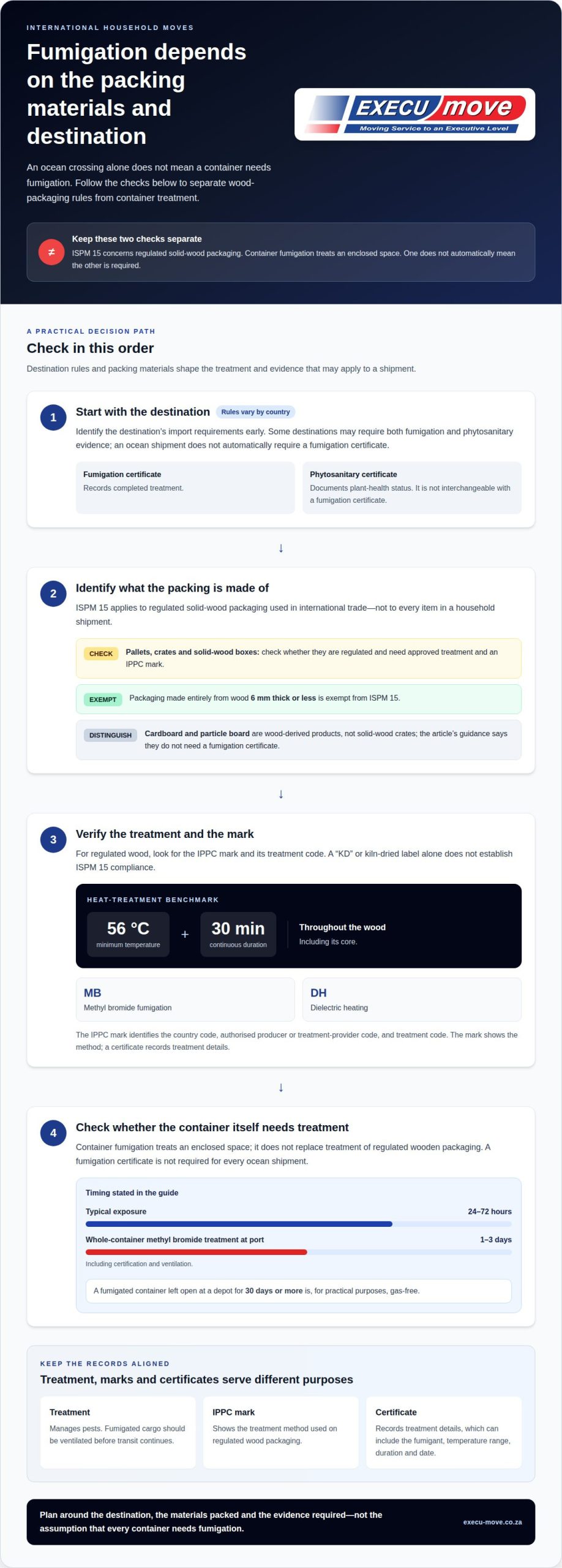
Conventional heat treatment requires at least 56°C for 30 continuous minutes throughout the wood, including its core. Canada applies ISPM 15 to outbound shipments through CFIA directive D-13-01. These requirements distinguish compliant treatment from ordinary kiln drying.
Approved Wood-Treatment Codes
The IPPC mark identifies the country code, authorised producer or treatment-provider code, and treatment code. MB means methyl bromide fumigation; DH identifies dielectric heating. The mark shows the treatment method used, while a certificate records treatment details. Canada’s CFIA directive D-98-08 identifies an exemption for continental-US wood packaging, separate from treatment certification.
Export Treatment Timelines
Container fumigation treats an enclosed space, not only its pallets or crates. Typical exposure lasts 24 to 72 hours; whole-container methyl bromide treatment at port typically takes 1 to 3 days, including certification and ventilation. A fumigated container left open at a depot for 30 days or more is, for practical purposes, gas-free. Align treatment with international relocation planning to account for destination rules and shipment documents.
Practical Advice for Household Moves from South Africa
For a household shipment leaving South Africa, start by identifying the destination and the packing materials. Wooden pallets, crates and boxes used for international transport must meet the applicable export treatment rules. The destination determines what treatment evidence and additional biosecurity documents are required. An overseas container shipment does not automatically need a fumigation certificate.
Build the packing and documentation plan around the goods, not assumptions about familiar materials. Cardboard cartons and particle board are wood-derived products, while solid-wood crates are a different category. For regulated solid wood, the IPPC mark identifies the treatment method. A “KD” or kiln-dried stamp alone does not establish ISPM 15 compliance.
- Identify wooden pallets, crates and boxes in the packing plan, then separate them from cardboard and particle board.
- Match the destination’s import requirements to the shipment; some countries require both phytosanitary and fumigation certificates.
- Keep the treatment certificate aligned with the shipment’s timing. A standard fumigation certificate is valid for 21 days from the date of treatment.
- Allow time for treatment and documents before dispatch. If the 21-day certificate window lapses, re-fumigation adds 1 to 3 days.
Australia and New Zealand have destination-specific biosecurity rules. Seasonal Brown Marmorated Stink Bug measures are separate from wood-packaging compliance. A certificate for this pest is specifically required for shipments from regions where it is prevalent. This means pest-related requirements and ISPM 15 treatment must be considered as distinct parts of export planning.
Container treatment is a separate consideration: it applies to the enclosed shipping space, not just the wooden packing materials inside. Whether it is required depends on the destination, the container’s treatment history and the shipment arrangements. Keep certificates and treatment records with the shipment documents so they are available for inspection and clearance when needed.
For a move from South Africa, set the destination, packing materials and treatment schedule early. Plan your international household move with these requirements in view.
Execu-Move: International Furniture Removals
Execu-Move coordinates international furniture removals, packing and fumigation for household moves from South Africa. This can help when a shipment includes wooden crates, pallets or other regulated packaging, or when destination rules affect how goods must be prepared.
Wood treatment and container fumigation address different things. Treatment may apply to wooden packaging, while container fumigation concerns the enclosed space. The destination and packing materials determine which requirements apply. Execu-Move’s Steam Cleaning and Fumigation service can support the fumigation stage, while Full Packing and Wrapping helps prepare household goods for transport.
Involve your relocation team while planning the move, not after packing is complete. This gives the shipment plan time to account for:
- Whether the packing plan uses solid wood, cardboard or particle board.
- Destination requirements for treatment and related documents.
- The timing of treatment in relation to the shipment’s departure.
- Whether fumigation of an enclosed container is relevant to the move.
For example, a move packed in cardboard cartons may raise different treatment questions from one using solid-wood crates. If a certificate is required, its treatment date also matters because the standard fumigation certificate is valid for 21 days from treatment. Planning these details alongside packing and freight arrangements helps keep the documentation and shipment schedule connected.
Customs clearance is another part of an international move, separate from pest treatment. Keeping these requirements distinct helps avoid assuming that one document or process covers every step. Execu-Move coordinates relocation services around the household shipment, with the plan shaped by the destination and packing requirements.
When discussing your move, share the destination, intended moving date and any known packing or treatment requirements. These details help shape the relocation plan and clarify how packing, fumigation and customs clearance fit together.
If you’re planning an international household move from South Africa, contact Execu-Move to discuss your requirements.
Plan Your Move with Clarity
Start planning with your destination and packing materials. These details help determine how fumigation, treatment records and transport arrangements fit together, instead of leaving them as separate last-minute tasks.
Execu-Move provides international and domestic furniture removals, as well as full packing and wrapping. For an overseas relocation, including fumigation requirements in the wider plan helps align packing decisions with shipment preparation. Share your destination, timing and household needs with Execu-Move to start planning.
Every move has its own practical considerations. Discussing them early helps clarify the next steps for your household goods and prepare you to move with greater confidence.
Contact Execu-Move about your move to discuss the support that fits your plans. A well-organised move starts with a conversation, and you can take that next step when you’re ready.
Frequently Asked Questions
What is fumigation?
Fumigation uses a fumigant in an enclosed space to control pests. For a household move, first clarify what needs treatment: the shipping container, particular goods or wooden packaging. These are separate treatment scopes. Identifying the scope early helps match the treatment and its records to the shipment’s contents.
Methyl bromide or phosphine: which fumigant does your shipment need?
The appropriate fumigant depends on the treatment purpose, the goods or packaging, the enclosure and the destination’s requirements. Methyl bromide and phosphine are not interchangeable choices based on personal preference. The treatment must meet the applicable requirements and be carried out by qualified professionals. For a household move, first establish whether the requirement concerns wood packaging or an enclosed container.
What does ISPM 15 cover?
For practical packing decisions, ISPM 15 concerns regulated raw-wood packaging, not the furniture or personal effects inside it. A wooden support or crate used to protect a household item should therefore be considered separately from the item itself. This distinction helps keep treatment decisions focused on the packaging and avoids assuming that every wooden household possession needs the same treatment.
When might a fumigation certificate be required?
A fumigation certificate may be required if the destination asks for evidence that a particular shipment or its packing was fumigated. Before dispatch, identify the items or spaces treated and keep the relevant treatment record with the shipment documents. This helps ensure the correct evidence is available if officials inspect the shipment during import clearance.
Which countries require container fumigation from Canada?
Container fumigation requirements vary by destination, so Canada’s wood-packaging rules do not establish a general list of countries requiring container fumigation. A rule for packaging does not automatically mean the shipping container itself must be fumigated. For a move from Canada, distinguish the destination’s container requirements from any separate rules for wood used to pack or support goods.
Which countries require fumigation for household goods in international moves?
Requirements depend on the destination and the shipment’s packing and biosecurity circumstances; they do not apply uniformly to all household goods. Include destination rules in the packing and documentation plan, and distinguish pest-specific measures from wood-packaging treatment. This is especially helpful when a move involves different packing materials or several stages of transport.