A move can be shaped by decisions made before the first box is packed. If you’re wondering what to expect from an in-home moving survey, it’s a practical assessment of the items you plan to move and the access, packing and handling needs that may affect the move.
It’s natural to wonder whether everything needs to be packed or whether a surveyor will inspect every corner of your home. You don’t need to pack beforehand. Leaving belongings visible helps the surveyor understand what’s going, what needs special care and what may affect collection or delivery.
This guide explains what a pre-move survey is, what the surveyor typically assesses and how to prepare without adding unnecessary work. You’ll also learn how doors, windows and other access points may be considered, what to mention about delicate or oversized items, and how a clear assessment helps inform the moving quotation.
Key Takeaways
- A thorough home survey helps movers assess the shipment and plan the people, materials and access arrangements needed for a more informed quotation.
- Expect the assessment to cover belongings, property access and features such as doors and windows, as well as details that may affect packing or handling.
- Leave belongings unpacked and make relevant areas accessible where safe; point out anything that needs special handling or cannot be inspected.
- For help coordinating a move, packing or storage, Execu-Move can tailor its relocation services to your household’s requirements.
Why an in-home moving survey matters
A survey records what you plan to move and the practical details that shape collection, packing and delivery. This inventory gives the quotation a clearer basis than a rough estimate alone.
Survey Planning and Quotations
A moving survey is a visual review of the goods and access involved in your move. It helps the mover estimate shipment size, packing materials, crew requirements and handling needs. For example, moving a piano may require different planning from moving standard household furniture. The survey is also a good time to identify items you plan to sell, donate or store instead.
An in-home survey lets the surveyor view your belongings directly. A video survey uses a live call to view rooms and items, while an online survey usually relies on information and images submitted digitally. For a sound quotation, show the full inventory and mention any additional collection address.
Getting quotes from multiple moving companies can help you compare the proposed scope and terms. Whether you are dealing with local movers or international relocation teams, check what each quote includes, rather than comparing totals alone.
Preparing the Home and Inventory
Make the goods and relevant access points easy to view. Leave items unpacked, open cupboards and storage areas, and point out outbuildings, external paths and structures. Identify delicate or oversized belongings, such as antiques or large artwork. Tell the surveyor about areas they cannot enter, as restricted access can limit the assessment and affect plans for specialist items.
A moving survey is not a property condition inspection for buyers or sellers. Keep sale-related documents and moving decisions separate, and explain which fixtures or belongings are staying. Make sure the surveyor can access the rooms, storage areas and belongings included in your inventory.
Survey Costs and Duration
Whether an in-home survey is free in South Africa depends on the appointment terms. Ask for any survey charge to be shown in writing with the quotation. The appointment length depends on the home, shipment volume, storage areas and access details, so allow enough time to show each relevant space and discuss special handling.
Check the quotation for packing, storage, delivery access and any services listed separately. If your belongings change after the survey, update the inventory, as added goods can affect the shipment plan. For moving day, follow the agreed packing arrangements, keep essential items accessible and tell the move coordinator about changes before collection.
What happens during an in-home moving survey?
If you’re wondering about an in-home moving survey, here’s what to expect: the surveyor builds a visual picture of the shipment and property access. They review belongings, rooms and storage areas, then note details that could affect packing, collection, transport or delivery.
The assessment covers practical requirements, not just a count of the furniture. The surveyor may discuss what’s travelling, what’s staying behind and which items need careful handling. A piano, oversized appliance or large artwork can require different planning from standard household goods. For an international move, unusual items can be noted for further customs or destination review.
- Floors and rooms: The surveyor views the goods in each room and considers stairs, corridors and lifts that could affect moving them.
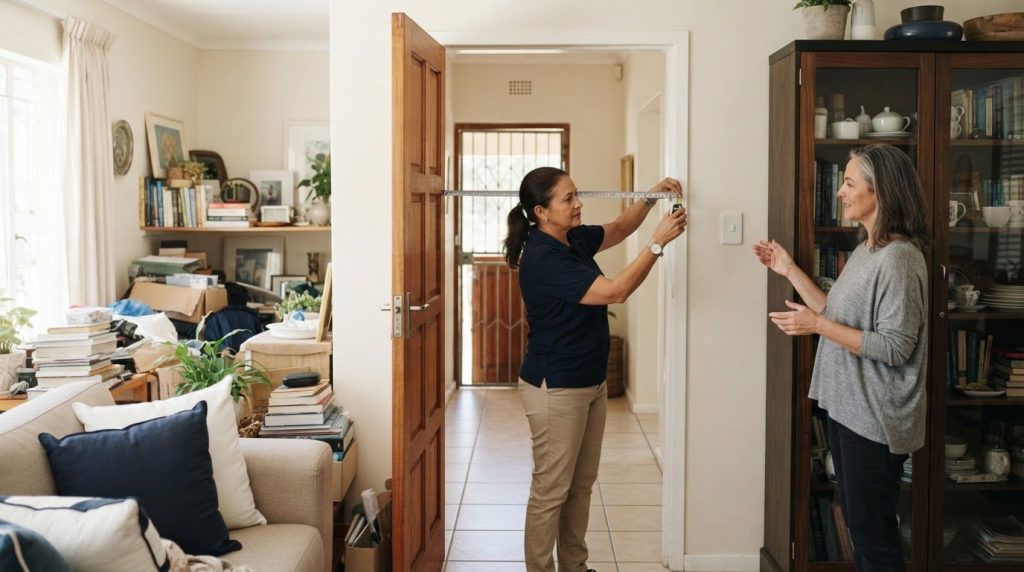
- Doors and windows: A sample may be tested or assessed to understand access and potential handling constraints.
- Storage and outdoor areas: Garages, sheds and other visible spaces help complete the shipment picture.
- Collection and delivery access: Parking, entrances and loading areas can affect vehicle access, equipment and crew planning.
These details help shape the move plan. Narrow stairs, for example, may affect how a large item is handled, while limited parking can influence where loading takes place. The survey also informs estimates of shipment volume, packing materials, staffing and extra handling needs. It records visible conditions relevant to moving, rather than serving as a full property inspection.
Knowing what to expect from an in-home moving survey helps you prepare for the appointment. Its length depends on the home’s layout, the volume of belongings and the storage or access areas to review. Allow enough time to show the surveyor the goods you plan to move and explain any access constraints. This helps cover the whole move, not just the main living areas.
Clear visibility gives the surveyor a better basis for planning. For relocation planning, consider how each access detail may affect collection and delivery.

How to prepare for an in-home moving survey
A clear view of the property helps the surveyor assess the furniture, access and any unusual handling needs. Before the appointment, think through each room, storage space and route from the home to the collection point.
- Open storage areas: Make cupboards, garages and outbuildings available for viewing. Show the contents planned for the move, including items stored outside the main living areas.
- Prepare loft access: Tell the surveyor if a loft hatch is locked, blocked or unsafe to reach. Don’t move heavy furniture or climb into an unsafe space to make it accessible.
- Show external routes: Point out paths, gates, steps, garden structures and the route to the loading area. A narrow gate or uneven path can affect how furniture is moved.
- Identify special items: Flag a piano, large artwork, antique or oversized appliance. Their size, position and route out of the home can influence handling plans.
Access restrictions limit what a surveyor can see and assess. If a locked room or obstructed loft contains goods for the move, those items may be missing from the visible inventory. Share what you know about them and arrange a safe way to show them later. If an area cannot be inspected, the assessment can only reflect the information and visible conditions available.
Building rules matter, too. If you live in a complex or apartment block, tell the surveyor about lift bookings, restricted parking or access hours. Tenants can coordinate entry with the landlord or property manager, especially if access is needed to a locked storeroom or shared loading area.
What can cause the final moving cost to differ from the survey quotation? A larger inventory, added belongings or changes to access and handling needs can alter the planned shipment. Tell the move coordinator about changes before collection so the move plan can be updated.
For help planning your move, share access restrictions and specialist-item details during the survey process.
Execu-Move
Execu-Move helps turn your requirements into a practical plan for a local or international relocation. Details about your inventory, access and items needing careful handling help clarify the scope of the move.
For a move within South Africa, domestic furniture removals can support the transfer of your household belongings between homes. For an overseas destination, international furniture removals cover the wider relocation journey. Your destination, shipment contents and collection arrangements all help define the planning conversation.
Different needs may call for different support:
- Full packing and wrapping can help prepare household belongings for transport.
- Secure storage solutions may suit belongings that cannot move directly into the next home.
- Furniture removals provide the core moving support for household goods, whether the relocation is domestic or international.
Share relevant survey findings, such as access restrictions, items requiring special handling or belongings that may need storage. If a room or outbuilding was inaccessible during the assessment, explain what remains there and whether those items are intended for transport. This helps clarify requirements before collection arrangements are made.
Execu-Move can organise moving, packing and storage support around your circumstances. Discuss the scope of your relocation and any details that may affect planning, particularly if some items need different arrangements.
For a local move or overseas relocation, prepare your inventory and access details to keep the discussion focused on your household’s requirements.
Contact Execu-Move to discuss your relocation requirements.
Make your next move a considered one
Knowing what to expect from an in-home moving survey helps you turn relocation decisions into a clear conversation about your next home. Explain your priorities, timing and any changes that may affect the move. A well-informed plan starts with the details that matter to your household.
Execu-Move handles domestic and international furniture removals, with full packing and wrapping for belongings that need professional preparation. The right combination depends on your destination and the support you need. Discussing your requirements early gives you time to consider arrangements that suit your move.
Whether your next chapter is across South Africa or overseas, you can take the next step at your own pace. Contact Execu-Move about your move to discuss your relocation requirements and the support that may fit. A thoughtful conversation can help you move forward with greater clarity.
Frequently Asked Questions
What happens after you receive your survey report?
The survey findings are considered alongside your requirements, preferred moving dates and destination details before a quotation or proposal is prepared. Read the document for the scope of work, including whether packing, storage, customs-related services and delivery access are included or listed separately. If your inventory changes after the survey, tell your move coordinator promptly so the shipment plan can be reviewed.
How clean and tidy does my house need to be?
Your home doesn’t need to look staged or be professionally cleaned for a moving survey. Keep access routes clear enough to view belongings and move safely between rooms. Leave items you intend to move visible, rather than packing them away or placing them in an area you haven’t shown. Ordinary household clutter matters less than making the planned shipment and relevant spaces easy to assess.
How should you prepare?
Before the appointment, make a simple note of belongings you’re unsure about, such as furniture you may sell or store. Tell the surveyor which items are definitely moving and mention anything you expect to add later. Write down questions about the quotation or moving arrangements, too. This keeps the discussion focused on decisions that could affect your plans.
What does the surveyor look at?
The surveyor reviews the planned shipment and practical factors that could affect handling and transport. These may include room contents, storage areas, access routes, doors and windows. A moving survey isn’t a full property condition assessment or valuation. Its purpose is to gather information relevant to the move, not to diagnose building defects or assess the home for sale.
What rooms, belongings, and access details does the surveyor assess?
The assessment can cover rooms and storage spaces containing goods for removal, such as cupboards, a garage or an outbuilding. The surveyor may also consider entrances, stairs, lifts, corridors, parking and loading areas. If the move involves another collection or delivery address, share access information for that location as well. The route available at each property can affect handling arrangements.