
Eight weeks is a sensible time to begin planning a long-distance move. A moving checklist 8 weeks out helps turn the work into manageable steps, from organising belongings and arranging removal quotes to planning bookings and starting to pack.
It’s easy to assume you can deal with everything closer to moving day, but early decisions give you more time to organise the details calmly. This guide shows you what to tackle first and what can wait, including utilities, address updates, travel arrangements and packing supplies.
Use the checklist as a flexible plan for your move in South Africa. Work through each task at a steady pace, adapt it to your destination and household, and keep important documents and decisions together so nothing gets lost in the rush.
Key Takeaways
- Start planning eight weeks ahead, especially for a long-distance relocation, so you can spread decisions across manageable steps.
- Build time into your schedule for removal quotes, travel and moving bookings, utility arrangements and address updates.
- Declutter before packing, then label boxes by room to make belongings easier to organise at your new home.
- Consider whether professional packing, furniture removals or secure storage could make your move simpler to manage.
Why an eight-week moving checklist matters
Starting eight weeks ahead gives you time to make decisions in a sensible order instead of arranging everything at once. This is especially useful for a long-distance move, when bookings, belongings and the details of leaving one home and settling into another all need attention. A moving checklist for eight weeks out breaks a large task into smaller actions you can track.
The right lead time depends on the type of move. An eight-week timeline is presented as ideal for long-distance moves, while four weeks is presented as ideal for local moves. Starting sooner can still help if your household has many belongings, several people to coordinate or a move date during a busy period.
Start by listing the main decisions and what depends on them. The volume of your belongings affects the removal arrangements you need, while your destination and moving date shape travel and booking plans. A clear inventory helps you decide what to move, donate or sell, and what needs careful packing.
- Set a moving date and work backwards. A fixed date gives you a reference point for scheduling each task.
- List the people and arrangements involved. Include household members, work commitments and any move-related responsibilities that need coordination.
- Sort belongings before packing. Deciding what to keep early helps you plan around the items that will actually travel.
Starting early also gives you room to handle unexpected changes without losing sight of essential tasks. If a booking needs adjusting or plans for your new home change, a written timeline helps you see what else may be affected. Keep key dates, decisions and correspondence together in a shared digital document or a folder everyone involved can access.
Treat the checklist as a working plan, not a rigid timetable. Review it regularly, mark completed tasks and bring forward anything that depends on another decision. With the major arrangements visible from the start, you can focus on one practical step at a time and keep the move organised as the date approaches.
Your moving checklist, eight weeks out
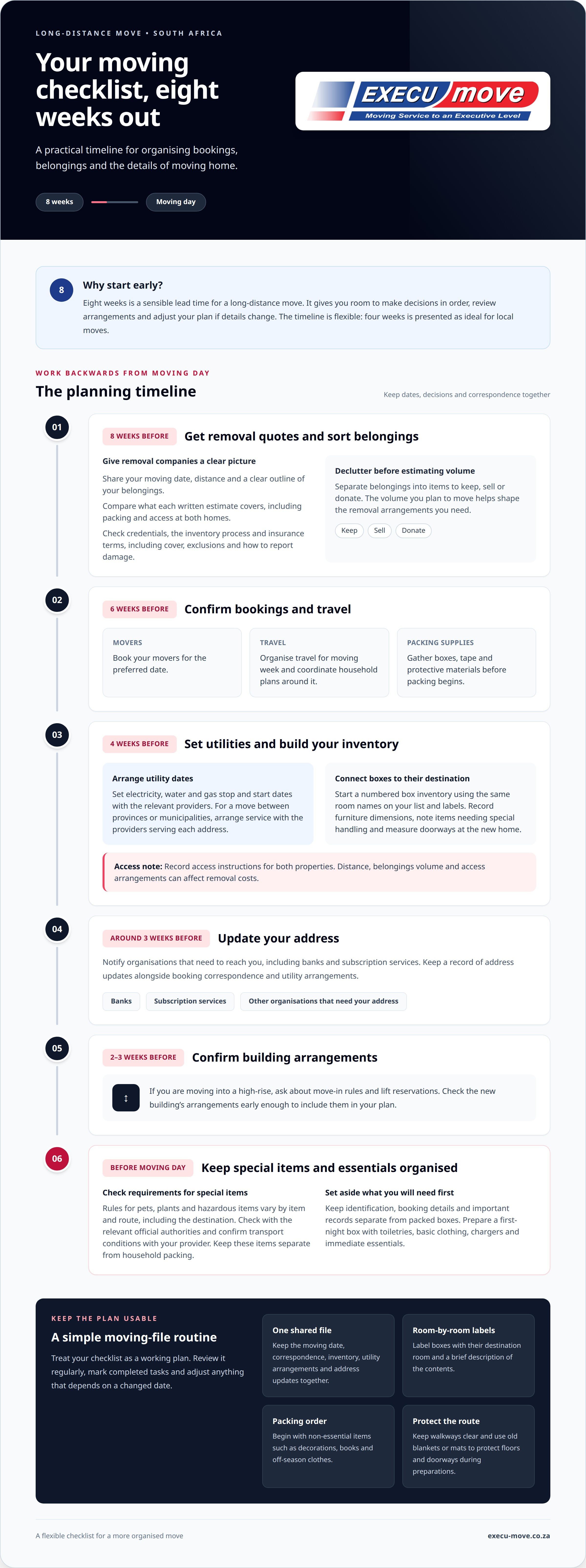
At eight weeks, request removal quotes. Give the removal company your moving date, distance and a clear outline of your belongings. Compare what each estimate covers, including packing and access at both homes. Decluttering first helps you estimate the volume more accurately; separate items to keep, sell or donate.
At six weeks, arrange travel and moving bookings. Book your movers for the preferred date and organise travel for moving week. Gather packing supplies, such as boxes, tape and protective materials, before you start packing. Booking early gives you time to coordinate travel and household arrangements around the move.
Four weeks before moving day, set utility dates. Arrange electricity, water and gas stop and start dates with the relevant providers. Update your address with organisations that need to reach you, including banks and subscription services, around three weeks before the move.
For a move between provinces or municipalities, arrange utilities with the providers serving each address, and record access instructions for both properties. Distance, the volume of your belongings and access arrangements can affect removal costs.
What should I check when choosing a removal company or reviewing insurance? Check the company’s credentials and review the written quote, inventory process and insurance terms, including cover, exclusions and how to report damage. Make sure the documents relate to the service being arranged.
How far in advance should I book a moving company in South Africa? Book movers six weeks before moving day and request removal quotes eight weeks ahead to allow time to review the arrangements.
What should renters do about notice periods, inspections, deposits and lease handover? Read your lease for its notice process, record the property’s condition at inspection and keep written handover notes. Track deposit correspondence and return the keys as agreed with your landlord.
What are the rules for moving pets, plants and hazardous items in South Africa? Requirements vary by item and route, including the destination. Before arranging transport, check the rules with the relevant official authorities for the animal, plant or item, and confirm any transport conditions with your provider. Keep these items separate from household packing and make arrangements before moving day.
How should I plan packing supplies and start packing non-essential belongings? Start with decorations, books and off-season clothes; label each box with its room and contents. Keep toiletries, documents and daily essentials separate for unpacking.
Practical advice for an organised move
Keep one moving file for details that are easy to misplace: your moving date, booking correspondence, inventory, utility arrangements and address updates. A shared digital document helps household members see the same information, while a printed copy is useful for notes during calls or property inspections.
Use a room-by-room inventory to connect belongings with their destination. Record furniture dimensions and measure doorways at the new home before moving day to identify access issues early. Group items by room and note anything that needs special handling. When you start a numbered box inventory four weeks before moving day, use the same room names on your list and labels.
- Review the timeline each week. Mark completed tasks and move any dependent task if its date changes.
- Keep essential documents together. Store identification, booking details and important records separately from packed household boxes.
- Prepare a first-night box. Set aside toiletries, basic clothing, chargers and items needed immediately after arrival.
- Protect access points. Keep walkways clear and use old blankets or mats to protect floors and doorways during preparations.
- Confirm building arrangements. If moving into a high-rise, ask about move-in rules and lift reservations two to three weeks ahead.
Make labels easy to read at a glance. Write the destination room and a brief description of the contents on more than one side, so the information stays visible when boxes are stacked. Clearly identify fragile items and keep essentials separate from items that can remain packed until later.
Two weeks before moving day, prepare a simple run sheet with the schedule, key addresses and specific instructions. As the date approaches, reconfirm arrangements and keep moving-day essentials accessible instead of loading them with the rest of your belongings. Update your file after each decision to avoid conflicting notes and help everyone follow the same plan.
Execu-Move
Execu-Move can support your eight-week preparations with domestic or international furniture removals, full packing and wrapping, and secure storage. Domestic removals suit a move within South Africa, while international removals are for relocations across borders. The right support depends on your destination, belongings and the arrangements you need help coordinating.
Bring your moving date, addresses and a clear outline of your household goods into the planning conversation. An inventory helps define what needs to be moved and highlights items that may need careful handling. If your plans are still taking shape, identify what is settled and what may change to keep the next steps clear.
- For a local or domestic move, consider which furniture and household belongings need to travel to the new home.
- For an international relocation, discuss the destination and the belongings involved so the move can be planned around its wider logistics.
- If packing is a concern, full packing and wrapping can help prepare household items for the move.
- If your dates or home arrangements do not align, secure storage may help bridge the gap between leaving and settling in.
These services can fit alongside your own preparations. Sort belongings before packing, keep documents and daily essentials separate, and note any timing constraints that affect access to either property. Sharing these details early gives the removal plan a clearer foundation and helps you identify which tasks remain yours to organise, such as address updates, utilities and travel.
Professional removal support is useful when coordinating furniture, packing and storage alongside other moving arrangements feels difficult to manage alone. It can also bring more structure to a household move, whether you’re moving within South Africa or to another country. Keep your priorities clear and use the eight-week timeline to organise decisions one step at a time.
If you would like to discuss your move, contact Execu-Move to talk through the support that fits your plans.
Frequently Asked Questions
How Soon Should Planning Begin?
Start planning four to eight weeks before moving, with eight weeks suited to a long-distance move and four weeks presented as suitable for a local move. Start earlier if you need to coordinate several people, work commitments or separate destinations. Once the date is set, note which decisions depend on it, such as arranging access to your new home or confirming when you can collect the keys. This makes it easier to adjust the plan if dates change.
What should I do 8 weeks before moving house?
Set your moving date, create an initial inventory and decide which belongings should travel with you. Note furniture that may need special handling and important household dates, such as work commitments or property handover. For an international move, keep destination paperwork and travel records separate from household documents. This early overview helps reveal which plans remain undecided and what needs attention before packing progresses.
How do I declutter and decide what to sell, donate, or discard before a move?
Sort one category at a time, such as books or kitchen items, and consider whether each item is useful, in good condition and worth taking. Set aside items to sell, usable donations and damaged goods for responsible disposal. If you’re unsure about sentimental belongings, put them in a separate review pile rather than rushing the decision. Keep each category apart as you work so items for donation or sale don’t accidentally end up among your packed possessions.
What documents and records should I organise before moving?
Keep identification, property or lease records, moving correspondence, inventory notes and utility account details together in a secure folder. Save digital copies of important records and use clear file names so they’re easy to find. For an international move, separate travel and destination paperwork from household records. Carry essential documents with you rather than packing them in a box, and make sure everyone involved knows where to find relevant booking information.
Summary
A well-managed move comes from making decisions in a useful order: set the date, organise key records, sort belongings and keep important arrangements visible. Use the checklist as a guide, adapting it to your household, destination and property handover dates. A central record of decisions can also help prevent missed details when several people are involved.
If professional support would help with your relocation, contact Execu-Move to discuss your plans.