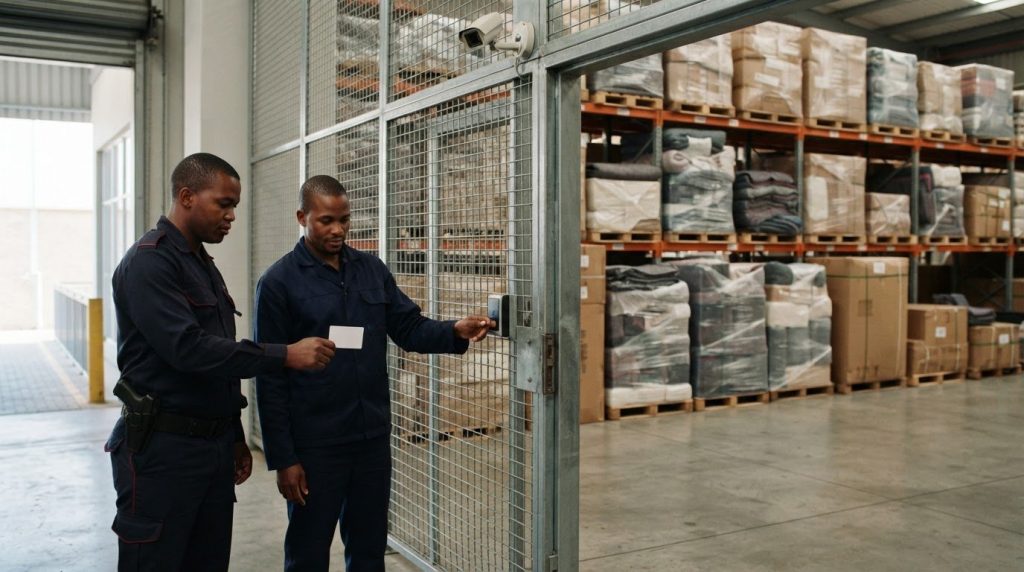
What protects belongings beyond a locked door? The security features of professional storage warehouses work in layers: controlled entry, physical barriers, surveillance and alarms, staff procedures, and accurate inventory records. Together, these measures can deter unauthorised access, flag unusual activity and help reduce the risk of theft, loss or damage. A sound visitor process includes signing in and being escorted on site.
It’s reasonable to want reassurance that your furniture and personal effects are being looked after during a move. Security also depends on how people, vehicles and goods move through a facility, especially around loading areas and restricted zones.
This guide explains what warehouse security involves and how cameras, alarms and access controls work alongside fencing, lighting, staff and record-keeping. It also explains why equipment alone is not a complete security plan, and what to consider when storage is part of a South African relocation. The aim is to clarify the safeguards involved and the risks they are designed to address.
Key Takeaways
- Look beyond the main entrance: loading bays, emergency exits and elevated access points also need controlled access and monitoring.
- Understand how cameras, alarms and access controls work together, including how monitoring adapts during seasonal staffing changes.
- Assess the role of guards, perimeter fencing, lighting, gates and barriers in deterring unauthorised entry.
- Review how access credentials are managed when staff or contractors leave; the United Nations Office of Internal Oversight Services found that identity cards for 126 contractor personnel remained active for an average of 198 days after separation.
What Is Warehouse Security?
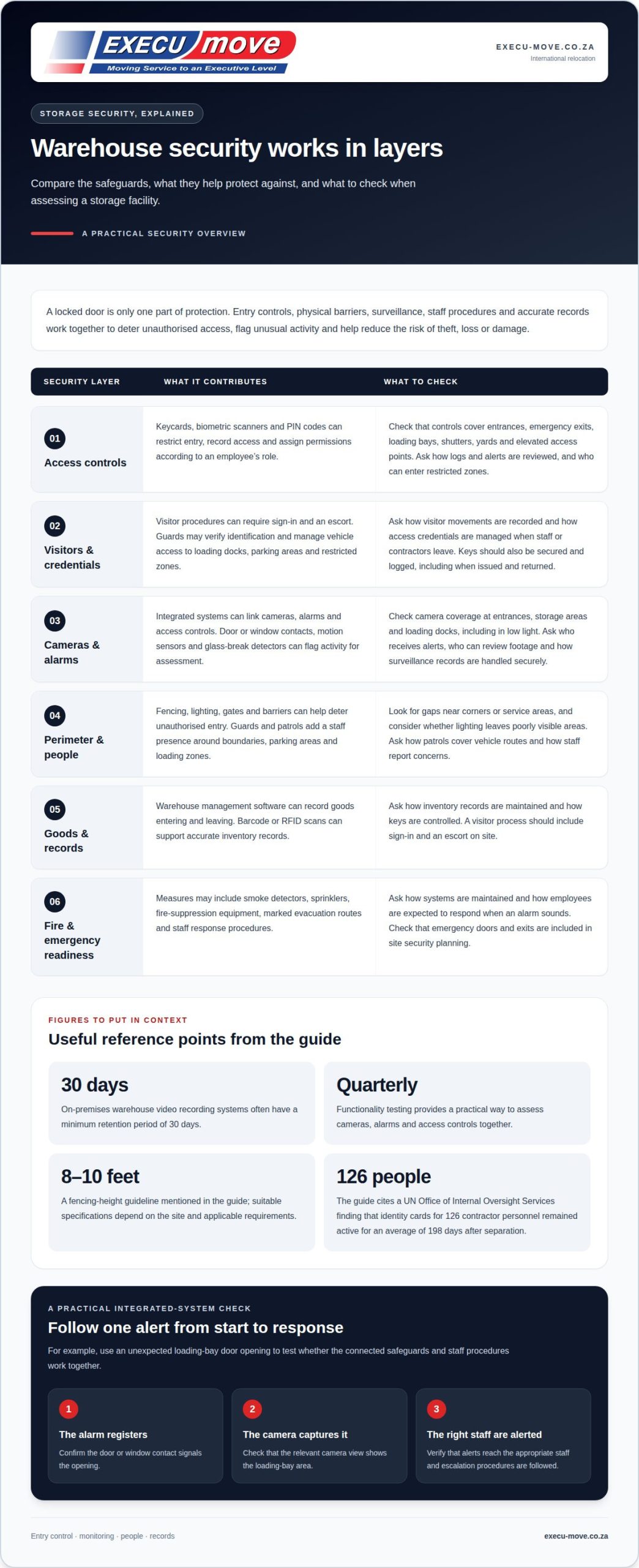
The security features of professional storage warehouses combine physical safeguards, access control, monitoring procedures and staff protocols. A site assessment should cover main entrances, emergency exits, loading bays, shutters, yards and roof or other elevated access points. Controls should reflect how people, vehicles and goods move through each area.
Keycards, biometric scanners and PIN codes can restrict entry and record access. Permissions can be set according to an employee’s role, while visitor procedures can require sign-in and an escort. Warehouse management software records goods entering and leaving; barcode or RFID scans can support accurate inventory records, a system relied upon by logistics operators such as EZ3PL Ltd to maintain strict inventory control. Ask how access logs and alerts are reviewed, and who can enter restricted areas.
Before choosing a warehouse, ask which entrances and loading areas are monitored, how visitors are managed, and how incidents are recorded. In South Africa, safety, fire and data-protection requirements depend on the facility and its operations. Ask which requirements guide its procedures, what insurance covers, whose goods are insured, and what exclusions or documentation requirements apply.
Goods are protected through controlled access to storage zones, inventory records and monitoring. Keys also need accountable handling. The United Nations Department of Peacekeeping Operations describes master and daily key registers for recording locks, and the issue and return of keys. Ask how keys are secured and logged to reduce the risk of unauthorised access or tampering.
Fire and emergency planning is another part of warehouse security. Measures may include smoke detectors, sprinklers, fire-suppression equipment, marked evacuation routes and staff response procedures. Ask how these systems are maintained and how employees are expected to respond when an alarm sounds.
A security plan should also cover side entrances, emergency doors, fire exits, docks and goods-in access points. Warehouse security can combine security personnel, canine handlers, fencing and lighting with insurance, access controls, monitoring procedures, and staff awareness and training. The right combination depends on the facility and its operations.
At entry points, guards may verify identification for employees, contractors and visitors, and manage vehicle access to loading docks, parking areas and restricted zones. Mobile patrols, CCTV cameras and access controls can add coverage. Ask how these measures work together and how staff are trained to follow the site’s procedures.
Security System Integration and Remote Monitoring
An integrated security system links alarms, cameras and access controls so an event can be assessed in context. Door or window contacts can signal an unauthorised opening, while motion sensors and glass-break detectors can flag activity. A monitoring centre may receive alerts and follow agreed procedures. This joined-up approach helps staff assess incidents and decide whether an emergency response is needed.
CCTV cameras are most useful when their views cover entrances, storage areas and loading docks. High-resolution and night-vision cameras can record activity in low light, while footage can help staff review an incident afterwards. On-premises warehouse video recording systems often have a minimum retention period of 30 days. Surveillance records need secure handling, with access limited to people responsible for reviewing incidents.
Busy seasons can change vehicle movements, staffing levels and activity around loading areas. During these periods, a facility may increase monitoring, extend security hours or use temporary systems to respond to changing demand. Staff training should cover reporting alerts, preserving relevant footage and following internal escalation procedures. Clear shift handovers help prevent alerts from being missed.
Integration only helps if equipment works as intended. Regular inspections can identify cameras with obstructed views, faulty alarms or access controls that fail to record entry. Quarterly functionality testing provides a practical way to assess these systems together. A useful review follows one example, such as a loading-bay door opening unexpectedly: confirm the alarm registers, the camera captures the area, and the appropriate staff receive the alert. These checks help enhance oversight of stored assets without treating cameras as a substitute for trained people or clear procedures.
Physical Security Personnel, Fencing and Lighting
Perimeter fencing marks the boundary around warehouse facilities and can deter unauthorised access. A height of 8-10 feet may be used as a guideline, with anti-climb features that make footholds or handholds harder to use. However, appropriate fencing specifications depend on the site and applicable requirements. Fencing should connect securely with gates and walls, without gaps near corners or service areas. A clear boundary also helps personnel spot signs of attempted entry during patrols.
Among the security features of professional storage warehouses, security personnel provide a human presence alongside physical barriers. Foot and vehicle patrols can cover boundaries, parking areas and loading zones. Staff can communicate about trespassers, damage or severe weather. At a loading bay, a guard can observe vehicle movements while surveillance cameras record activity. Clear patrol procedures help staff report concerns and respond consistently.
Lighting makes entrances, gates and vehicle routes easier to observe after dark. Positioning lights to reduce poorly visible areas around fences, yards and access points supports effective surveillance. Gates and barriers can control vehicle entry, while bollards can deter unauthorised vehicles from approaching restricted zones. These measures work best when personnel can see the areas they protect.
Assess how the physical safeguards work together. Follow a visitor’s route from the gate to reception, then consider whether staff can observe vehicle access and the loading area. Check whether fences provide clear sightlines, lighting covers likely approaches, and patrols include perimeter and parking areas. Ask how personnel communicate when they notice a breach, damaged fencing or an obstruction. This review helps show whether the facility’s measures protect stored goods and address likely threats. Effective arrangements combine visible boundaries, controlled vehicle access, attentive personnel and useful camera coverage.
Warehouse Security Risks and Threats
Warehouse risks include break-ins, cargo theft, internal theft, shared access codes and errors in stock records. A strict process for removing access after an employee or contractor leaves helps reduce exposure. The United Nations Office of Internal Oversight Services (OIOS) found identity cards for 126 contractor personnel remained active for an average of 198 days after separation. This illustrates why access records need regular review, not just careful issuing.
Security measures also have limits. A camera may record an incident without preventing it, while a missed alarm or inaccurate inventory entry can delay a response. Comparing dispatch records with physical stock checks can help identify discrepancies for prompt investigation. Clear reporting procedures help staff respond to damaged goods, suspicious activity or interruptions to warehouse operations.
Water, pests and environmental conditions can damage stored goods even when access is controlled. Suitable protection may include keeping items off the floor, using appropriate wrapping, maintaining clean storage areas, and checking for leaks or pest activity. Temperature or humidity monitoring may also matter for sensitive belongings. The appropriate measures depend on the goods and the storage environment.
Ask what the warehouse’s insurance covers, which risks are excluded, and how claims are documented. Review your own cover for stored belongings too, including whether it protects your goods against relevant risks and whether limits or exclusions apply. Security systems cannot address every cause of loss: fire, water damage, pests, handling damage and record errors each require different controls. Accurate item records and clear evidence of condition can support any later assessment.
The United States recorded roughly 65,000 cargo theft incidents in 2024; incidents increased by 40% from 2023 to 2024, showing persistent exposure.
Execu-Move: Secure Storage Solutions
Execu-Move’s Secure Storage Solutions provide an option when belongings need to be stored as part of a move. Storage can help when move-out and move-in dates do not align, a home is being prepared, or an international relocation means some belongings will remain in South Africa for a time. Including storage in the wider relocation plan can make the transition easier to organise.
Consider storage when you need a temporary place for furniture and household effects during a change of home, work or location. The timing depends on your moving schedule, what needs to be stored and when you expect to use those belongings again. Listing the items and setting aside essentials you’ll need during the transition can clarify what should travel with you.
Storage can also be part of a broader furniture move. Execu-Move offers Full Packing and Wrapping, Domestic Furniture Removals and International Furniture Removals. These services can help when belongings need to be packed and moved as part of the same relocation, rather than handled as separate tasks. The right combination depends on your move and the belongings involved.
Before arranging storage, consider which items need to be stored, how the storage period fits your moving dates, and whether you’ll need particular belongings sooner. Keep important documents and everyday essentials separate from items going into storage. A clear plan helps you decide what to pack and how to sequence your move without adding unnecessary complexity.
If storage would help with your relocation, contact Execu-Move to discuss your requirements.
Frequently Asked Questions
What security features do professional storage warehouses typically offer?
Features vary by facility, so consider how its procedures address the belongings you plan to store. Artwork, electronics and household furniture, for example, may have different handling and environmental needs, whereas specialised box and mini-storage services like 100storage are designed to safeguard standard document cartons and larger items. Ask what insurance applies to your goods, what exclusions or limits affect your own cover, and what records to retain, such as an inventory or proof of value.
How do storage warehouses control site access and verify customer identity?
Access procedures should distinguish authorised customers, employees, contractors and other visitors. Before storing goods, clarify how collection authorisation works, especially if someone else may collect items for you. Find out what identification or written authority is required and how changes to authorised contacts are recorded. Clear arrangements can prevent confusion during collection and help maintain a record of who may act on your behalf.
What CCTV, alarm and security monitoring systems are used in storage facilities?
Monitoring arrangements differ, so ask how an incident is reported to customers and what information may be shared afterwards. A damaged package or unexplained inventory difference, for instance, may need prompt reporting and supporting records. Keep your own dated inventory and photographs of valuable belongings before storage. These records can help clarify the nature and timing of a concern without relying solely on surveillance footage.
Summary
Warehouse security involves more than equipment. Clear procedures, accurate records and suitable protection for stored goods all matter. Consider how the facility’s approach fits your belongings, and keep your own inventory and condition records.
Contact Execu-Move to discuss storage as part of your relocation.