
Keeping an office operational during a move depends on protecting IT continuity, scheduling work around business priorities and giving every team clear responsibilities. Knowing how to plan an office move with minimal downtime means backing up systems, coordinating equipment disconnection and reconnection with IT staff, and testing essential services before employees return. A phased schedule can also keep critical functions running while other areas are relocated.
It’s understandable to focus on desks, boxes and the moving date, but communication matters just as much. Clients, suppliers and service providers need to know what is changing and how to reach your business during the transition.
This guide covers four practical ways to keep teams and technology working: prepare IT, choose a lower-disruption moving window, appoint a move coordinator, and notify the people and services your business relies on. Clear timing and ownership make the move easier to manage and less likely to interrupt day-to-day work.
Key Takeaways
- Protect business-critical technology with a clear backup, disconnection and reconnection plan, then test essential systems before teams resume work.
- Choose a moving window that avoids peak operational periods and gives employees room to settle into the new workspace.
- Appoint one coordinator to track responsibilities, milestones and decisions across departments.
- Tell clients, suppliers and service providers about the move early, including how to reach your business during any disruption.
1. How do you minimize downtime during office relocations?
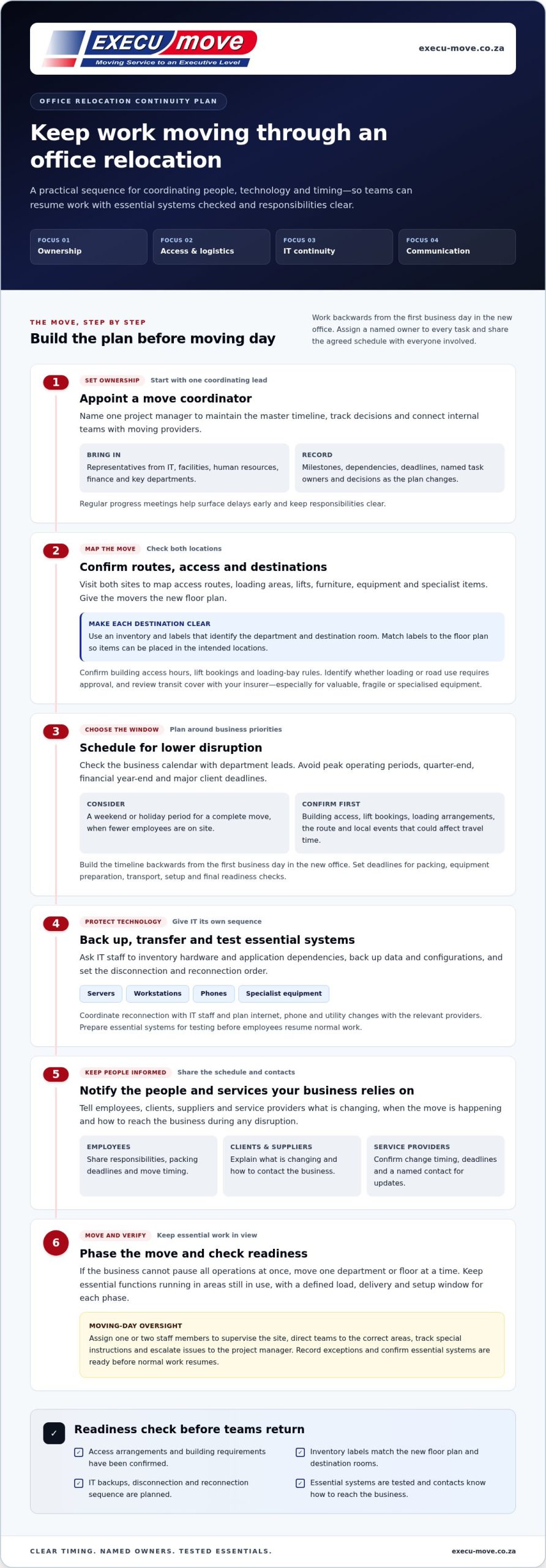
To plan an office move with minimal downtime, coordinate the commercial movers, IT staff and building contacts around one agreed schedule. Start with a site visit to map access routes, loading areas, lifts, furniture, equipment and specialist items at both addresses. Give the movers the new floor plan and label each item by department and destination room.
In South Africa, permit requirements depend on the site and moving activities. Identify whether loading or road use requires approval, then record building rules for access hours, lift bookings and loading bays. Review insurance with your insurer, especially for valuable, fragile or specialised equipment, and clarify what the policy covers during transit.
Technology needs its own relocation sequence. Ask IT staff to inventory hardware and application dependencies, back up data and configurations, and set the disconnection and reconnection order for servers, workstations, phones and specialist equipment. Prepare essential systems at the new office for testing before employees resume normal work.
Common causes of delays include missed access arrangements, unclear item destinations, unavailable IT connections and tasks without an owner. Prevent them by assigning each task to a named person, confirming access with building management and sharing the schedule with all providers in advance. A floor plan and labelled inventory help movers place furniture and equipment correctly on arrival.
Appoint one move coordinator to maintain the master timeline, track decisions and connect internal teams with moving providers. Include milestones for packing, IT transfer and move-in, with a named contact responsible for each. Schedule regular progress meetings and document changes so the relocation stays aligned as business priorities shift.
For complex office and corporate relocations, professional project coordination can align packing, transport and delivery with your operational plan. Share access details, the inventory, floor plan and IT sequence early, then agree how updates and changes will be communicated during the transition.
2. Scheduling the move outside peak business hours
Schedule the physical move outside your busiest operating hours, not simply on the first available date. Avoid quarter-end, financial year-end and major client deadlines, when finance teams, sales staff or customer support may be under pressure. Check the business calendar with department leads, then choose a window that protects the work customers rely on most.
For a complete office move, a weekend or holiday period can provide time to transfer furniture and equipment while fewer employees are on site. Before setting the date, confirm building access, lift bookings and loading arrangements with property management. In South African cities, also consider the planned route and local events that could affect travel time.
Build a working timeline backwards from the first business day in the new office. Set deadlines for staff packing, equipment preparation, transport, setup and final readiness checks. For example, if customer support must operate on Monday, schedule its workstations and essential equipment early enough for the team to test access beforehand.
Phased scheduling can suit businesses that cannot pause all operations at once. Move one department or floor at a time, keeping essential functions running in areas still in use. Sequence the inventory by destination and department so each phase has a defined load, delivery and setup window, rather than competing for space or attention.
Share the schedule with employees and service providers, including the timing of internet, phone and utility changes. Give each provider a clear deadline and a named contact for updates. Build flexibility into tasks that depend on another team, such as setting up workstations after network access is ready. A realistic schedule helps teams identify conflicts early and keep the transition organised.
3. Appointing a moving committee or project manager
Begin an office relocation by naming one project manager with the authority to coordinate decisions and track progress. Form a cross-functional committee with representatives from IT, facilities, human resources, finance and key departments. Each representative should own defined tasks, such as employee updates, equipment records or building arrangements. This gives staff a clear route for questions and connects decisions across teams.
Set out the move plan in a shared timeline, with milestones for inventory, packing, technology transfer, delivery and the first day in the new office. Record dependencies, such as workstation setup waiting for network access, and give each task an owner and deadline. Regular committee meetings help surface delays early and keep employees informed as responsibilities change.
For moving-day oversight, assign one or two staff members to supervise the site and track special instructions. They can direct teams to the correct areas, record exceptions and escalate issues to the project manager. Before moving heavy or specialised equipment, document its dimensions, handling needs and destination. Confirm the route and access at both premises, then agree who is responsible for preparing and positioning each item.
Use a consistent inventory and labelling system. Record each asset’s department, destination room and identifying details; photograph valuable, fragile or specialist equipment before packing. Match labels to the new floor plan so desks, printers and other items reach their intended locations. Colour-coding by department can make destinations easy to recognise at a glance.
Protect confidential material by assigning a named custodian to files and sensitive equipment. Seal document containers, limit handling to authorised staff, and keep a transfer record from collection to delivery. Include archiving and approved shredding decisions in the plan instead of leaving confidential files in general packing areas.
Where continuous work matters, move departments in phases. Keep essential functions operating in areas not yet moved, and schedule each team’s equipment transfer around its work. A defined sequence helps employees resume tasks smoothly while the rest of the relocation continues.
4. Notifying clients, vendors, and service providers
Communication helps protect customer service when an office address, phone line or delivery point changes. Contact clients, suppliers, insurers and service providers well before moving day. Give them the planned move date, the new address and the best way to reach your team during the transition. A direct notice gives partners time to update their records before the change takes effect.
Create a contact checklist and assign an owner to each group. Include banks, postal services, online platforms, utilities, internet providers, cleaning teams and regular suppliers. Ask the internal contact to record when each organisation was notified and whether it needs a revised account address or service-transfer arrangement. This record helps prevent an overlooked provider from interrupting operations.
Tell clients what will remain available and what may be affected. If you plan a weekend move, explain whether phone support, orders or deliveries will operate as usual. If downtime is unavoidable, provide an alternative contact method and its operating hours. Be specific: identify the affected service and the date normal access resumes.
Give employees the same core information, then tailor details by department. Reception needs call-handling instructions; finance needs updated banking and invoice details; facilities staff need the service-transfer schedule. A shared communication plan ensures every team uses the correct address and contact information, reducing confusion during the move.
Use a final checklist before moving day: confirm each critical provider has the correct address, transfer date and contact person. After arrival, test internet and phone services, then update website details, email signatures and customer-facing profiles. These checks help the business keep running and protect productivity while staff settle into the new premises.
For help coordinating the physical transition around your business schedule, discuss your office move with a relocation team.
Execu-Move: International Furniture Removals
Execu-Move coordinates the furniture and packing elements of office moves, helping you align the physical relocation with your business schedule. Its Office and Corporate Relocations service is suited to moves where departments, workstations and shared furniture need to be transferred in a planned sequence.
For a move within South Africa, Domestic Furniture Removals can support the transfer between offices. For an international relocation, International Furniture Removals can help move office furniture across borders. Full Packing and Wrapping is useful when desks, equipment and other items need professional preparation, while Secure Storage Solutions can hold items that cannot move directly into the new premises.
Share your move dates, inventory and destination layout when discussing the project. These practical details help the relocation team coordinate the move with your operational plan. Contact Execu-Move to discuss your office relocation.
Set your next move in motion
An office relocation is an opportunity to shape how your teams will work in the new space from day one. Before confirming the plan, identify which functions must remain available, what tasks can happen remotely and what employees need to prepare. These decisions turn the move schedule into a practical transition plan.
A considered approach to how to plan an office move with minimal downtime starts by matching the physical move to operational priorities. Execu-Move can coordinate the relocation around your business requirements, from planning the move sequence to managing the transfer of office furniture.
Bring your proposed dates, destination details and key operational needs into the planning conversation. Contact Execu-Move to discuss your office move and take the next step with a clear plan. A steady, well-organised transition gives your team a stronger start in its new workspace.
Frequently Asked Questions
How do you keep IT systems running during an office move?
Keep essential applications accessible by mapping which tasks depend on the office network and which can run remotely. Ask IT staff to identify access requirements, system owners and dependencies between applications. Confirm employees can securely access the tools they need from temporary work locations. This helps you prioritise services and identify access problems before they affect customer-facing work.
How do you minimize downtime during office relocations?
A practical way to plan an office move with minimal downtime is to define which business functions must remain available throughout the transition. Set a fallback for each critical function, such as redirecting calls or temporarily handling enquiries through an established digital channel. Agree who can activate each fallback and what signals a return to normal service. This gives teams a clear response if an unexpected interruption occurs.
How far in advance should you plan an office relocation?
Match the planning period to the size and complexity of the move. General guidance suggests starting six to twelve months ahead; larger organisations with extensive IT or specialised equipment may need twelve to eighteen months. Mid-sized businesses can often plan within six to nine months, while smaller offices may need three to six months. Lease dates, building readiness and operational dependencies all shape the schedule.
Looking for Help with Your Office Move?
Execu-Move’s Office and Corporate Relocations service helps businesses coordinate moves around their operational needs. Prepare a brief covering your intended dates, the type and volume of items moving, access arrangements and any business functions needing special consideration. These details give the planning conversation a practical starting point. Contact Execu-Move to discuss your office relocation and the support you need.
What should employees do before and during the relocation?
Employees should follow the company’s packing instructions, remove personal belongings and identify anything needing special handling. Before moving day, they can save work, note essential contact details and confirm how they will access their tasks during any temporary work arrangement. During the move, follow the department lead’s instructions and promptly report missing or damaged items through the agreed internal channel.
What’s the difference between phased and complete office moves?
A phased move transfers teams or work areas in stages, allowing some departments to keep operating while others relocate. A complete move transfers the whole office operation in one coordinated period, often outside normal working hours. Phased scheduling can suit businesses that need ongoing in-person functions; a complete move may suit teams that can pause site-based work and restart together once the new premises are ready.