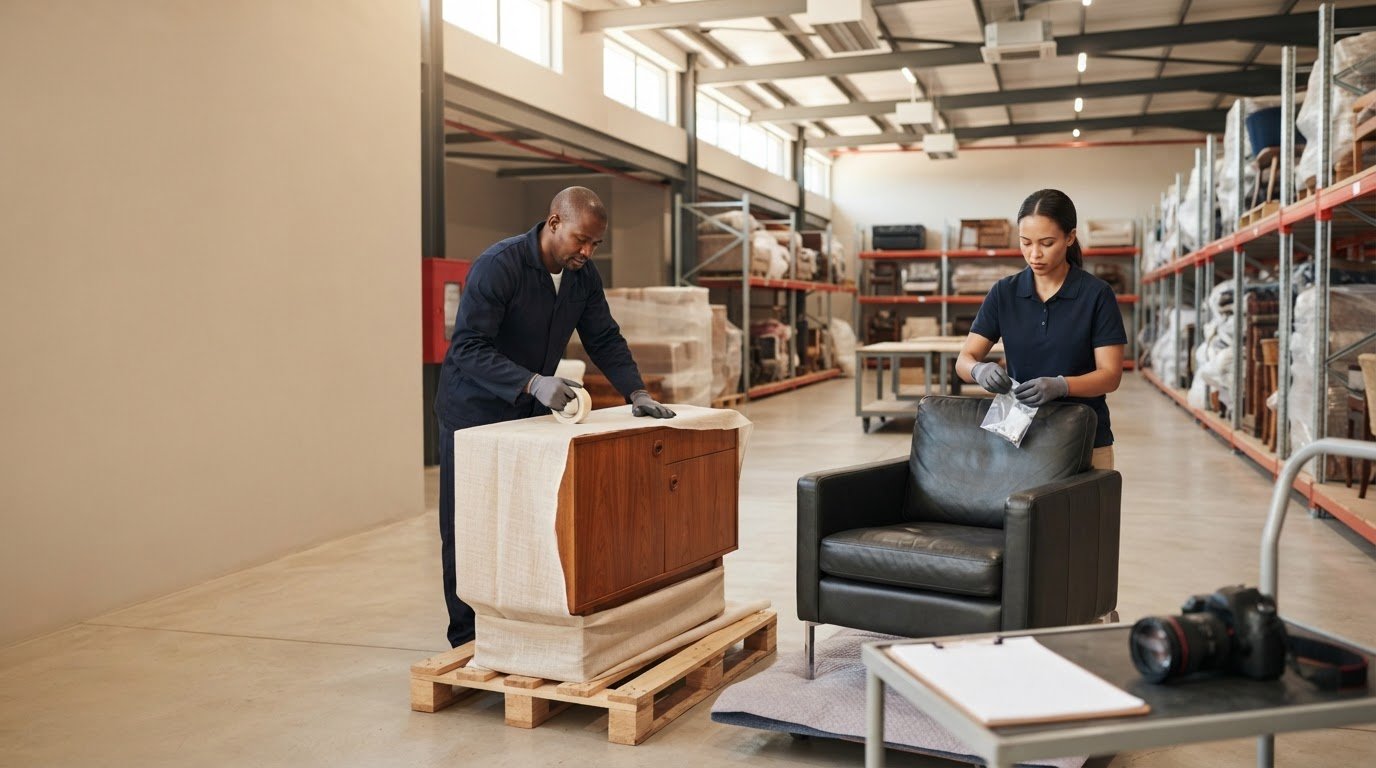
A digital inventory for international moves can do more than record what’s in each box. It can bring item descriptions, photos and packing updates together in a searchable record, making it easier to review what you plan to take and discuss shipment planning with a professional mover.
It’s understandable to wonder how much detail to capture, or worry that lists and photos will become difficult to manage once packing begins. The key is to use a consistent format and update it as decisions change, rather than treating the inventory as a one-off task.
This guide explains how to build and organise your inventory, what to record for each item, and how to keep it aligned with your packing and shipment plans. You’ll also learn how to use the record in conversations with your mover and check destination-specific documentation requirements.
Key Takeaways
- A digital inventory for international moves can keep belongings, descriptions and photos organised in one accessible record.
- Build your list room by room, using consistent categories and descriptions that make items easy to identify.
- Before sharing your inventory, check for missing details, duplicate entries and photos that don’t clearly show the item.
- Use the inventory to support planning discussions with your mover, and confirm destination-specific documentation requirements separately.
Why a digital inventory matters for an international move
A digital home inventory is an organised record of belongings you’re considering for shipment, with descriptions and supporting photos. Think of it as a working reference: it helps you review what’s moving, spot items that need attention and track questions that still need an answer.
A digital inventory for international moves brings item details and photos together, so you can review your belongings and discuss them more clearly. It can support conversations with your mover, but it doesn’t guarantee customs clearance or replace documents requested for your shipment.
What should a moving inventory help you keep track of?
Choose a structure that’s easy to review and update. For each item, record its name, room, quantity, a brief description and, where useful, a photo. “Wooden dining table, six chairs” is more informative than “furniture.” A clear photo can also help everyone identify the item if a question comes up during planning.
Use the record to flag belongings that need a decision or further discussion, including items you’re unsure about taking. Update their status when your plans change. This keeps the inventory useful throughout planning instead of leaving you with a static list that no longer reflects your decisions.
Does a digital inventory replace customs paperwork?
No. Inventory requirements and other documentation can vary by destination and shipment circumstances. Your personal record may help you prepare, but it isn’t automatically a formal inventory or customs document. Confirm what’s required with your mover and relevant official sources for the destination.
Shipping documents have distinct roles. For example, a bill of lading serves as a receipt for goods and can be a document of title to the goods; your inventory is a separate record of belongings. Keep the distinction clear, and ask your mover which documents they need and in what format.
How to create a digital inventory for an international move
Keep the process manageable by choosing a format you can access and update, such as a spreadsheet or inventory app. There’s no single format that suits every household. The right one is the format you’ll keep current and can share in an agreed way if your mover requests it.
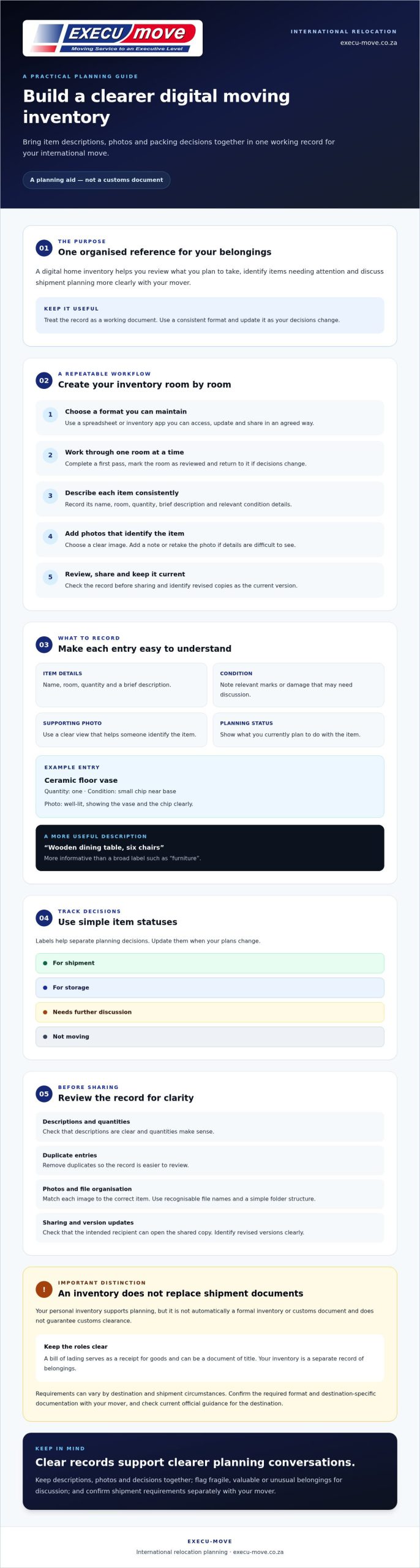
Choose a tool, work room by room, describe each item, add useful photos, then review and update the record. This repeatable workflow makes your digital inventory for international moves easier to use as packing decisions take shape.
What details and photos should you record?
For each entry, note a clear description, quantity and any relevant condition details. Add a photograph that shows the item clearly, rather than a distant shot that makes it hard to identify. For example, record “ceramic floor vase, one, small chip near base” and take a well-lit photo that shows both the vase and the chip. Forbes also outlines ways to build a home record using a home inventory app.
Use the same naming style and categories throughout. Flag fragile, valuable or unusual belongings for a conversation with your mover. A photo or note can help explain what an item is, but it doesn’t determine how it should be packed or handled.
How can you organise the inventory room by room?
Start with one room and complete its first pass before moving on. Mark that room’s list as reviewed, then return to it if your decisions change. Give each item a simple status, such as:
- For shipment
- For storage
- Needs further discussion
- Not moving
These labels help separate planning decisions without turning your list into a packing or customs document. If you’d like to discuss how your inventory can support international moving arrangements, keep your questions and flagged items ready.
How to check, share and update your inventory before shipment
Before sharing your digital inventory for international moves, review it as a working document. Check that descriptions are clear, quantities make sense, duplicate entries are removed and each photo matches the item it refers to. If an image is unclear, retake it or add a brief note so the recipient doesn’t have to guess.
How can you keep the record clear and easy to share?
Use recognisable file names and a simple folder structure, such as separate folders for the inventory and its photos. Keep item names or reference numbers consistent between the list and images. If you share a cloud-based file or folder, check that the intended recipient can open it before relying on that copy. Agree with your mover on a practical format for discussing the information; don’t assume a particular file type is required.
What should you confirm with your international mover?
Ask whether the mover needs a particular inventory format or additional information for shipment planning. Requirements can vary, so confirm destination-specific documentation with your mover and check current official guidance for the destination. Your personal inventory is a planning aid, but it may not replace documents required for a shipment.
Keep the record current as decisions change. If an item moves from “for shipment” to “for storage,” or is removed from the move, update its status and related notes. When you send a revised copy, identify it as the current version so discussions don’t rely on an outdated list.
A clear inventory can make planning conversations more focused. Find out more about international relocation planning and the information that may help with your shipment.
Make your digital inventory part of a calmer international move
A well-kept inventory gives you a clearer view of what you’re planning to move, but it’s a planning aid, not a substitute for advice from your mover or destination-specific checks. Build the record, review it for gaps, share it in an agreed format and update it when your decisions change. This cycle keeps your information useful as the move takes shape.
When should you ask for professional inventory guidance?
Ask early if your shipment includes fragile, valuable, unusual or bulky belongings, or if you’re unsure how to describe or plan for an item. A mover can advise what information is useful for planning and explain which questions need further confirmation. If you’re considering a shared load, ask how that option could affect your shipment plan rather than assuming the inventory alone will answer every question.
What to prepare before discussing your move
Have your draft inventory and a short list of questions ready. Mark uncertain details as estimates or items to confirm; don’t present them as settled requirements. Note which belongings need special attention, which are still under discussion, and what you want to clarify about packing or shipment planning. For general timing considerations, see this international relocation service information and ask how timing may relate to your circumstances.
Execu-Move can help you discuss international furniture removals, packing and shipment planning. For support with your international move, contact Execu-Move about your move when you’re ready to talk through the next steps.
Make your next moving decision with confidence
A digital inventory for international moves gives you a practical record to build on: keep descriptions and photos together, review the details, and update the list as your plans change. Use it to make planning discussions clearer, while confirming document requirements and special handling questions with your mover and relevant destination authorities.
Execu-Move supports international moves with furniture removals, full packing and wrapping, and customs clearance services. Its worldwide network includes more than 2,000 agents, helping coordinate the international journey. Your inventory can be a useful starting point for discussing what’s moving and what support may be needed.
When you’re ready to talk through your plans, discuss your international move with Execu-Move. A clear record and experienced guidance can help you approach the next steps with greater confidence.
Frequently Asked Questions
What is a digital inventory for an international move?
A digital inventory for an international move is an organised electronic record of household belongings, with descriptions and, where useful, supporting photos. Use it to review what you plan to move, flag items that need attention and track changes. It’s a personal planning tool, not automatically a customs document or a substitute for requirements confirmed by your mover or destination authorities.
How do I make an inventory of my home for an overseas move?
Choose a format you can maintain, then work through your home one room at a time. Record each item with a clear description, quantity and relevant condition notes, and add a useful photo where it helps identify the item. Use consistent categories, mark each room’s list as reviewed and update the record as you decide what will move, go into storage or stay behind.
Do I need a digital inventory for an international move?
A digital inventory can make it easier to organise your belongings and discuss shipment planning, but whether a particular inventory or document is required depends on the destination and shipment circumstances. Ask your international mover what information they need, and confirm destination-specific requirements through current official guidance. Don’t assume your personal record replaces any formal documents that may be requested.
What information should an international moving inventory include?
Include a clear item description, quantity, room or category, relevant condition notes and a photograph where it helps clarify what you’re recording. For example, identify a dining table by its material or distinguishing features rather than listing it simply as “furniture.” You can also flag fragile, valuable or unusual belongings for discussion with your mover. Confirm separately whether additional shipment information is needed.
Can I use a spreadsheet for an international moving inventory?
Yes, a spreadsheet can work if it’s easy for you to update and can be shared in a format your mover can access. Use consistent column headings, such as item description, quantity, room, condition and status, and keep related photos clearly labelled. Before relying on a shared file, check that the recipient can open it. Ask your mover whether they need another format or further details.