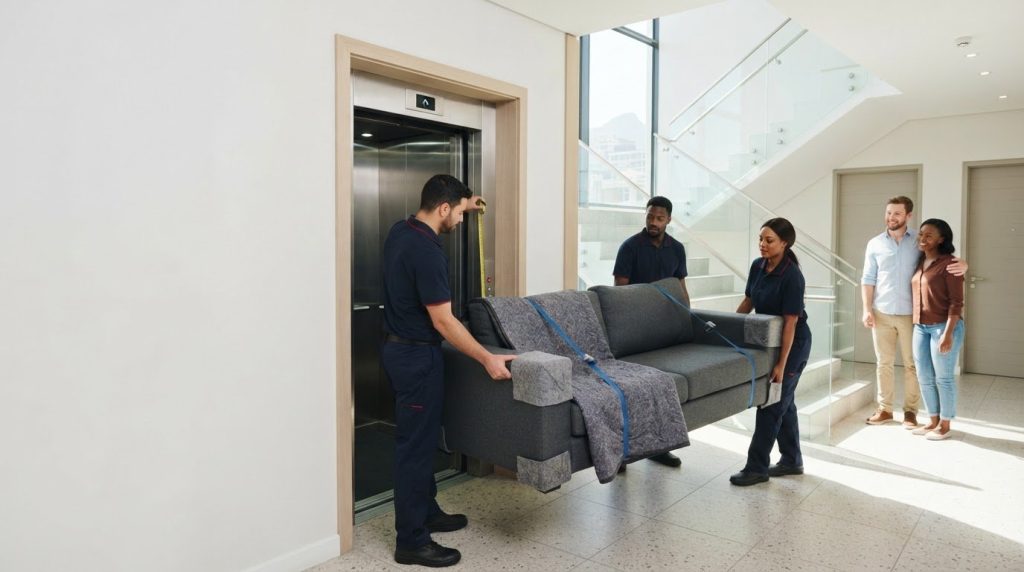
What if the lift is too small for your sofa, or a tight stairwell makes a familiar piece of furniture difficult to move? When planning for moving house stairs and elevators, it’s worth checking whether bulky items will fit, what building access allows and how to protect shared spaces. These details are easier to manage when you consider them before moving day.
Start with the whole route, from each room to the moving vehicle and then into your next home. This guide shows you how to assess access, prepare furniture and coordinate building arrangements with your removals team. Sharing clear information early helps the team plan around practical constraints and gives you more time to address potential problems.
Key Takeaways
- For moving house stairs and elevators, assess the full route at both addresses, including tight turns, doorways and lift openings.
- Measure large furniture and note any parts that can be safely detached to make handling easier.
- Protect furniture and keep stairways, landings and lift areas clear to reduce the risk of avoidable damage.
- Share floor details, stair access, lift arrangements and oversized items with your removals team early.
Why stairs and elevators matter when moving house
Stairs and lifts can affect loading time, how furniture is handled and whether an item can reach the vehicle by the planned route. A sofa may fit through the front door but be difficult to turn on a landing. A lift may be available but unsuitable for a large or heavy item. Planning for moving house stairs and elevators helps you identify these constraints while there’s still time to consider the route and handling plan.
Moving access planning means checking the building route and the dimensions of each item before moving day, so your removals team can plan a safe, practical way to carry your belongings. It’s one part of the wider relocation process, which includes preparing and transferring household belongings alongside other moving tasks.
Which parts of the route should you assess?
Follow the route from each room to the vehicle, rather than checking only the main entrance. Look at doorways, landings, stair turns, lift doors and the path outside. Tight corners can limit the angle at which an item can be carried. Low ceilings, handrails, narrow passages and fixed fittings can also reduce clearance. Check the full journey at both the collection and delivery addresses.
Why an available lift is not automatically suitable
A passenger lift is primarily intended to carry people. A service lift, where a building has one, may provide a more practical route for goods, but don’t assume either lift is available or suitable for your move. Dimensions, permitted loads and building rules can affect whether a lift can be used for particular items. Confirm arrangements with building management in advance, including which lift may be used and whether it needs to be booked. Share those details with your removals team so access can be included in the plan.
How to assess stairs and elevators before moving house
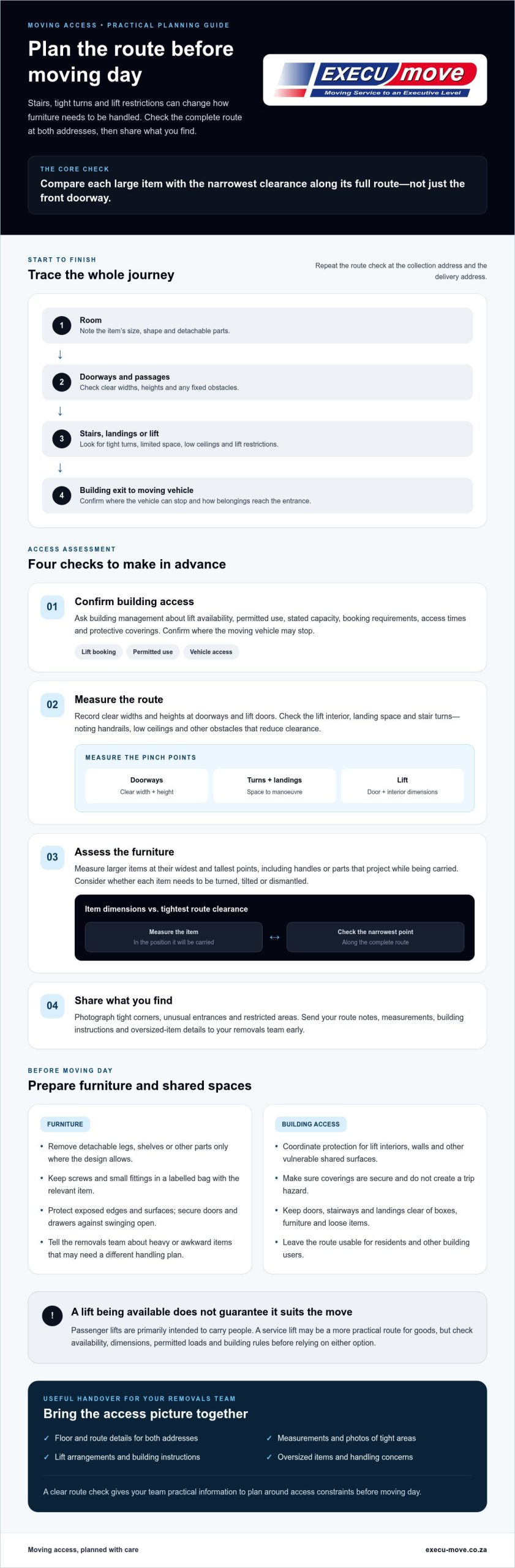
A route-first check can reveal constraints before the removals team arrives. For moving house stairs and elevators, inspect the path from each room to the vehicle at both addresses, then compare it with the size and shape of the items being moved. Checking the complete route before moving day gives you time to flag access problems and discuss a practical approach.
- Confirm access. Ask building management about lift bookings, permitted use, access times and any required protective coverings. Find out where the moving vehicle can stop and how belongings can travel from there to the entrance.
- Measure the route. Record clear widths and heights at doorways and lift doors. Check lift interior dimensions, landing space and stair turns, including obstacles such as handrails or low ceilings.
- Assess the items. Measure larger furniture at its widest and tallest points, including parts that may project while it’s being carried. Note items that may need to be turned, tilted or dismantled.
- Share the findings. Photograph tight corners, unusual entrances and restricted areas. Send your route notes, measurements and details of oversized items to your removals team.
What should you measure before moving day?
Compare each item’s dimensions with the narrowest clearance along its route, not just the front doorway. Consider whether it can be manoeuvred through turns and across landings, and whether lift doors and the lift interior provide enough room. Measure the item in the position it will be carried, allowing for handles or other parts that stick out. Photos can show the shape of a turn or obstacle that measurements alone may not explain.
What should you confirm about the building lift?
Ask building management to confirm the lift’s stated capacity and permitted use, and whether a booking, protective coverings or specific access times apply. OSHA’s elevator safety standard provides general context on lift operation, but it is a United States standard, not South African regulation. Share the building’s instructions and your route notes with your removals team early. Access details can then be considered as part of your moving plan.
How to prepare furniture and shared spaces for stairs or lifts
Thoughtful preparation helps protect belongings and keep the route manageable. For moving house stairs and elevators, consider both the item and the building: furniture needs protection during handling, while shared areas need to remain clear and usable. Execu-Move’s domestic relocation service includes full packing and wrapping to help prepare furniture for a move.
Prepare large furniture for the route
Where the design allows, remove detachable legs, shelves or other parts that make furniture wider or awkward to carry. Don’t force components apart if they’re fixed or unfamiliar. Place screws and small fittings in a labelled bag, and keep it with the relevant item to make reassembly more straightforward. Protect exposed edges and surfaces, and secure doors or drawers so they can’t swing open during handling.
Protect the building and keep access clear
Before the move, coordinate with building management about suitable protection for lift interiors, walls and other vulnerable shared surfaces. Make sure coverings are secure and don’t create a trip hazard. Clear loose items from the route, and keep doors, stairways and landings free of boxes and furniture. This helps protect the building while keeping access open for residents and other users.
Take care with heavy or awkward items. Don’t carry them alone or improvise a lifting or turning method that feels unstable. A bulky item may need a different handling plan, particularly on a narrow staircase or near a lift entrance. Tell your removals team about any concerns so they can consider the item and route together.
Good preparation is practical: secure loose parts, protect vulnerable surfaces and leave the access route clear. Execu-Move provides professional packing and furniture protection as part of its relocation services.
How to coordinate moving-day access with your removals team
What access details should you share?
Prepare a concise handover for both addresses. Include the floor, route photographs and any restrictions that could affect the crew or vehicle. Identify oversized furniture and explain any lift arrangements made with building management.
- Floor and route: State the floor and describe stairs, narrow turns and other access constraints.
- Lift arrangements: Share booking times, permitted use and any building instructions.
- Vehicle access: Explain where the moving vehicle may stop and note any restrictions on the route from there to the entrance.
- Large items: Identify furniture with an unusual shape or size, and flag concerns about getting it through the route.
This handover gives your team useful context before moving day, rather than leaving access details to be discovered during loading. Keep the information together and update it if building arrangements change.
What should you do if an item may not fit?
Don’t force furniture through a stairwell or lift opening. This could damage the item or building and create an unsafe handling situation. Tell your removals team about the concern before moving day, and share measurements and photographs where possible. The team can consider the item alongside the route when planning how to handle it.
Execu-Move provides domestic furniture removals. Early communication helps connect building access arrangements with the practical demands of moving your belongings. Share details about stairs, lifts and oversized items as part of planning your move.
Make your access plan the start of a smoother move
Once you’ve accounted for access, consider what needs to be ready first in your new home. Setting aside essential furniture and everyday items can help make the first few days more settled, especially after a move involving stairs or lifts.
Planning moving house stairs and elevators is one part of a larger relocation. Execu-Move supports domestic and international furniture moves, with full packing and wrapping available as part of its services.
A clear access plan gives your removals team practical information to work with. Contact Execu-Move to discuss your move or request a quote.
Frequently Asked Questions
Can movers use the lift in my apartment building?
They can use it if the building permits furniture moves and the lift’s access arrangements and stated capacity allow it. Some passenger lifts may be reserved for people, so don’t assume they can be used for removals. Confirm booking steps, permitted times and restrictions with building management, then share the instructions with your removals team before moving day.
How do I know if my furniture will fit up the stairs?
A plan for moving house stairs and elevators should include a careful check of the full route. Measure each item at its widest points and compare those dimensions with doorways, landings and stair turns. Check overhead clearance and account for detachable parts or protruding handles. If a turn looks tight, photograph it and discuss the route with your removals team rather than trying to force the item through.
Is it safe to move heavy furniture down stairs?
What should I do if my sofa will not fit in the lift?
Check whether the sofa’s legs or other parts can be removed safely, then consider whether the stair route is a workable alternative. Don’t assume stairs will provide more clearance or easier turns. Share the sofa’s dimensions and photographs of the lift and access points with your removals team before moving day. Avoid forcing it into the lift, as this could damage the sofa or building.
Should I book the building lift before moving day?
Book the lift if building management requires a reservation, as access procedures differ between buildings. Ask whether you need to reserve it, which times are permitted and what instructions apply on arrival. Keep a record of the confirmed arrangements and pass them to your removals team. Share any changes promptly so the crew can plan around the building’s access requirements.