
The cheapest option isn’t always the one with the lowest upfront cost. When comparing the cost to ship furniture vs buying new, consider the cost of replacing each item, along with its condition, quality and personal value.
It’s natural to focus on the transport quote, especially when a move already involves plenty of decisions. But buying new furniture can also mean paying for delivery and assembly, and spending time finding pieces that suit your home. Whether you’re moving within South Africa or overseas, the right choice depends on what you’re taking, where you’re going and what you would need to replace.
This guide explains how to compare shipping with buying new, including furniture’s practical and sentimental value and the extra costs that can affect your decision. You’ll also find a straightforward way to decide which pieces are worth taking and which may be better left behind.
Key Takeaways
- Compare the full cost of replacing furniture, including delivery and assembly, with the cost of moving it.
- Distance, the volume of furniture and the destination all influence shipping costs, so the right comparison depends on your move.
- Weigh each item’s condition, usefulness and sentimental value before deciding whether to bring it or replace it.
- Professional removals, packing and storage can help you plan what to move and manage your belongings through a relocation.
Why Compare the Cost of Shipping Furniture with Buying New?
Furniture decisions can affect the overall budget for an international move. Looking only at transport costs may make replacing everything seem simpler, but the purchase price is just one part of furnishing a new home. A useful comparison weighs the cost of moving each piece against the cost of replacing it at your destination.
Shipping costs depend on the shipment as a whole, including the furniture’s size, the space it takes up, the route and the services needed to prepare it for transit. Buying new involves different considerations: finding suitable furniture, arranging delivery and assembly, and fitting purchases around other settling-in expenses. Compare the cost to ship furniture vs buying new item by item, rather than making one decision for the entire home.
For each piece, consider:
- Replacement: Would a comparable item be easy to find, and would its quality meet your needs?
- Condition and use: Is the furniture in good shape and likely to suit your new home?
- Move requirements: How much space does it take, and does it need careful packing or special handling?
- Personal value: Is it difficult to replace because of its history or sentimental importance?
This comparison is especially useful for an international move, when your shipment and destination home may differ from your current circumstances. A large item that suits your current home may not fit the next one, while a well-made piece could be difficult to replace with something of similar quality. Taking stock before you move helps you avoid paying to transport furniture you don’t need or replacing pieces you would rather keep.
For a clearer picture, a professional international furniture removal assessment can account for the items being moved and the services required. Compare that scope with the replacement plan, including delivery and assembly, then decide which belongings belong in the shipment.
How Much Does It Cost to Ship Furniture When Moving?
Furniture shipping costs depend on the route, shipment size and services required. For an international move, compare the full transport plan with the cost of furnishing your home at the destination.
Shipping Distance Versus Replacement Prices
Longer routes involve more transport, while furniture size and shipment volume also affect the estimate. To compare the cost to ship furniture vs buying new furniture, consider the item’s replacement quality, delivery and assembly needs alongside its transport requirements. Custom furniture may cost more than ready-made pieces, and replacing a made-to-order item may also mean a longer wait.
Import duties, VAT and customs fees depend on the shipment and the applicable import arrangements for South Africa. Consider potential import charges separately from transport when planning your total budget.
New furniture prices in South Africa vary by item, materials, quality and retailer. Replacement options for a couch or desk can vary widely, so compare similar specifications instead of relying on the item name alone.
Quote Factors, Risks, and Accurate Estimates
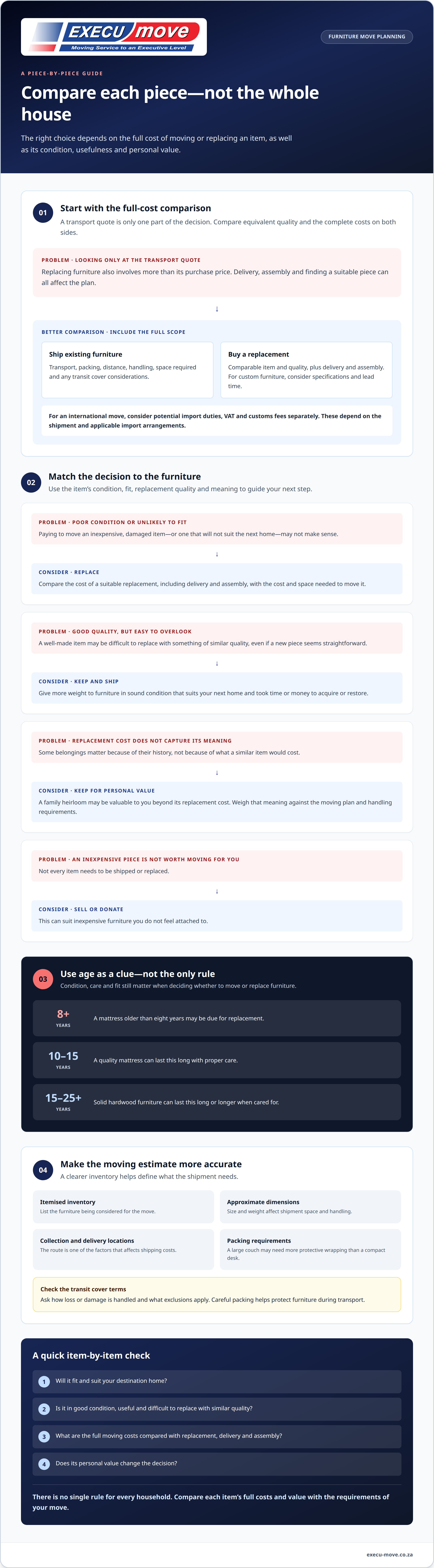
Size and weight affect the space and handling a shipment needs. Packing requirements matter too: a large couch may need more protective wrapping than a compact desk. For a more accurate South African estimate, provide an itemised inventory, approximate dimensions, collection and delivery locations, and any packing requirements.
Furniture can be damaged or lost during transport. Careful packing helps protect your items, while the terms of transit cover explain how loss or damage is handled. Ask for the quote to set out the cover and any exclusions.
Whether shipping furniture or buying new costs less depends on the route, volume, dimensions, packing and cover. Your quote will give you the costs for your move.
| Option | Upfront comparison | Other considerations |
|---|---|---|
| Ship existing furniture | Transport and packing | Distance, handling, sentimental value |
| Buy ready-made | Item, delivery and assembly | Available styles and fit |
| Buy custom | Made-to-order item and delivery | Specifications and lead time |
Compare equivalent quality and the complete costs of each option before you decide.
Delivery, assembly and hidden expenses add 15% to 30% to furnishing; custom furniture costs 20-50% more. Compare at least three services and quotes with and without furniture.
How to Decide Whether to Ship or Replace Furniture
Decide piece by piece, not room by room. A low-value side table in poor condition may be easier to replace than ship, while a well-made dining table may be worth keeping. Consider its condition, usefulness in your next home, replacement quality and personal meaning. Then weigh these factors against the space it takes up and the overall moving plan.
Age and construction offer useful clues, but they don’t decide the matter alone. A mattress older than eight years may be due for replacement, while a quality mattress can last 10 to 15 years with proper care. Solid hardwood furniture can last 15 to 25 years or longer when cared for. A sound, comfortable item may still be worth moving if it suits your destination home.
- Replace: Consider this for inexpensive pieces in poor condition or items that won’t fit your new home.
- Keep: Give more weight to quality furniture that took time or money to acquire or restore.
- Keep for meaning: A family heirloom may be valuable to you beyond its replacement cost.
- Sell or donate: This can suit inexpensive furniture you don’t feel attached to.
Buying new lets you choose furniture that suits your destination’s layout and your current needs. In-stock furniture bought in person may be available to take home immediately. Online orders can take several days or weeks to arrive, so replacing essential pieces may leave a gap after your move. Custom furniture can be tailored to your space, but may involve a longer wait and different costs from ready-made options.
There’s no single rule for every household. Start by setting aside items that are damaged or unsuitable, then identify pieces with lasting quality or strong personal meaning. For everything else, compare the effort and expense of replacement with the value of having the item arrive with you. This keeps the decision focused on what will genuinely serve your next home.
Execu-Move
Execu-Move helps you plan furniture removals around the pieces you’ve decided to keep. For an international relocation or a move within South Africa, your removal plan can take the shipment, destination and handling needs into account. This gives you a practical basis for comparing transport with replacement as you decide what belongs in your new home.
For a move across borders, International Furniture Removals transports selected household furniture to your destination. Domestic Furniture Removals covers moves within South Africa. In either case, start with a clear inventory of the furniture you plan to take, including large pieces, fragile items and anything that needs particular care.
Full Packing and Wrapping prepares furniture for transit. It can be especially useful for upholstered pieces, finished surfaces or items with parts that need careful protection. Including packing in your moving plan helps you account for it from the outset.
Move dates and access to a new home do not always line up neatly. Secure Storage Solutions can help when belongings need to be stored during a relocation. This may suit a household waiting for a home to be ready or needing more time to decide how furniture will fit the new space.
As you prepare, group items by what you plan to move, what you may replace and what needs storage. A useful inventory can identify:
- Furniture dimensions and any unusually large pieces.
- Items needing packing or careful handling.
- Pieces whose arrival timing matters for settling in.
- Furniture you may leave behind because it no longer suits your needs.
This approach keeps the comparison focused on your circumstances. Moving selected furniture may make sense, while replacing a worn or unsuitable piece may better suit your next home. The right plan brings these decisions together with the practical requirements of the move.
For support planning your furniture move, contact Execu-Move.
Frequently Asked Questions
How much should I budget for hidden furnishing costs?
Allow for costs beyond a furniture item’s listed price, such as delivery, assembly and anything else needed to make a room usable. Furnishing a dining area, for example, may involve more than buying a table. List essentials by room and separate immediate needs from later purchases. This helps you plan around the overall moving budget instead of treating one item’s price as the full cost of setting up a home.
Is it Worth Shipping Specific Furniture?
Shipping may be worthwhile for furniture that suits your destination home and would be difficult to replace with a comparable piece. Check whether its dimensions work in the new space and whether its features still meet your needs. A desk that suits your work routine, for instance, may be more useful than a similar-looking replacement without the same practical features.
How to compare furniture shipping costs with buying new furniture?
Compare similar pieces and include the full costs of each option. Note differences in materials, condition, size and function, then consider whether a replacement will be available when you need it. A cheaper item may not offer the same durability or fit. This helps you judge the practical value of keeping the original instead of focusing only on its purchase price.
When is it cheaper to sell or donate furniture and buy new instead of shipping it?
Selling or donating may suit furniture that is worn, won’t work in your next home or is easy to replace with a suitable alternative. For example, a bookcase that won’t fit the new room may be less useful than one chosen for that space. Consider whether you can arrange a sale or donation before leaving and whether replacement furniture will be available after you arrive.
In summary: Decide one item at a time, weighing usefulness, condition and personal value against the effort of replacing it. This keeps your furniture plan aligned with what your next home needs.
If you’d like support planning your move, contact Execu-Move.
What are the risks of damage or loss when shipping furniture, and what insurance is available?
Furniture can be damaged or lost during transit. Careful packing helps protect it, and the terms of transit cover explain how loss or damage is handled, including any exclusions. The cover available and who provides it can vary. Ask your mover to confirm the policy provider, terms and exclusions before your move.