
What if the most stressful part of your relocation isn’t packing your home, but wondering if your vehicle will actually clear customs on the other side? Shipping a car is a high-stakes task. You’ve likely spent years maintaining your vehicle, so the thought of it sitting in a port due to a missing SAPS clearance or an outdated ITAC permit is enough to cause significant anxiety. We understand that international car shipping from South Africa involves a complex web of 2026 regulations, but it doesn’t have to be overwhelming. This guide provides a definitive roadmap to ensure your vehicle arrives safely, legally, and without hidden delays.
We’ll walk you through the new mandatory SARS Traveller Management System, explain updated ITAC fee structures, and provide a step-by-step checklist for seamless transit. From securing your Vehicle Police Clearance Certificate to choosing between RoRo and container shipping, you’ll find the clarity you need to move forward with complete confidence. Let’s ensure your car meets every international standard before it even reaches the water.
Key Takeaways
- Master the complex regulatory landscape by securing your ITAC export permit and SARPCCO clearance to ensure a legal and delay-free departure.
- Select the most suitable transit method by comparing the enhanced protection of a private container with the cost-effective convenience of Roll-on/Roll-off shipping.
- Ensure your vehicle passes international hygiene inspections by performing a deep steam clean of the undercarriage and organizing all original ownership documentation.
- Successfully navigate international car shipping from South Africa by accurately budgeting for destination port handling fees and understanding the legal weight of your Bill of Lading.
Understanding the Regulatory Landscape for Vehicle Export
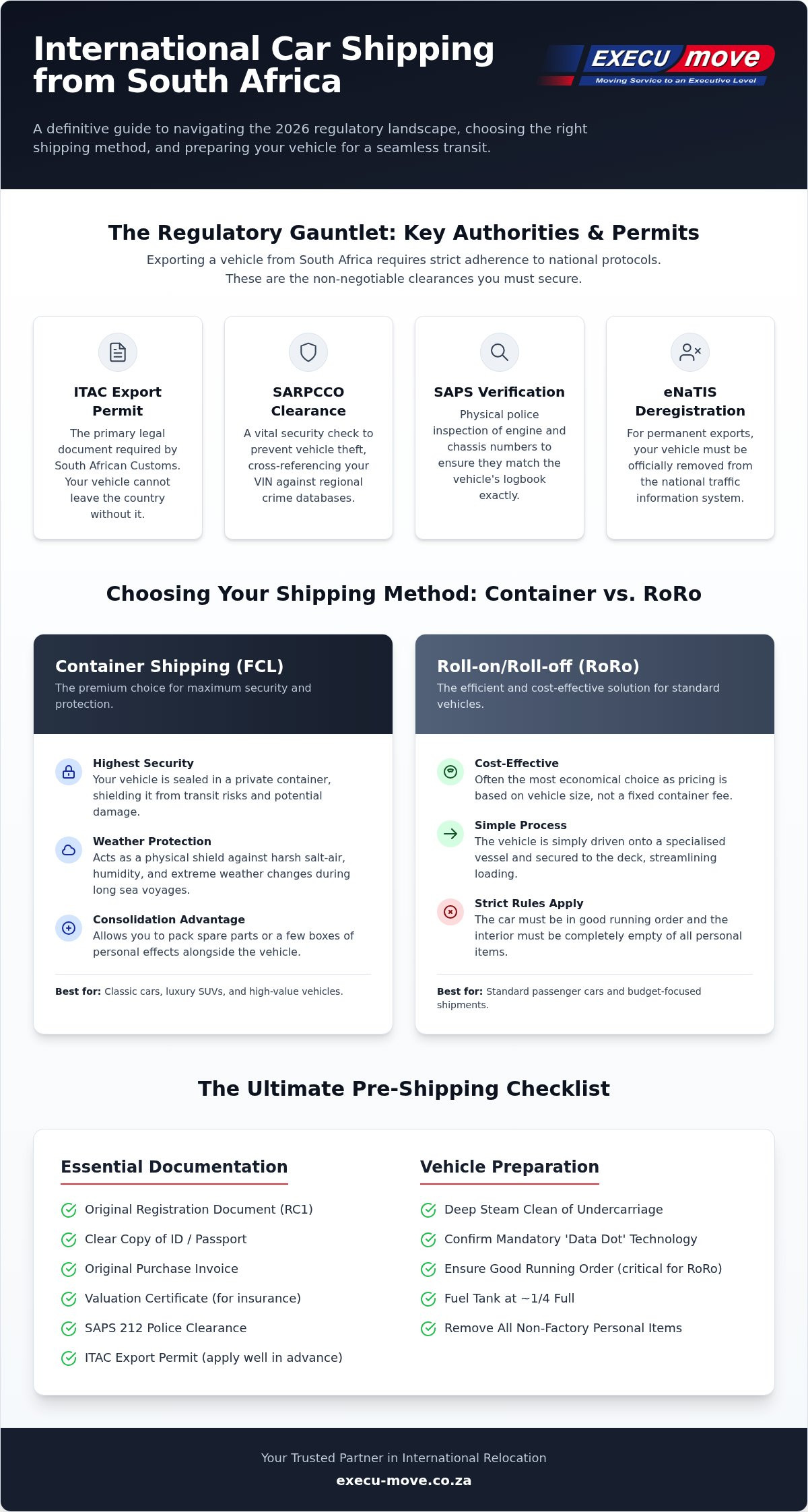
Exporting a vehicle requires more than just a shipping slot; it demands strict adherence to national protocols. The International Trade Administration Commission (ITAC) oversees this process, acting as the gatekeeper for all used motor vehicles leaving our borders. When you begin international car shipping from South Africa, you’ll find that an Export Permit is the primary legal document required by South African Customs to allow a vehicle to leave the country. Without this specific permit, your car won’t even reach the quay, let alone the destination port.
Security remains a top priority for local authorities during this transition. The SARPCCO (Southern African Regional Police Chiefs Co-operation Organisation) clearance is vital for preventing vehicle theft, as it cross-references your VIN against regional crime databases. It’s also important to distinguish between a permanent export and a temporary car relocation service South Africa. Permanent moves require full deregistration from the eNaTIS system, while temporary relocations often involve a Carnet de Passages to avoid permanent import duties in your host country.
Key South African Authorities and Permits
The South African Police Service (SAPS) provides the final layer of local verification. Officers must physically inspect the engine and chassis numbers to ensure they match the vehicle’s logbook exactly. You’ll also need to confirm your vehicle has ‘Data Dot’ technology, which has been a mandatory requirement for all vehicles exported from South Africa for over a decade. Managing these technicalities is often easier when integrated with your international relocation services. Whether you opt for a container or Roll-on/Roll-off (RoRo) shipping, these regulatory steps form the foundation of a successful move.
Choosing Your Shipping Method: Container vs. RoRo
How do you decide between the privacy of a container and the efficiency of an open car deck? When planning international car shipping from South Africa, your choice often depends on the vehicle’s value and your final destination. FCL (Full Container Load) shipping offers the highest level of security. It’s the preferred method for classic cars or luxury SUVs. Unlike other methods, a container allows you to pack spare parts or a few boxes of personal effects alongside the vehicle. This consolidation can be a significant advantage during a full relocation.
When to Choose Containerised Shipping
Protection is the primary motivator here. During long sea voyages, vehicles are exposed to harsh salt-air and extreme weather changes. A sealed container acts as a physical shield against these elements. Inside, experts use professional lashing and chocking to ensure the car doesn’t move an inch during transit. For a detailed look at these safety protocols, see our complete vehicle transport guide.
The Roll-on/Roll-off (RoRo) Alternative
Is budget your main concern? RoRo is often the most cost-effective solution for standard passenger cars. The process is simple: the car is driven onto a specialised vessel and secured to the deck. However, there are strict rules. The car must be in good running order and the interior must be completely empty. If your vehicle needs a jump-start or minor mechanical assistance to ensure it’s in good running order before it reaches the quay, TowConnect can connect you with roadside assistance providers across South Africa. You cannot leave even a spare tyre or a toolkit inside unless it’s part of the factory standard.
Before making a final decision, check the infrastructure of your destination port. Some smaller ports don’t have the cranes required for containers, making RoRo the only option. If you’re unsure which route fits your timeline, request a tailored vehicle shipping quote to see which logistics plan suits your needs. Remember that all exports still require approval from the International Trade Administration Commission (ITAC) regardless of the shipping mode.
The Ultimate Pre-Shipping Checklist for South African Vehicles
Success in international car shipping from South Africa depends on your attention to detail during the weeks before departure. To avoid delays at the port, you must gather your original Registration Document (RC1), a clear copy of your ID or Passport, and the original Purchase Invoice. A Valuation Certificate may be required for insurance purposes to reflect the vehicle’s current market value. Having these ready prevents the frantic last-minute search that often derails shipping timelines.
Documentation You Cannot Do Without
The core of your file is the SAPS 212 Clearance. This involves taking your vehicle to a designated police clearance office where officials verify that the chassis and engine numbers haven’t been tampered with. Simultaneously, you must adhere to South African export permit regulations by applying for an ITAC permit well in advance. These permits usually take several days to process, so early application is non-negotiable. If you find the paperwork daunting, contact us to assist with managing these essential logistics.
Preparing the Vehicle for Transit
Physical preparation is just as critical as the paperwork. If you’re moving to a country with strict biosecurity laws, such as Australia, you must arrange for professional steam cleaning of the undercarriage to remove all organic matter. For safety on the vessel, ensure your fuel tank is at exactly a quarter capacity and that the battery is in good working order. Remove all personal belongings to prevent theft and customs complications. Finally, conduct a thorough pre-loading condition report with high-resolution photographs from every angle. This documentation serves as your protection and peace of mind. To get started with a professional partner, book your vehicle relocation assessment today.
Seamless Logistics: From South African Ports to Your Global Destination
Once your vehicle is on the water, the focus shifts to the Bill of Lading. This document acts as your official title to the car, and you’ll need the original to claim your vehicle at the destination. It’s also the moment to confirm your Marine Insurance is active. Standard South African car insurance doesn’t cover transit on the high seas, so specialised marine cover is essential to protect your investment against maritime risks like heavy weather or vessel incidents.
Budgeting for the ‘other side’ is where many people feel the most anxiety. You must account for destination charges such as offloading, port handling fees, and any applicable VAT or duties. Professional coordination is the only way to avoid ‘demurrage’, which are expensive daily storage fees charged by the port if your vehicle isn’t cleared promptly. These costs can escalate quickly if your paperwork isn’t filed before the ship docks.
For those relocating to Melbourne who decide that shipping their current vehicle is not the best financial move, you can learn more about Rapid Car Removal to see how easy it is to sell an unwanted car for cash once you are settled in Australia.
Customs Clearance and Destination Duties
Customs officials often apply more scrutiny to ‘Owner-Packed’ shipments compared to those with professional inventory lists. If you’re a returning resident, many countries offer tax exemptions on a single vehicle, provided you’ve owned it for a specific period. For a broader look at financial planning, review our international moving costs guide to ensure no hidden fees catch you off guard.
Why Professional Coordination is Non-Negotiable
Managing the timeline between your furniture arrival and vehicle arrival is a delicate balancing act. When you use a single provider for international car shipping from South Africa, you gain a steady hand to synchronise these arrivals. This single point of contact reduces the chaos of dealing with multiple agents. It gives you the peace of mind to focus on settling into your new home while we handle the final-mile logistics.
Your Roadmap to a Successful Global Move
How do you turn a complex logistical challenge into a seamless transition? By now, you understand that the secret lies in meticulous preparation. From navigating the 2026 ITAC permit requirements to selecting the right transit method for your vehicle’s specific needs, every step counts. Managing international car shipping from South Africa requires a blend of local regulatory expertise and global reach. We’ve seen how the right documentation and physical preparation can prevent costly delays at destination ports.
As you prepare for this life-changing move, remember that you don’t have to handle the technicalities alone. Our team is accredited by leading international moving federations and works with over 2000 global agents to provide door-to-door service. With dedicated vehicle transport specialists at your side, you can focus on your new beginning while we secure your car’s journey. Take the first step toward a stress-free relocation and request a professional vehicle shipping quote from Execu-Move today. Your vehicle is in safe hands, every nautical mile of the way.
Frequently Asked Questions
Can I ship my car with personal items inside for an international move?
You can only include personal items if you choose containerised shipping. Roll-on/Roll-off (RoRo) vessels strictly prohibit any loose items inside the car to prevent theft and fire hazards. If you use a private container, you can pack spare parts or household goods alongside the vehicle. However, every item must be meticulously listed on your customs inventory to ensure smooth clearance at your destination port.
How long does international car shipping from South Africa typically take?
Transit times vary significantly based on your final destination and the shipping route. Shipping to the United Kingdom or Europe usually takes between 25 and 35 days. If you’re moving to Australia or the United States, expect the voyage to last six to eight weeks. These estimates don’t include the time required for customs clearance or the initial police clearance process before the vessel departs.
Is it necessary to get an export permit for a car I am moving permanently?
Yes, an ITAC export permit is a legal requirement for any vehicle leaving the country permanently. This document is issued by the International Trade Administration Commission and must be presented to South African Customs. Without this permit, your vehicle cannot be legally cleared for export. It’s best to apply for this at least three weeks before your planned shipping date to avoid any last-minute delays.
What is the difference between RoRo and container shipping for cars?
RoRo involves driving your vehicle onto a specialised vessel’s deck, while container shipping places your car inside a private steel box. RoRo is generally the most economical choice for standard passenger vehicles. Container shipping offers superior protection from salt-air and the elements. It’s the preferred method for high-value or classic cars during international car shipping from South Africa, providing an extra layer of security.
Do I need to steam clean my car before shipping it overseas from South Africa?
You must steam clean your vehicle if you are relocating to countries with strict biosecurity laws like Australia or New Zealand. Quarantine officers inspect the undercarriage and engine bay for soil, seeds, or organic matter that could threaten local ecosystems. Even if your destination has relaxed rules, a professional clean ensures your car meets international hygiene standards and prevents unexpected cleaning fees at the destination port.