
What if the most sensitive part of your entire relocation wasn’t the dining room table, but the vehicle parked in your driveway? With interprovincial moves in South Africa jumping by 16.4% over the last year, more families are facing the daunting task of moving their lives across vast distances. We know the stress that comes with handing over your keys. You worry about transit damage, hidden fees, and the frustration of being without transport because your car didn’t arrive when promised. Finding professional vehicle transport South Africa shouldn’t feel like a gamble with your most valuable assets.
This 2026 guide promises to simplify your move by providing a clear, expert logistics framework for transporting your car, motorcycle, or boat. You’ll learn how to choose a reliable door-to-door service, understand the complexities of insurance protection, and stay compliant with the latest SARS online Traveller Declaration System requirements. We’ll explore the best ways to synchronize your vehicle’s arrival with your household goods, ensuring a seamless transition to your new home with total peace of mind.
Key Takeaways
- Understand the critical differences between open and enclosed shipping to choose the most secure method for your car, motorcycle, or boat.
- Learn how to identify a reputable provider for vehicle transport South Africa by verifying their national depot network and comprehensive insurance policies.
- Master the preparation process, from performing a detailed pre-move cleaning to understanding why personal items must be removed before transit.
- Discover how to integrate your vehicle’s delivery with your household move to ensure a seamless, stress-free arrival at your new destination.
What is Professional Vehicle Transport in South Africa?
Have you considered the logistical precision required to move a vehicle across challenging terrains or through bustling urban corridors? Professional vehicle transport in South Africa isn’t merely a towing service; it’s a specialized logistics framework designed to protect your investment. This service utilizes dedicated equipment, often choosing between Open Carrier vs. Enclosed Shipping trailers to move cars, bikes, and boats across the country’s diverse landscapes. You generally choose between two models: terminal-to-terminal, where you use secure depots, or door-to-door, which offers a seamless transition from your old home to the new one. This professional approach involves specialized transport fees, which are project-based costs that reflect the infrastructure, fuel, and expert labor required for a secure journey.
Why Choose Professional Transport Over Driving?
Is the cost of driving across the country truly lower than professional transport? When you sit down to calculate the expenses, the “cheap” option often becomes the most expensive. Consider the price of fuel for a 1,400-kilometer trip, the cost of safe overnight accommodation, and the meals required along the way. You also have to factor in vehicle depreciation and the immediate wear on your tires. In South Africa, safety is a primary driver for choosing professional services. Long-haul routes can be exhausting, and the risk of mechanical breakdown or fatigue-related incidents on quiet stretches of major national routes is real. Handing your keys to an expert provides a sense of calm efficiency, knowing your car will arrive safely without adding unnecessary mileage to the odometer. If you value this same level of professional reliability for your personal airport transfers or executive travel, you can find out more about luxury ground transportation services.
Types of Vehicles Covered
Modern logistics providers offer solutions for a diverse range of assets. While standard passenger vehicles and SUVs make up the bulk of relocations, the South African bakkie requires its own consideration due to its size and weight. Specialized vehicle transport South Africa also extends to lifestyle assets. This includes motorcycles, quad bikes, and even small watercraft that require specific securing mechanisms. If you own a classic car or a high-value luxury vehicle, you might require specialized handling that treats the vehicle as a sensitive asset rather than just cargo. This meticulous attention to detail ensures that whether you’re moving a family runaround or a collector’s piece, the transport method is tailored to the specific needs of the machine.
Comparing Transport Methods: Open Carrier vs. Enclosed Shipping
How do you decide which trailer is right for your asset? Selecting the correct method for vehicle transport South Africa requires balancing your budget against the specific vulnerability of your vehicle. While both methods adhere to high safety standards, they serve different purposes in the relocation ecosystem. The choice usually comes down to the level of protection you require against the external environment and your overall relocation budget.
The Open Carrier: Cost-Effective and Efficient
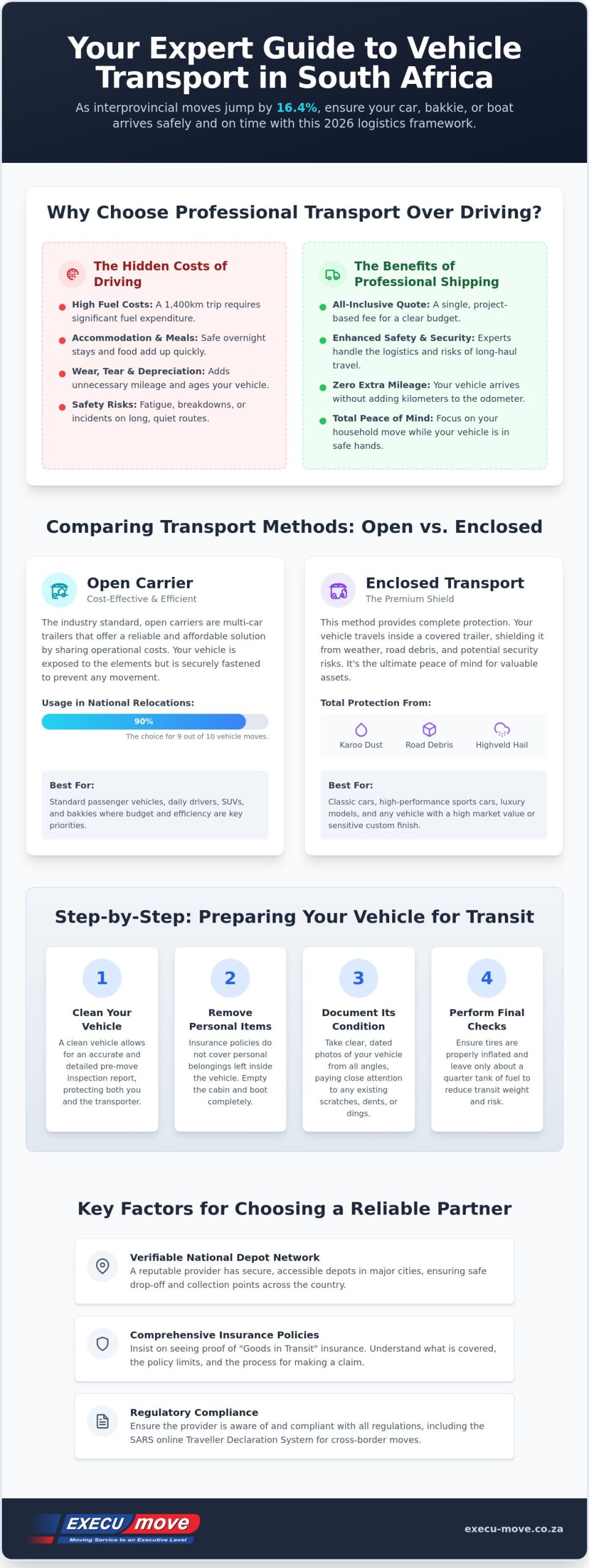
The open carrier is the backbone of the logistics industry. These multi-car trailers maximize space, which allows providers to offer more competitive rates by spreading operational costs across several vehicles. It’s the standard choice for roughly 90% of national relocations. Even though the vehicle is exposed to the air, it’s securely fastened at multiple points to prevent any movement during transit. For daily drivers, SUVs, and bakkies, this method provides a reliable and highly efficient solution. It’s a practical choice for those moving standard vehicles who want a balance of safety and affordability.
Enclosed Transport: The Premium Shield
What if your vehicle is a rare classic, a high-performance sports car, or a brand-new luxury model? In these cases, enclosed transport acts as a premium shield. This method offers total protection from the harsh South African elements. Consider the abrasive dust encountered on long stretches of the N1 through the Karoo or the sudden, intense hail storms common on the Highveld. Enclosed trailers prevent road debris, UV rays, and weather from touching your vehicle. It also adds a layer of security by keeping the vehicle out of sight during transit stops. While the investment is higher, it’s logically justified for assets where the cost of a single paint chip or weather-related blemish could be significant.
Choosing between these options doesn’t have to be a source of anxiety. If you’re moving a standard family car and prioritize value, the open carrier is your best friend. However, if your vehicle’s market value is exceptionally high or it has a sensitive custom finish, the peace of mind offered by an enclosed service is invaluable. We often suggest that clients chat with an expert logistics coordinator to determine which method aligns best with their specific relocation timeline and asset value. By understanding these differences, you can make an informed choice that ensures your vehicle arrives in the same condition it left, ready for your new journey.
Key Factors for Choosing a Reliable Vehicle Relocation Partner
How do you distinguish a world-class logistics expert from a simple towing company? When you’re searching for vehicle transport South Africa, the infrastructure supporting the service matters far more than the initial quote. You need a partner who offers a steady hand through the inherent chaos of relocation—a standard you can also find when you discover Done Wright Towing & Transport in the Australian market. A provider with a deep national footprint ensures your vehicle is never left in an unsecured lot or handled by unvetted third parties. This stability acts as the anchor for your entire move, turning a potentially stressful event into a managed, professional process.
Insurance and Liability: Protecting Your Asset
Protection begins long before the carrier arrives at your driveway. It’s vital to understand that standard personal motor insurance often excludes or limits coverage during commercial transit. You should ask your provider for their specific “Goods in Transit” policy limits to ensure your asset is fully covered. A meticulous inspection is the foundation of this protection. We recommend a joint walkthrough where every existing scratch, chip, or dent is documented on a formal condition report. This document is your security. If any discrepancy exists upon delivery, a clear paper trail allows for a professional resolution rather than an emotional dispute. Reliable partners prioritize this transparency to give you total peace of mind.
Track Record and National Reach
Why does a physical presence in major hubs like Johannesburg, Cape Town, and Durban matter so much? It means your vehicle stays within a closed, secure network of established depots. Companies that manage both furniture removals and vehicle transport offer a level of synchronization that specialized car-only carriers simply cannot match. Imagine the relief of having your car arrive exactly when your moving boxes are being unloaded. This single point of contact eliminates the headache of juggling multiple contractors and conflicting schedules. Whether you’re managing a private household move or a large-scale corporate relocation, a partner with a proven track record brings a sense of calm efficiency. They understand that they aren’t just moving a machine; they’re moving a critical part of your daily life. Look for a partner who offers:
- Verified physical depots in all major South African provinces.
- Integrated logistics that coordinate vehicle arrival with household goods.
- Transparent documentation regarding insurance and transit times.
- A dedicated consultant to provide updates throughout the journey.
Step-by-Step: Preparing Your Vehicle for Long-Distance Transit
Have you ever wondered why a clean car is the first requirement for professional transit? It isn’t about aesthetics. A layer of South African dust can hide minor scratches or paint chips that need to be documented before the journey begins. Preparing for vehicle transport South Africa involves more than just handing over the keys. It requires a methodical approach to ensure your asset is ready for the rigors of the road. By following a clear preparation sequence, you mitigate risks and ensure a smooth handover to the logistics team.
It’s often tempting to use your car as an extra “moving box” for those last-minute household items. However, professional carriers strictly prohibit this practice. Loose items can shift during transit, potentially causing internal damage or breaking windows from the inside. More importantly, these personal belongings are not covered by the carrier’s transit insurance. Empty your bakkie’s load bed, clear out the glove compartment, and remove all loose electronics. This ensures the vehicle’s weight remains within safety limits and your personal property stays secure in your furniture removal containers instead.
The Pre-Transport Inspection
Documentation is your greatest ally during a relocation. Take high-resolution photos of your vehicle from every angle, paying close attention to the roof, lower bumpers, and wheels. This visual record provides clear evidence of the vehicle’s condition at the point of collection. You should also check for any fluid leaks. Even a small oil or coolant leak can prevent your car from being loaded, as it poses a risk to the vehicles positioned below it on the carrier. Check your tyre pressure; properly inflated tyres ensure the vehicle remains stable and secure once the wheel straps are applied.
Logistical Final Touches
Safety standards dictate that your fuel tank should be at approximately 1/4 capacity. This provides enough fuel for the loading and unloading process while significantly reducing the overall weight and fire risk on the trailer. If your vehicle has a retractable antenna, specialized roof racks, or aftermarket spoilers, consider removing them. These protruding parts are the most vulnerable to damage during long-haul transit. Finally, ensure you provide a spare set of keys and clear instructions for any unique security systems. If your vehicle has a specialized immobilizer or a complex alarm system, the driver needs to know exactly how to manage it during the journey.
Taking these steps ensures that the logistics team can focus on the safe movement of your vehicle without unexpected delays. Ready to get started with your move? You can request a tailored vehicle transport quote today to secure your preferred relocation date and ensure your car is handled with the care it deserves.
Execu-Move: Seamlessly Integrating Vehicle Transport into Your Relocation
Why coordinate multiple contractors when you can have one steady hand? Moving your life across the country is complex enough without managing separate timelines for your lounge suite and your car. At Execu-Move, we specialize in harmonizing these moving parts. Our team understands that vehicle transport South Africa is most effective when it’s integrated into a broader relocation strategy. This approach ensures that your transport arrives with the same meticulous care as your household goods, providing a seamless transition into your new home.
A Single Solution for Your Entire Move
We don’t just move boxes; we move lives. This means coordinating furniture removals, pet transport, and vehicle relocation under a single, cohesive plan. With a national network of over 2,000 agents, we manage even the most complex interprovincial moves with international standards of safety and reliability. Our staff are trained to treat every vehicle as a high-value asset, ensuring it receives the specialized attention it requires. This centralized management reduces the logistical headaches that often accompany major life transitions. You won’t have to worry about chasing different companies for updates or wondering why your car is in a different city than your beds.
Requesting Your Specialized Transport Quote
Getting started is simple and designed to put you at ease. To provide an accurate quote for vehicle transport South Africa, our team needs specific details including the vehicle’s make, model, and your preferred transit dates. Whether you’re moving a standard sedan or a specialized bakkie, these details allow our logistics experts to allocate the right carrier space. Our online quote system is built for speed and clarity, allowing you to plan your national relocation with confidence. We prioritize your peace of mind over aggressive sales tactics, focusing instead on providing a steady hand throughout the process.
Start your stress-free move with a vehicle transport quote from Execu-Move
Your Journey Forward with Total Confidence
Relocating your life is a major milestone that deserves a steady, experienced hand. By understanding the nuances of open and enclosed shipping and following a meticulous preparation checklist, you’ve already mitigated the most common risks. You now know that professional vehicle transport South Africa is about more than just moving a car; it’s about synchronizing your entire world so you can start your new chapter without delay. Whether you’re moving a family SUV or a prized classic, the right preparation ensures your asset arrives in pristine condition.
At Execu-Move, we offer a comprehensive logistics framework that integrates furniture, pets, and vehicles into one seamless plan. With established offices in Cape Town, Johannesburg, and Durban, and a network of over 2,000 global agents, we provide the stability you need for a local or international transition. Let us manage the complexities while you focus on the excitement of your new destination. Request a Free Vehicle Transport Quote from Execu-Move and experience a relocation defined by calm efficiency and professional care. We’re ready to help you move forward.
Frequently Asked Questions
How much does it cost to transport a vehicle across South Africa?
The cost of transport depends on several variables including the distance of the route, the size of your vehicle, and whether you choose an open or enclosed carrier. Factors like current fuel prices and seasonal demand also play a role in the final calculation. It is best to request a personalized quote to ensure you receive an accurate figure tailored to your specific relocation needs.
Can I leave personal belongings inside my car during transport?
You shouldn’t leave any personal items inside your vehicle during its journey. Carriers are specifically licensed to transport vehicles and their insurance doesn’t cover household goods left inside the cabin or boot. Removing these items also prevents internal damage from shifting objects and ensures the vehicle remains within the safe weight limits required for the carrier’s stability.
How long does it typically take to move a car between major South African provinces?
Transit times usually range between 3 and 10 days depending on the specific route and current scheduling. For instance, moving a car between Cape Town and Johannesburg typically takes about 5 days. While we strive for precision, factors like weather conditions or roadworks on major national routes can occasionally influence the final arrival time at your destination.
Is my vehicle insured while it is on the transport carrier?
Reputable logistics providers include specialized “Goods in Transit” insurance to protect your asset while it is in our care. You should always verify the policy limits and remember that this coverage is distinct from your standard personal motor insurance. A joint inspection at the point of collection is essential, as this documented report serves as the baseline for your protection throughout the move.
Do I need to be present for the collection and delivery of my vehicle?
You or a trusted representative must be present at both collection and delivery to sign the official inspection reports. This process is vital for your peace of mind, as it involves a shared walkthrough to document the vehicle’s condition. If you can’t be there yourself, please ensure your representative is briefed on the inspection process and authorized to sign the legal handover documents.
Can you transport non-running vehicles or classic cars?
We certainly accommodate classic cars and can often assist with non-running vehicles provided we have prior notice. Classic cars are typically moved using enclosed shipping to provide a premium shield against the elements. Non-runners require specialized winching equipment for safe loading, so please disclose the vehicle’s mechanical status when you book your vehicle transport South Africa service.
What documents are required for national vehicle transport in South Africa?
You generally need to provide a copy of your South African ID and the vehicle’s registration papers to initiate vehicle transport South Africa. If the vehicle is currently under a finance agreement, it’s a good idea to have a letter of authority from your financial institution. For moves involving foreign-registered vehicles, ensure you’ve complied with the latest SARS online Traveller Declaration requirements before transit.
How do I prepare my car’s alarm system for long-distance shipping?
You should ideally disable the alarm system or provide the driver with explicit instructions on how to manage it. The natural vibrations and motion of the transport carrier can trigger sensitive alarms, which may drain your battery during the trip. If your vehicle has a unique immobilizer or a complex security sequence, sharing these details ensures the loading crew can handle your car with calm efficiency.