What if the office could move in stages instead of asking every team to stop work at once? Phasing an office move to reduce disruption means sequencing the work around business priorities, IT dependencies and the readiness of each workspace. This gives teams a clearer path through the change while critical work continues.
Keeping IT running takes more than carefully moving computers. Back up important data, test connectivity and systems at the new office, and schedule critical system cutovers within a planned downtime window. A clear sequence helps surface risks before they interrupt work.
This guide explains how to identify likely downtime risks, plan relocation stages and coordinate IT with the physical move. It also covers how to sequence teams, furniture and storage, clarify responsibilities and leave time to resolve issues before the next phase begins.
Key Takeaways
- Sequence the move around critical operations and team dependencies, not simply by floor or department.
- Plan IT cutovers in advance, with tested systems and a clear contingency if reconnection takes longer than expected.
- Give employees timely updates, clear move responsibilities and practical arrangements for working during each stage.
- Coordinate teams, furniture and storage by destination readiness, and use professional relocation support to manage the logistics.
What causes the most downtime during office relocations?
Measure productivity and service disruption against a normal-work baseline. Track completed work, response times, missed appointments and unresolved requests before and during each phase. Comparing these measures shows which functions need more support or a different move sequence.
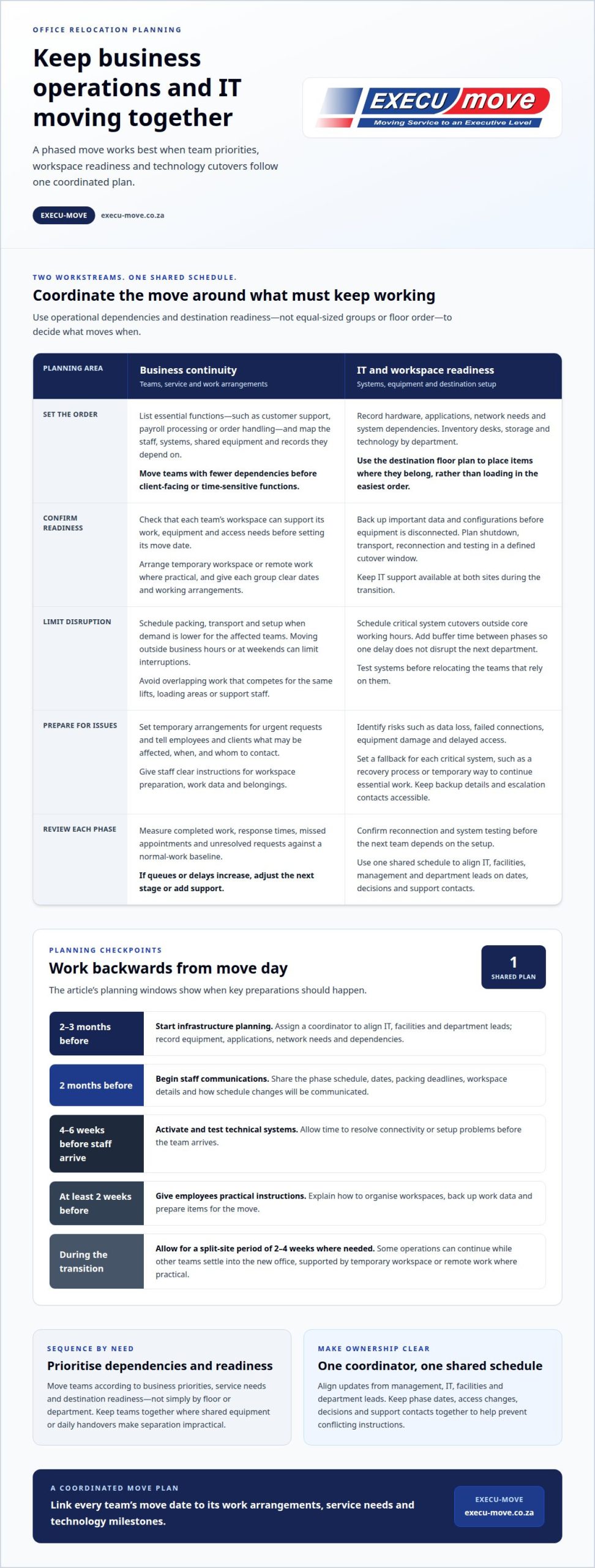
- Identify critical operations first. List the functions that must remain available, such as customer support, payroll processing or order handling. Map their dependencies, including staff, systems, shared equipment and records. This reveals which teams can move early and which need temporary arrangements to keep serving customers.
- Set the sequence by business priority. Move teams with fewer dependencies before client-facing or time-sensitive functions. For example, a back-office group might relocate while customer service remains operational. A phased move should follow operational needs, not divide departments into equal-sized groups.
- Balance staff impact with service needs. Stagger teams by department, floor or function, and use temporary workspaces or remote work where practical. A split-site period of 2-4 weeks can keep some operations running while other teams settle into the new office. Give each group clear dates and working arrangements.
- Plan decant space and review each phase. A decant space is temporary workspace used while teams or areas are being moved. Before scheduling a phase, confirm it can support the required work, equipment and access. After each move, compare service measures with the baseline and adjust the next stage if queues or delays increase.
How do you keep IT systems running during an office move?
Keep downtime controlled by aligning technology, furniture and department moves. A plan for phasing an office move to reduce disruption should assign owners, dates and fallback actions before equipment is disconnected.
Assess Risks and Safety Requirements
Include safe equipment handling, clear walkways and unobstructed access in the move risk plan. Identify risks such as data loss, failed connections, equipment damage and delayed access. Set a contingency for each critical system, such as a recovery process or temporary way to continue essential work. Keep backup details and escalation contacts accessible during cutover.
Sequence the Move in Phases
Sequence departments by dependencies and destination readiness, not equal group sizes. Test the new workspace before relocating systems a team relies on, and schedule critical cutovers outside core working hours. Add buffer time between phases so one delay does not disrupt the next department. A coordinated office relocation plan can align physical logistics with IT milestones.
How do you build a phased business relocation plan?
Build a shared schedule linking each team’s move date to its work arrangements and service needs. A clear approach to phasing an office move to reduce disruption gives employees and clients time to prepare for each transition.
-
Arrange Remote Work and Staff Updates
Set temporary remote-work arrangements for each affected department, including dates, shared-file access and a route for urgent requests. Align updates with the new office layout and phase sequence. Invite staff to flag practical needs, such as equipment required at home, and adjust arrangements before that team moves.
-
Clarify Employee Responsibilities
Give each employee clear instructions for organising their workspace, backing up work data and preparing items for the move. Explain what must remain available for daily operations and where belongings should go at the destination. Share these details at least two weeks before relocation so staff can prepare and raise questions early.
-
Coordinate Relocation Communications
Appoint one move coordinator to align updates from management, IT, facilities and department leads. Keep phase dates, access changes, decisions and support contacts in a shared schedule. Send regular updates through agreed official channels and record staff questions for follow-up. This coordination helps prevent conflicting instructions as teams relocate in sequence.
-
Share the Move Schedule
Share the schedule in practical terms: tell employees and clients what is moving, when work or service may be affected, and whom to contact about an issue. Give each department its move date, packing deadline and first-day workspace details. Begin staff communications two months before the move, and promptly share schedule changes through the same official channels.
Moving teams, furniture and storage in stages
- Group teams by how they work. Map dependencies before setting the sequence. For example, move a support team while the customer-facing function it serves remains active. Keep teams together when shared equipment or daily handovers make separation impractical. Confirm each group’s first working day and temporary arrangements before its move date.
- Move essential furniture to match the floor plan. Identify the desks, chairs and shared equipment the first team needs. Label each item for its destination area, not just its owner. Place furniture according to the approved layout so workstations and collaboration areas are ready to use, not simply unloaded.
- Send non-essential items ahead. Move archive cabinets, spare furniture and rarely used supplies before teams that rely on them daily. This clears space and lets the new office take shape without disrupting core operations. Keep essential documents and frequently used equipment accessible until the relevant department is ready to transition.
- Use storage to manage gaps between stages. Separate items needed immediately from furniture or records awaiting their final destination. Secure storage can keep surplus or temporarily displaced contents organised as the move progresses. Maintain an inventory recording what is stored, its owner and where it belongs when the next phase begins.
- Review readiness before releasing each phase. Confirm the destination workspace, furniture, storage areas and team access are ready. After a department settles, record outstanding issues before scheduling the next group. For example, if shared filing cabinets are still inaccessible, resolve that gap before moving the team that depends on them.
For coordinated handling of office furniture and staged logistics, discuss your office move with Execu-Move.
Execu-Move: Office and Corporate Relocations
Execu-Move supports office and corporate relocations by managing the physical movement of workplace contents between locations. Bring the move plan forward when your organisation needs to coordinate departments, furniture and storage across stages. Your internal team can focus on business continuity and technical systems while relocation logistics are organised around the agreed sequence.
The right support depends on the move. A business changing premises within South Africa may need Domestic Furniture Removals, while a company moving operations across borders may need International Furniture Removals. For either type, a clear inventory and destination plan help align what moves, where it goes and when each area is needed.
Full Packing and Wrapping can help prepare office furniture and contents for transport. Secure Storage can also help when items need to be held between stages or the new workspace is not ready for everything at once.
- Share the move schedule, department sequence and destination details so relocation planning reflects the organisation’s requirements.
- Identify furniture and contents for each phase, including items that need packing and wrapping before transport.
- Discuss storage needs when the timing of a team’s move differs from the readiness of its new workspace.
- For a move between countries, consider how international furniture removals fit into the wider office transition.
Early contact is useful when the move involves several departments, multiple destinations, phased transport or storage between stages. It gives the relocation plan time to account for the volume and type of contents being moved, alongside the dates your business sets for each phase. Keep responsibility for IT cutovers and system testing with the relevant internal specialists, and coordinate those milestones with the physical move.
For professional support with your office relocation, contact Execu-Move.
Set your office move in motion
A move plan becomes actionable when decision-makers agree on what must remain operational, which teams can transition first and how the new workspace will be prepared. Use those priorities to shape a practical brief for phasing an office move to reduce disruption, with clear responsibilities for business teams and relocation logistics.
Execu-Move supports the physical transition through Office and Corporate Relocations, including Domestic Furniture Removals for moves within South Africa and International Furniture Removals for cross-border moves. Full Packing and Wrapping can also help prepare office contents for transport. The right combination depends on the destinations, items being moved and your organisation’s planned stages.
Bring your move requirements together before the transition begins. Share the intended sequence, destination details and packing needs so the relocation plan reflects your business priorities. Taking this step helps coordinate the physical move with your internal IT and staff plans.
Contact Execu-Move to plan your move, and take the next step with a clear, considered plan.
Frequently Asked Questions
What’s the difference between phased and complete office moves?
A phased move transfers departments or functions in stages, while a complete move transfers the operation together. A complete move often takes place over a weekend or holiday period. Phasing can suit teams with different dependencies; a complete move may suit an operation able to pause work together. Choose the approach that fits service commitments, staff needs and destination readiness.
Have More Questions About Avoiding Disruptions?
Yes. Keep one issue log for questions that arise before, during and after each move stage. Record the affected team, operational impact, person responsible and next action. For example, a staff member unable to access a shared file should know where to report the issue and who will follow up. Review open items before starting another phase.
How can I ensure that company data is protected during the move?
Protect company data by controlling access throughout packing, transit and setup. Have the IT owner identify devices by team and sensitivity, keep credentials separate from equipment, and restrict access to backup locations. After reconnection, confirm authorised users can retrieve the files they need and remove access from equipment no longer in use. Record these checks during handover.
How do I decide the best phasing?
Set phase boundaries around operational dependencies, service commitments and available workspace. For example, avoid moving a finance team during a payroll run if other staff depend on timely processing. Consider whether people or equipment would need to move more than once, and whether temporary desks can accommodate teams between stages. A suitable sequence limits avoidable handovers and repeat moves.
How does a phased office move support business continuity?
A phased move lets some teams continue working while others transition, rather than interrupting the whole operation at once. Set a minimum service level for each critical function, such as keeping customer enquiries assigned to an available team. Agree who can authorise a pause or change in sequence if that service level is at risk, and make the decision process clear to staff.
How far in advance should you plan an office relocation?
Begin general office relocation planning 6-12 months before the intended move date. Larger organisations with extensive IT infrastructure, specialised equipment or regulatory requirements typically need 12-18 months in advance. Mid-sized businesses can often plan over 6-9 months, while smaller offices may manage with 3-6 months of planning. Complexity and operational dependencies should guide the schedule.