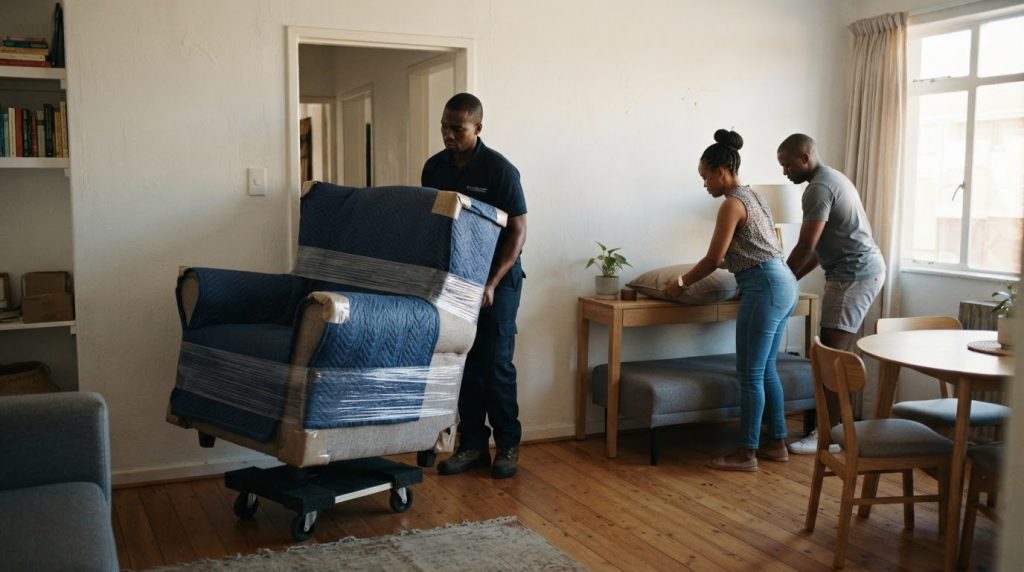
A smaller home can make a move feel lighter, not more limiting. Learning how to downsize for a move starts with measuring the space you’re moving into, then deciding which belongings will genuinely suit it. Begin planning the new layout 2-4 months before moving, so there’s time to make thoughtful choices rather than rushed ones.
It’s natural to worry that downsizing means giving up too much or making difficult decisions under pressure. When considering how to downsize for a move, a clear plan helps you focus on what matters in your next home and let go of items that no longer fit your space or lifestyle.
This guide explains how to measure rooms and furniture, sort belongings into keep, sell, donate or discard groups, and choose space-saving furniture. It also covers the practical benefits of downsizing before a move, including a simpler transition and a home arranged around the way you want to live.
Key Takeaways
- Start with an inventory and a clear floor plan to make decisions based on your new home, not guesswork.
- Measure rooms, access points and larger furniture, while allowing space for work, paperwork and everyday routines.
- Sort possessions by their use and importance, then decide what to keep, pass on, sell, donate or discard.
- Choose furniture that suits the layout and consider professional packing, removals or storage to support a more organised move.
Benefits of downsizing before a move
Start planning 6-12 months before moving and begin decluttering 4-6 months beforehand. To understand how to downsize for a move, first connect each decision to the floor plan and routines in your next home. Sort gradually to keep everyday spaces usable for children, older relatives and pets.
- Create a useful inventory. Record belongings, condition and market value. This list helps organise packing and estimate moving costs. For example, note whether a dining table has extendable leaves, so you can decide if its full size suits the new layout.
- Reduce clutter room by room. Compare each item with the space and lifestyle ahead. If the next home has a compact kitchen, keep the cookware and appliances you use regularly instead of moving duplicates that will occupy limited cupboards.
- Make selling decisions early. Set aside usable furniture and household goods for selling, donating or passing on. Give each item a clear next step and collection plan. This helps prevent unwanted belongings from staying in walkways or returning to the moving pile.
- Keep the household organised. Use one decision list for each room, and update it as plans change. A practical plan for how to downsize for a move should leave familiar essentials accessible while sorting continues. Invite relatives to help identify photographs or keepsakes, while letting the owner make the final choice.
In the United States, 25% of repeat homebuyers cited wanting a smaller home as a primary purchase reason; homes under 2,000 square feet use roughly 40% less energy than homes over 3,000 square feet.
Measure the space available in the new home
Start measuring and planning 2-4 months before moving. Map rooms, measure furniture, then match essentials to the layout. For moves within or between South African municipalities, check bulky-waste disposal and move-day access rules before arranging collection or parking.
-
Measure Rooms in the New Home
Measure each room’s length and width, then note doorways, windows, built-in cupboards and fixed features. Sketch a floor plan and mark where beds, desks and dining furniture could go. Note useful features too, such as storage, natural light and outdoor access. This helps you judge whether the layout supports your routines, not just whether it looks appealing.
-
Measure Furniture Against Available Space
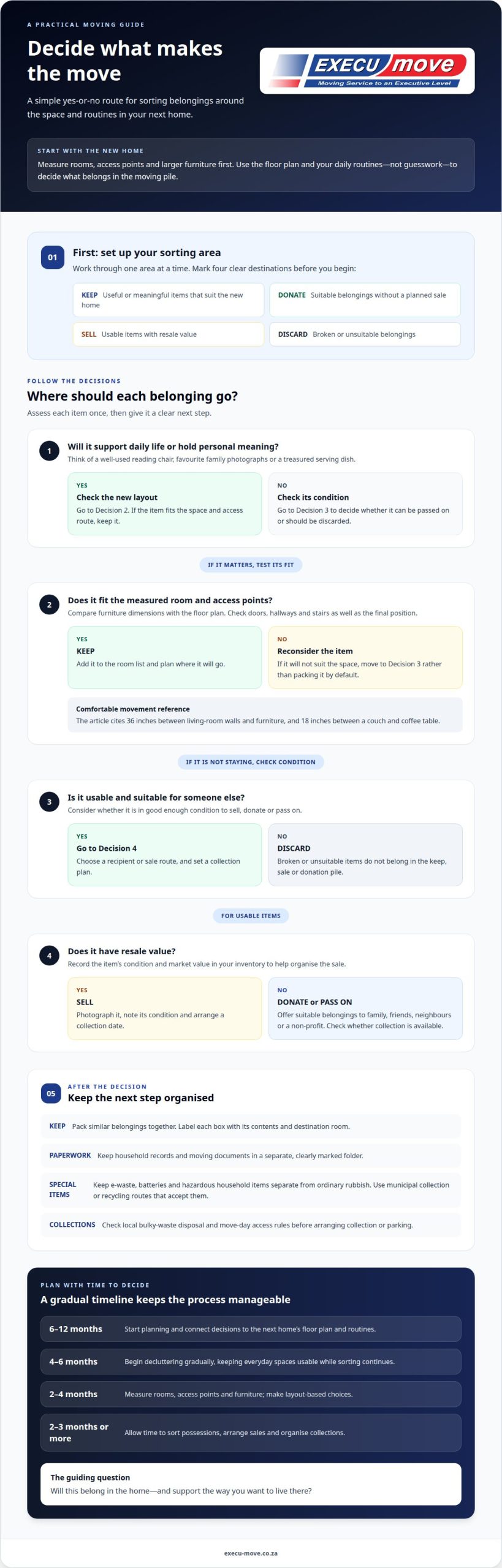
Measure bulky furniture at its widest and deepest points, including handles or legs that affect placement. Compare these dimensions with the floor plan, and check whether items can pass through doors, hallways and stairways. According to This Old House, allow 36 inches between living-room walls and furniture, and 18 inches between a couch and coffee table for comfortable movement.
- Plan for work and paperwork. Choose a home-office position that fits your desk, chair and equipment without blocking everyday routes. Decide where you’ll keep work files, household records and moving documents, so paperwork doesn’t take over a smaller space.
- Assess the home’s practical features. Consider storage, room shape, access to outdoor space and how each area will be used. A compact room may suit a study better than a second lounge.
- Use your measurements to make decisions. Compare essential furniture with the layout before purchasing replacement pieces. If you’re planning an international move, explore international relocation planning alongside your space plan.
Sorting belongings to keep, donate, sell, or discard
Allow two to three months or more to sort possessions, arrange sales and organise collections. Work through one area at a time to keep everyday household routines manageable.
-
Sort Items Into Four Groups
Set up labelled keep, donate, sell and discard areas, then assess each belonging once. Keep useful items that fit the new home, donate suitable goods, sell items with resale value and discard broken or unsuitable belongings. For example, a working spare kettle could be sold or donated, while a damaged appliance belongs in the discard group.
-
Keep the Belongings That Matter Most
Prioritise possessions that support daily life or hold personal meaning before keeping extras. Choose favourite family photos, a well-used reading chair or a treasured serving dish rather than keeping everything from a full household. If relatives are helping, ask them to identify familiar photographs or keepsakes, then give the owner space to decide.
-
Donate, Sell, or Pass On Unwanted Items
Arrange a recipient or sale for each useful item before packing begins. Offer suitable furniture to family, friends or neighbours, or donate it to a non-profit. Some non-profits collect furniture in good condition from donors’ homes. Photograph items for sale and record their condition to help estimate value. Set a collection date so unsold belongings don’t linger.
-
Pack and Label What You’re Keeping
Pack similar belongings together and label each box with its contents and destination room. Keep essential paperwork, such as household records and moving documents, in a separate, clearly marked folder. This makes boxes easier to identify and helps you locate important items during unpacking.
Choosing space-saving and multi-functional furniture
In South Africa, storage costs depend on the space required, duration and belongings being stored. For e-waste, batteries and hazardous household items, keep them separate from ordinary rubbish and use municipal collection or recycling routes that accept them.
-
Choose Space-Saving Furniture
Compare each piece with the room measurements before purchasing. A narrow dining table may leave clearer walkways than a wide one, while wall-mounted shelves make use of vertical space. Take time to decide which pieces suit your lifestyle and which simply take up floor area. Avoid buying furniture until you know the layout and essential storage needs.
-
Select Multi-Functional Furniture
Choose pieces that serve more than one purpose without making daily routines awkward. A sofa bed can provide guest sleeping space, while a lidded ottoman can offer both seating and storage. Check how each piece opens, folds or converts, and whether there is enough room to move around it. Ask someone in your household to test it before you decide.
-
Choose Bedroom Furniture With Built-In Storage
Look for bedroom furniture that makes use of available space, such as a bed with drawers or a headboard with shelves. Measure the full footprint, including drawers when open, and make sure access remains practical. Built-in storage can reduce the need for extra cabinets, but only if it suits the belongings you’re keeping.
- Declutter before packing. Use a category-based method, such as sorting clothes together, to spot duplicates. Keep items that fit the new home and your routines; remove worn or unused pieces rather than packing them for storage.
For advice on planning a move around what you’re keeping, discuss your relocation needs.
Execu-Move
Execu-Move can help turn your downsizing decisions into a practical moving plan. When you’re ready, share your destination, the belongings you’ve selected and any timing considerations. A clear inventory helps shape the support around your relocation, whether it’s local or international.
Different parts of your move may call for different services. Domestic Furniture Removals supports moves within South Africa, while International Furniture Removals is for relocations abroad. Full Packing and Wrapping can help prepare selected belongings for transport, and Secure Storage Solutions can hold items separately during a transition.
- Domestic Furniture Removals: for household belongings moving to another home within South Africa.
- International Furniture Removals: for selected furniture and household contents travelling overseas.
- Full Packing and Wrapping: for help preparing belongings for the move.
- Secure Storage Solutions: for belongings that need storage as part of the relocation plan.
Before discussing your move, prepare an inventory and note which items are going to your new home, which need packing support and which require storage. You can also flag large furniture or delicate belongings that need particular attention during planning. These details keep the conversation focused on your relocation and the household contents you’ve chosen to take.
Contact Execu-Move to discuss your move.
Make Your New Home Feel Like Yours
The move doesn’t end when the last box arrives. Give yourself time to see how each room works in daily life, then adjust where things belong as new routines take shape. A considered approach to how to downsize for a move isn’t about making every decision perfectly in advance. It’s about creating room for the life you’re moving into.
Start by unpacking the items you rely on each day. Notice what feels useful, what remains tucked away and whether any spaces need a different arrangement. These first impressions can guide small changes without rushing into new purchases or filling every cupboard immediately.
When you’re ready to plan the practical side of your relocation, request moving support from Execu-Move. A steady plan can help you settle in with greater ease and make your new space feel comfortable, personal and ready for what comes next.
Frequently Asked Questions
How do I decide what to keep, donate, sell, or throw away when downsizing?
Prioritise items you use, need in your next home or value personally. To make a quick decision, ask yourself whether you’d choose the item again if furnishing your new home today. Keep useful belongings, offer good-condition items to others and set aside broken or unusable goods for suitable disposal. This makes each decision clearer.
How can I estimate the furniture and storage space I will have in my new home?
Use the new home’s floor plan and measurements, then compare them with your furniture’s dimensions. Include cupboards and built-in storage in your assessment. For example, if the new bedroom has a fitted wardrobe, check whether you still need your freestanding chest of drawers. Consider doorways and hallways too, since each piece must fit through the route into its intended room.
What are the cheapest ways to sell or donate unwanted household items in South Africa?
Offer usable items to family, neighbours or friends first, or list them locally with clear photographs and collection details. For donations, group suitable belongings together and arrange a practical handover with the recipient. Some non-profits collect furniture in good condition. Focus selling efforts on items likely to find a buyer, rather than spending time preparing damaged or low-demand goods.
How much can I save on moving costs by downsizing?
The cost depends on the volume of belongings being moved, the distance and the services required, so there’s no single saving figure. Removing bulky items can reduce the shipment or load, and packing needs may change too. Make an accurate inventory of what you plan to take and use it when requesting an up-front moving quote, so the estimate reflects your move.
What should I do with sentimental belongings when downsizing?
Choose the keepsakes you want in your new home, and preserve memories of items you can’t take. For example, photograph children’s artwork or digitise family pictures before passing the originals to someone who values them. Ask relatives to help identify people or places in older photographs, but let the owner make the final decision about treasured possessions.