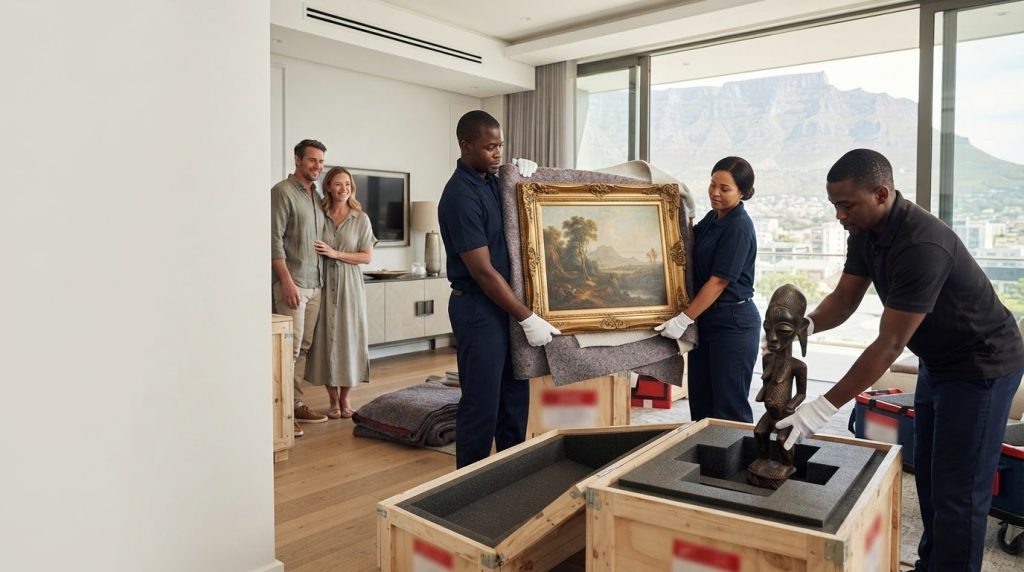
What if the piece you’re most concerned about is treated like just another box on moving day? Moving fine art and antiques South Africa requires careful planning before collection, especially when an item is valuable, fragile or deeply personal. It’s sensible to consider how each piece will be recorded, packed, handled and transported.
This checklist will help you prepare an inventory, document each item’s condition and choose a packing approach that suits your move. It also explains how to include artwork and antiques in a coordinated relocation plan, with packing, transport and any storage considered together. For an overseas move, check whether export paperwork may apply, including whether a South African Heritage Resources Agency permit is required. Preparing these details early can make collection day more organised.
Key Takeaways
- List each piece with a description, dimensions and identifying details so it can be accounted for before collection.
- Photograph its condition and note visible damage or previous repairs before packing begins.
- Choose owner-led, household or professional packing based on the item, the move and your confidence handling it. The right approach to moving fine art and antiques South Africa depends on these factors.
- Coordinate packing, collection, delivery and any storage as one plan. For an overseas move, check destination customs requirements with the relevant authorities.
Why Moving Fine Art and Antiques in South Africa Needs a Specific Plan
A painting may have market value, a family heirloom may carry generations of memories, and an antique cabinet may be both delicate and difficult to move. These pieces deserve attention before the household move begins. Moving fine art and antiques in South Africa is not simply a matter of setting them aside. Their features should inform how they are prepared, protected, handled and transported.
A specialist move plan considers the preparation, protection, handling and transport of each piece. That does not mean every artwork or antique needs the same treatment. It means identifying belongings that need individual attention rather than treating them as ordinary household cargo. The principles of conservation and restoration of movable cultural property also help explain why an object’s materials, condition and history matter when planning its movement.
Which pieces need individual consideration?
Start by identifying paintings, framed works, sculptures, heirlooms and delicate antique furniture. Consider each item’s dimensions, construction, current condition and fragility. A large framed work has different handling needs from a small sculpture, while a cabinet with delicate details may need more careful preparation than a sturdy piece of furniture. Recording these details helps shape the packing and transport plan.
Why value is not only financial
Some belongings matter because of their family history, cultural meaning or connection to a particular person or time. Their significance may not be reflected in a market valuation. Note why a piece matters to you, along with practical details that distinguish it. This helps make clear which items need particular care without assuming every piece has the same kind of value.
Bring these considerations into the wider relocation plan so packing, handling and transport can be coordinated. The next step is to create a clear record of each piece before collection.
Fine Art and Antiques Moving Checklist: What to Prepare Before Collection
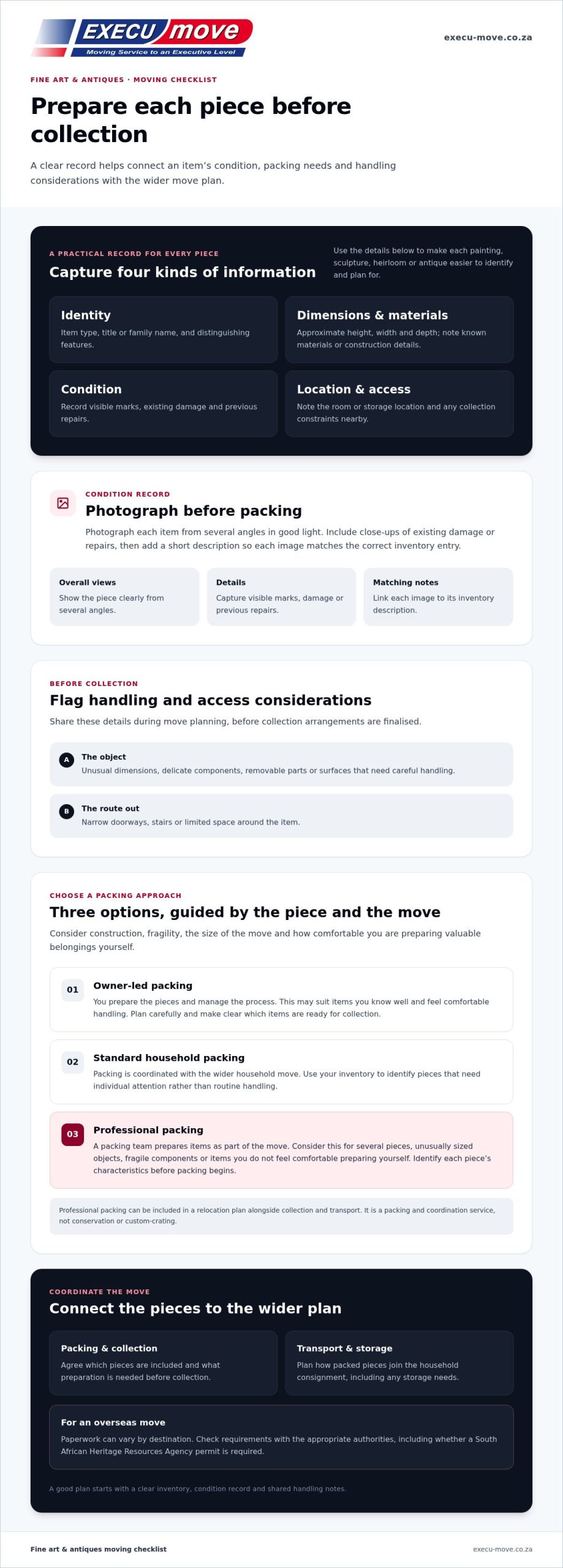
A clear record gives everyone involved in moving fine art and antiques South Africa a shared reference before packing begins. Create an inventory that identifies each piece and its current location. Include details such as:
- Item type, title or family name, and distinguishing features
- Approximate height, width and depth
- Materials or construction details you know
- Room or storage location
- Visible marks, damage or previous repairs
Document each piece before it is packed
Photograph each item from several angles in good light, including close-ups of existing damage or repairs. Add a short description so each image can be matched to the correct inventory entry. Keep the inventory and any relevant ownership, provenance or destination documents together and accessible during planning. For international moves, paperwork can vary by destination, so check requirements with the appropriate authorities.
For context on the professional handling of art and antiques, consult ICEFAT: International Fine Art Logistics Experts. If you’re preparing other breakables too, the guidance on how to pack fragile items for moving can help you plan their preparation without assuming every object needs the same approach.
Flag handling and access considerations
Record details that could affect preparation or collection, such as unusual dimensions, delicate components, removable parts or surfaces that need careful handling. Note access constraints too, including narrow doorways, stairs or limited space around the item. Share these details during move planning, before collection arrangements are finalised. Doing so helps connect the item’s needs with the wider packing and transport plan.
With your inventory prepared, you can decide how packing and wrapping will fit into the move. Contact Execu-Move about your relocation to discuss the next steps.
Compare Packing and Transport Approaches for Art and Antiques
There isn’t one packing choice that suits every piece. For moving fine art and antiques South Africa, consider the item’s construction and fragility, the size of the move and how comfortable you are preparing valuable belongings yourself. Packing decisions should also account for how the items will be handled and transported as part of the relocation.
- Owner-led packing: You prepare the pieces yourself and manage the process. This may suit items you know well and feel comfortable handling. Plan the preparation carefully and make clear which items are ready for collection.
- Standard household packing: Packing is coordinated with the wider household move. This can bring belongings together in one plan, while your inventory identifies pieces that need individual attention rather than routine handling.
- Professional packing: A packing team prepares items as part of the move. This can reduce the preparation you manage yourself and allows packing to be discussed alongside transport. You will still need to identify each piece’s specific characteristics.
When professional packing may be a better fit
Consider professional packing if you have several pieces, unusually sized objects, fragile components or items that you do not feel comfortable preparing yourself. Execu-Move’s full packing and wrapping service can be included in your relocation plan, with arrangements considered alongside collection and transport. This is a packing and coordination service, not a claim of conservation or custom-crating.
Questions to settle before packing begins
Before packing starts, agree which items are included, what preparation you need to complete and how the packed pieces will join the household consignment. For an overseas move, connect these arrangements with the wider international relocation services plan, including customs coordination. Execu-Move can coordinate packing, transport and any storage needs as part of your relocation. Discuss these arrangements as part of your move planning.
Coordinate Fine Art and Antique Removals Across South Africa or Overseas
Once packing arrangements are clear, include each piece in the wider move plan. For moving fine art and antiques South Africa or arranging an overseas relocation, use a simple sequence to keep each stage connected:
- Confirm the inventory. Check that every piece is listed and its collection location is clear.
- Agree packing arrangements. Set out which items will be packed, by whom, and what preparation is needed before collection.
- Coordinate collection. Share relevant item and access details so collection fits the household move.
- Plan delivery or storage. Confirm the intended destination and timing, including whether secure storage is needed if dates differ.
Domestic and international coordination checkpoints
A domestic move involves coordinating collection and delivery within the relocation plan. An international move adds other steps: customs clearance and destination documentation need to be considered alongside transport. Requirements differ by destination, so check current customs and import requirements with the relevant official authorities. For global routes such as consignments heading to Australia, freight and logistics specialists like Freight and More Pty Ltd can assist with freight handling and customs clearance, while Execu-Move’s international agent network helps coordinate the wider move as processes are planned for the destination.
When collection and delivery dates do not align
Sometimes collection takes place before the new home is ready. Secure storage can bridge the gap, with onward delivery coordinated when the timing allows. Include storage in the overall schedule rather than treating it as a separate afterthought. Note which pieces need to be stored and when they will be needed so packing, transport and storage remain connected.
A clear sequence helps keep responsibilities and timing visible, whether your move is domestic or overseas. To discuss the next steps, plan your fine art and antiques relocation.
Make Your Next Move With a Clear Plan
A well-planned relocation starts by recognising that valuable pieces have individual needs. Record their condition, choose suitable packing arrangements and coordinate their journey as part of the wider move. That is the practical foundation for moving fine art and antiques South Africa, whether your belongings are travelling domestically or overseas.
A considered plan helps you make informed decisions at each stage. When you’re ready to discuss your requirements, request a relocation quote from Execu-Move. A clear conversation is a helpful next step towards an organised move.
Frequently Asked Questions
How do you prepare fine art for a move?
Start with an item-specific record, clear photographs and notes on its condition, then agree on packing arrangements before collection. Clear the route from the artwork’s current position to the exit and move nearby household items out of the way. Keep detachable fittings together and label them separately so they can be matched to the correct piece during unpacking.
Can fine art and antiques be included in an international move from South Africa?
Yes. Fine art and antiques can be included in an international relocation, with destination customs documents planned alongside the shipment. Requirements differ, so verify them with the relevant authorities. For permanent exports, South African Heritage Resources Agency permits may apply to specified South African art, furniture or applied art at least 50 years old, and antiquities over 100 years old. Rules include exemptions, so check the current criteria directly with SAHRA.
Should I pack artwork and antiques myself or use professional packers?
Choose based on the item’s needs, the preparation involved and how comfortable you are handling it. Owner-led packing may suit a manageable task you feel confident completing. Professional packing can be useful for a more complex collection. A hybrid approach is also possible: agree which items you’ll prepare and which will be included in the professional packing plan.
What information should I record before moving antiques?
Alongside a description, dimensions, photographs and notes on visible condition, record maker’s marks, inscriptions or other identifying details. Note whether the item has detachable parts, keys or fittings, and keep any relevant ownership or provenance papers. Save a copy of the record separately from the item so you can refer to it during planning and after delivery.
Can fine art and antiques be stored between moves?
Yes. Secure storage may help if your move is phased or your new home is undergoing renovations. Before making arrangements, note which pieces will be stored and which you may need first at the destination. Keep their identification consistent with your relocation records, and include the storage period and onward delivery in the overall schedule. This does not imply specialist environmental controls.