What if the most daunting part of your international move wasn’t the packing, but a digital form you haven’t filled out yet? As of July 2026, the South African Revenue Service has made the online traveller declaration mandatory for everyone entering the country. It’s understandable if you feel a sense of unease about navigating this new system while trying to coordinate the arrival of your household furniture and personal effects. You want to ensure your South Africa customs declaration is flawless to avoid heavy penalties or the heartbreak of seized goods.
We understand that a successful relocation relies on precision and a calm approach. This guide is designed to give you total clarity on the 2026 SARS digital transition, ensuring you master the online process before you even reach the airport. We’ll walk you through the current duty-free allowances, explain the difference between accompanied luggage and shipped goods, and provide the practical steps needed for a truly stress-free border crossing. By the end of this article, you’ll have the confidence to handle your documentation like a seasoned logistics expert.
Key Takeaways
- Master the mandatory SARS online traveller declaration system to ensure your entry into South Africa is seamless and compliant with July 2026 regulations.
- Differentiate between accompanied baggage and unaccompanied household effects to apply the correct customs procedures for every item you own.
- Identify prohibited and restricted items early to secure the necessary permits and avoid the risk of goods being seized at the border.
- Prepare a comprehensive inventory and gather essential documents to submit your South Africa customs declaration accurately within the required timeframes.
- Learn how professional customs clearance services mitigate the risks of DIY digital submissions and provide peace of mind during your international move.
The New Landscape of South Africa Customs Declarations in 2026
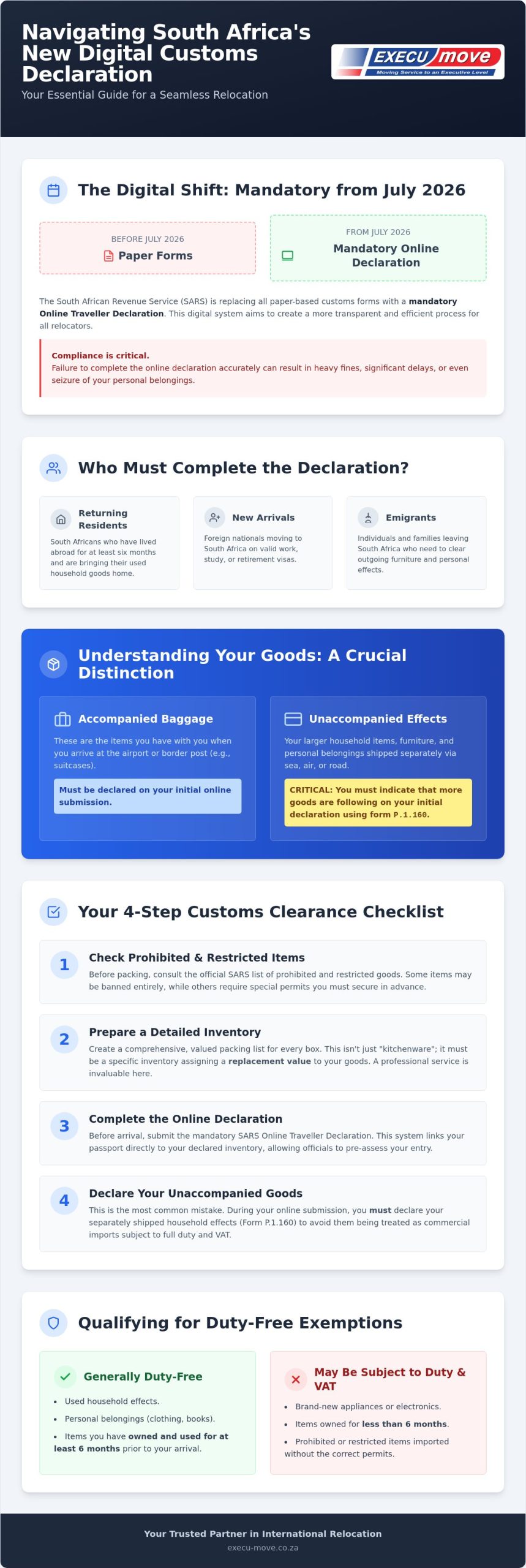
Relocating across borders involves many moving parts, but the most critical administrative step is your South Africa customs declaration. Simply put, this is a mandatory report of all goods brought into or taken out of the country. For decades, this process relied on physical paper forms handed out on planes or at border posts. However, as of 1 July 2026, the South African Revenue Service (SARS) has replaced that legacy system with a mandatory Online Traveller Declaration. This digital transition is designed to modernise the border experience, especially for those coordinating international furniture removals.
The shift to the digital Traveller Management System isn’t just about saving paper. It’s a strategic move to create a more transparent and efficient process for everyone involved. For relocators, this means your inventory is now logged electronically, allowing for faster clearance of household goods and personal effects. It also means the authorities have a clearer view of what’s entering the country, which helps in maintaining high standards of border security and revenue collection.
Why the 2026 Digital Shift is Mandatory
The move toward a paperless border is intended to significantly reduce the time you spend waiting for clearance. By submitting your details online, the system links your passport directly to your declared inventory. This integration allows customs officials to assess risks and approve declarations before you even land or reach the border. It’s a faster way to handle the logistics of a move, but it requires absolute accuracy. If you don’t comply with the new digital requirements, you risk more than just a headache. Non-compliance often leads to heavy fines, frustrating delays, and the potential seizure of your belongings.
Who Needs to Declare?
The requirement to complete a South Africa customs declaration applies to anyone moving personal property across the border. This includes:
- Returning Residents: South Africans who’ve lived abroad for at least six months and are now bringing their used household goods home.
- New Arrivals: Foreign nationals moving to the country on valid work, study, or retirement visas.
- Emigrants: Individuals and families leaving South Africa who need to clear their outgoing furniture and personal effects.
Whether you’re shipping a single vehicle or an entire house, the digital declaration is your first step toward a successful arrival. It acts as the official record that your goods are legally entering the Republic, ensuring your transition is handled with the professionalism it deserves.
Accompanied vs. Unaccompanied Goods: What You Need to Know
Do you know the difference between what’s in your suitcase and what’s in your shipping container? In the context of a move, SARS distinguishes between accompanied baggage and unaccompanied effects. Accompanied baggage refers to the items you have with you when you land at the airport or drive through a border post. Unaccompanied effects are your larger household items, furniture, and personal treasures shipped separately via sea, air, or road. When you complete your South Africa customs declaration online, it’s vital to indicate that more goods will be following. Failing to flag these items during your initial digital submission can lead to unnecessary delays or duty charges when your container arrives weeks later.
The P.1.160 form is the cornerstone of this process. It’s the official declaration of household effects for people changing their residence to South Africa. This document, alongside your digital traveller declaration, tells the authorities that your shipment isn’t a commercial import but a collection of personal belongings. It’s a small but powerful piece of paperwork that ensures your life’s possessions are recognised correctly by the system.
Duty-Free Allowances for Relocators
Most people moving to South Africa qualify for a duty-free exemption on their used household effects. To benefit from this, you must generally adhere to the ‘six-month rule’. This means the items in your shipment must have been owned and used by you for at least half a year before your arrival. If you’ve recently bought brand-new appliances or high-end electronics just for the move, they may be subject to full duty and VAT. It’s also wise to consult the official list of Prohibited and Restricted Imports to ensure your ‘personal treasures’ don’t include items that require special permits or are banned entirely.
Inventory Management for Customs
SARS requires a detailed, valued packing list for every box in your shipment. This isn’t just a list of ‘kitchenware’ or ‘bedroom items’. It needs to be a specific inventory that assigns a replacement value to your goods. A professional packing service can be invaluable here. They ensure that every item is logged according to international standards, which significantly reduces the risk of a physical customs inspection. If you find the prospect of valuing every fork and frame overwhelming, you might consider how expert customs clearance assistance can streamline the entire inventory process for you. Distinguishing clearly between your personal effects and anything that could be construed as commercial goods is the best way to avoid the ‘red channel’ and keep your move on schedule.
Navigating Restricted and Prohibited Items
Entering a new country with your life’s possessions is a major milestone, but it requires a keen eye for detail regarding what is allowed across the border. Certain items are strictly prohibited, meaning they cannot enter South Africa under any circumstances. These include narcotics, fully automatic or military weapons, and counterfeit goods. Attempting to include these in your South Africa customs declaration will lead to immediate confiscation and potential legal action. Understanding these boundaries early is the best way to ensure your move remains on track and your peace of mind is preserved.
While you can bring small amounts of alcohol and tobacco as part of your duty-free allowance, including large collections in a household move is more complex. Wine cellars or significant tobacco stocks often attract high duties and require specific permits. It is usually best to keep these quantities within the standard traveller limits to avoid complications during the clearance of your furniture. If you are unsure about a specific collection, seeking professional advice before the packing process begins can prevent costly surprises at the border.
Vehicle and Pet Declarations
Moving a car or a beloved pet involves specialised layers of documentation that sit outside your standard inventory. For motor vehicles, you must obtain an Import Permit and a Letter of Authority (LOA) from the National Regulator for Compulsory Specifications. These are separate from your general furniture inventory. For more detail on the specific regulations for cars, you might find our guide on vehicle transport South Africa particularly helpful. Pets also require their own import permits and original veterinary health certificates. Because these involve living beings and high-value machinery, they must be declared separately from your household effects to ensure they receive the specific attention they require.
Agriculture and Health Restrictions
South Africa is protective of its local ecosystem, which means items containing soil, seeds, or untreated wood are heavily restricted. We recommend professional steam cleaning and fumigation for items like garden tools, outdoor furniture, and wooden crates to meet these biosecurity standards. Health regulations are equally precise. If you are bringing chronic medications, you must declare them and carry a valid prescription from your doctor. This ensures your South Africa customs declaration is accurate and prevents your essential health supplies from being delayed at the port of entry. Taking these small, methodical steps now ensures a welcoming arrival for both your family and your belongings.
Step-by-Step: Completing Your Declaration for a Move
How do you move from the planning phase to the actual submission? Timing is everything when dealing with your South Africa customs declaration. If you’re arriving by air, you must submit your online declaration no more than 24 hours before your flight lands. For those with a container of furniture following by sea, you still complete the declaration upon your own arrival in the country, ensuring you flag the “unaccompanied” status of your shipment. This synchronisation prevents your goods from being treated as a separate, commercial import when they reach the port weeks later.
Before you log in, gather your essential documents. You’ll need your passport, a valid visa or residency permit, and your detailed “Inventory of Personal Effects”. This inventory should list every box and its replacement value. If you’re concerned about potential duties on newer items, it’s helpful to review international moving costs South Africa to budget effectively for any unforeseen charges. Accuracy at this stage is your best defence against the common pitfalls of the 2026 digital system, such as mismatched passport numbers or undervalued assets.
The Digital Submission Process
The first step is creating a profile on the SARS Traveller Management System (TMS). Once your account is active, you’ll navigate to the “Goods to Declare” section. Here, you’ll record your household removals and any high-value items you’re carrying. After you’ve reviewed and submitted the data, the system generates a digital declaration receipt in the form of a QR code. Keep this code easily accessible on your phone or as a printed copy. This is what you’ll present to the customs official at the border post or airport to verify your submission.
Arrival and Physical Inspection
When you reach the border, a customs officer will scan your QR code. In most cases, this is a quick process. However, your shipment may be flagged for a “stop” or physical inspection. This is a routine part of border security and doesn’t necessarily mean there’s a problem. The officer will verify that the contents of your container match your submitted inventory. If your goods are unaccompanied, the clearance happens at the bonded warehouse or port once the vessel arrives. Having a professional partner to manage these communications with SARS can significantly reduce the time your goods spend in storage. For a seamless transition, we recommend using our expert customs clearance services to handle the technical details of your arrival.
How Professional Customs Clearance Simplifies Your Relocation
Attempting to manage the clearance of an entire household on your own is a high-risk strategy that often leads to avoidable complications. While the digital portal is designed for accessibility, the technical nuances of a South Africa customs declaration for a full container of furniture are vastly different from declaring a few holiday purchases. A single error in valuation or a misclassified item can trigger an audit, resulting in significant storage fees at the port or warehouse. When you partner with a specialist, you aren’t just paying for paperwork; you’re investing in a buffer between your family and the complexities of border bureaucracy.
An experienced relocation partner acts as your dedicated advocate in all communications with SARS. We understand the specific language customs officials use and the exact evidence they require to approve a duty-free entry. This expertise is backed by a robust network of over 2000 global agents, ensuring that your move is compliant at both the origin and the destination. This international reach means that whether your goods are leaving London or arriving in Cape Town, there’s a steady hand monitoring every milestone of the journey.
The Execu-Move Advantage
Our approach to customs clearance begins long before your shipment reaches the water. We provide professional packing and wrapping services that are specifically designed to meet international inventory standards. This meticulous attention to detail ensures that your packing list is beyond reproach, which is the most effective way to minimise the chance of a physical inspection. We also take the lead on the complex paperwork required for vehicle transport and pet relocation, synchronising these specialised shipments with your primary household move. By managing the technicalities of the 2026 digital transition on your behalf, we allow you to focus on the human side of your relocation.
Peace of Mind for Your Journey
The true value of professional logistical expertise lies in the reduction of your emotional burden. Knowing that every box is accounted for and correctly declared allows you to board your flight with a sense of calm rather than a list of worries. Our goal is to eliminate the risk of unexpected costs and frustrating border delays, ensuring that your first days in your new home are spent unpacking memories rather than resolving administrative disputes. Relocating is a significant life transition and a new beginning. It shouldn’t be defined by logistical hurdles. With the right support, your crossing into South Africa can be the smooth, welcoming experience you deserve.
Your Seamless Entry into South Africa Starts Here
Navigating the transition to a new country is a significant milestone that deserves a clear and organised path. By mastering the 2026 digital requirements and distinguishing between your accompanied luggage and shipped furniture, you’ve already taken the most important steps toward a successful arrival. Accuracy in your South Africa customs declaration is the foundation of a move that’s free from unnecessary delays or administrative stress. Remember that identifying restricted items early and maintaining a detailed inventory are your best tools for a smooth border crossing.
You don’t have to manage these complexities alone. With a network of over 2000 global agents and specialised expertise in pet and vehicle transport, we provide the steady hand you need during this transition. Our dedicated customs clearance service is designed to handle the technical details so you can focus on settling into your new home. If you’re ready to move forward with confidence, we invite you to request a free international removal quote from Execu-Move today. Your journey is a beginning, and we’re here to ensure it starts with total peace of mind.
Frequently Asked Questions
Is the online customs declaration mandatory for everyone in 2026?
Yes, as of 1 July 2026, the online traveller declaration is mandatory for every person entering or leaving South Africa. This digital requirement has completely replaced the legacy paper-based forms. You must complete your submission through the SARS website or the official mobile app before you reach the border post or airport to ensure a legal and documented entry.
What happens if I forget to declare an item when moving to South Africa?
Omitting items from your South Africa customs declaration can lead to serious consequences, including heavy financial penalties and the seizure of your belongings. It also causes significant delays in the clearance of your entire shipment. It is always better to be thorough and accurate during your initial digital submission to maintain a smooth and stress-free relationship with the authorities.
Can I bring my car as part of my household effects duty-free?
Motor vehicles are generally not included in the standard duty-free allowance for household effects and are subject to specific duties and taxes. You must obtain an Import Permit and a Letter of Authority before the vehicle reaches South African shores. While some exemptions exist for returning residents who have lived abroad for long periods, these require very specific documentation to prove ownership.
How do I declare my pets when moving from South Africa?
Declaring pets requires a specialised process involving original veterinary health certificates and valid import or export permits. These documents must be presented at the border alongside your personal declaration receipt. Because pets are living beings, their clearance is handled with specific attention to biosecurity, separate from your furniture, to ensure they meet all health standards for their new destination.
What is the difference between prohibited and restricted goods?
Prohibited goods are items that are completely banned from entering the country, such as narcotics, counterfeit products, or fully automatic weapons. Restricted goods are items that are allowed only if you possess a specific permit or licence from the relevant government department. This category includes items like firearms, certain medications, and specific plant or animal products that require health certification.
Do I need to pay tax on my used furniture when I move?
Most individuals relocating to South Africa qualify for a duty-free exemption on their used household effects if they have owned and used the items for at least six months. This benefit is designed for people moving their permanent residence. However, any brand-new items or goods intended for resale found in your shipment will attract standard customs duties and VAT at the current rates.
How long does customs clearance take for an international furniture removal?
Customs clearance typically takes between 5 and 10 working days, depending on the volume of freight at the port and whether your container is selected for a physical inspection. The 2026 digital system is designed to streamline this window, but delays can still occur if your documentation is incomplete. Using a professional service helps ensure your paperwork is lodged correctly to avoid unnecessary storage costs.
What documents do I need for a South Africa customs declaration in 2026?
You will need your valid passport, your residency or work visa, and a detailed Inventory of Personal Effects with replacement values. Crucially, you must have the digital QR code receipt generated by the SARS online system. For unaccompanied shipments, you’ll also need the P.1.160 and DA304 forms to prove that the goods are your personal property and not a commercial import.