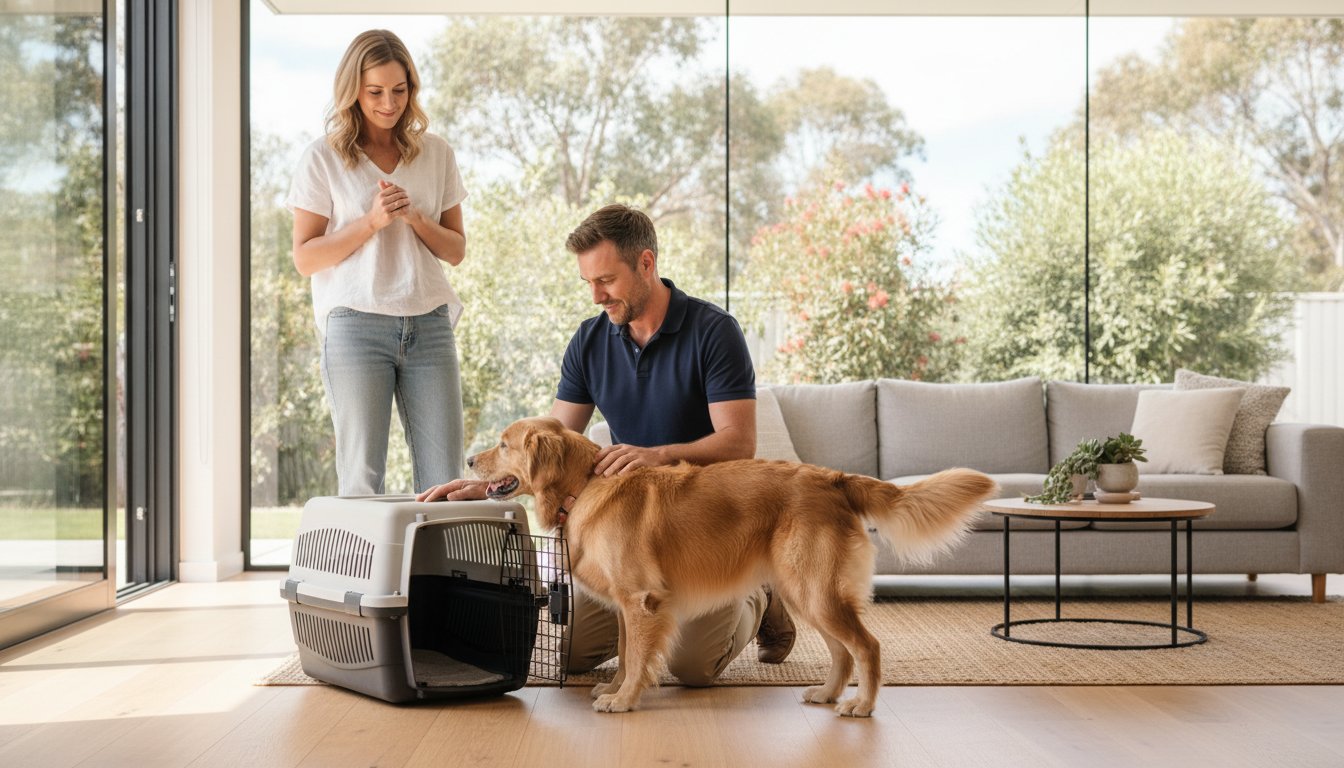
Can you imagine handing over your beloved family dog or cat to a stranger at a cargo terminal, trusting they’ll arrive safely on the other side of the world? It’s the moment that keeps most pet owners awake at night during an international move. We understand that your pets aren’t just cargo; they’re family members who deserve the highest standard of care. Managing a pet relocation South Africa involves more than just booking a flight. It requires a meticulous dance of veterinary import permits, ISO-compliant microchips, and strict rabies titration wait periods that can feel overwhelming when you’re already juggling a household move.
You’re likely feeling the weight of complex paperwork and the fear of a logistical error causing unnecessary quarantine for your animal. This guide is designed to replace that anxiety with a sense of calm control. We’ll walk you through the professional relocation timeline for 2026, explaining how expert animal travel services manage everything from USDA-endorsed health certificates to specialized ground transport. By the end of this article, you’ll have a clear roadmap for your pet’s journey, ensuring they settle into their new home safely and without delay.
Key Takeaways
- Learn how to distinguish between basic courier options and comprehensive animal travel services that manage end-to-end logistics.
- Understand the critical timelines for veterinary requirements, including microchipping and rabies vaccinations, to ensure a smooth pet relocation South Africa process.
- Discover the non-negotiable standards for IATA-compliant travel crates that guarantee your pet’s safety and comfort during long-haul flights.
- Gain practical advice on crate training and maintaining a stable environment to minimize your pet’s anxiety during the transition to a new home.
- Explore the benefits of coordinating your pet’s journey with your household furniture removal for a seamless, integrated relocation experience.
What Are Professional Animal Travel Services?
Professional animal travel services represent a highly specialised branch of the logistics industry, focusing exclusively on the safe and legal movement of live animals across domestic and international borders. Animal travel services are the bridge between veterinary care and global logistics. While many people initially look for a simple ‘pet courier’, there’s a vast difference between a local driver and a professional relocation partner. A courier might provide basic transport between two points; however, a professional service manages the entire regulatory ecosystem. When planning a pet relocation South Africa, owners often realise the scope of the task exceeds a simple transport job. It involves navigating the strict requirements of the Department of Agriculture, Land Reform and Rural Development (DALRRD) and adhering to the global pet travel standards established to protect animal welfare during transit. These professionals are typically members of the International Pet and Animal Transportation Association (IPATA), which ensures they stay updated on the ever-shifting landscape of international import and export laws.
The Scope of Modern Pet Relocation
A comprehensive relocation service offers much more than a crate in a van. It encompasses a full suite of logistical support, including door-to-door collections, terminal-to-terminal coordination, and the meticulous management of veterinary health certificates. These experts work directly with pet-friendly airlines to secure space in climate-controlled, pressurised cargo holds that maintain a stable environment throughout the flight. This level of detail is essential for South African pet owners moving abroad. The service includes the coordination of mandatory blood tests for diseases like Brucella canis or Babesia gibsoni, ensuring that every biological requirement is met before the paws even touch the tarmac. They act as a single point of contact, synchronising the pet relocation South Africa process with your household furniture removal so that your entire family arrives together.
Why Stress Management is the Priority
How do we ensure your pet remains calm during such a significant life event? Professional handlers who prioritising animal welfare understand that stress is the biggest hurdle in travel. They focus on maintaining a sense of routine and familiarity, often advising owners on how to acclimatise pets to their travel crates weeks in advance. By using specialised vehicles and trained staff who recognise signs of distress, these services transform a potentially chaotic experience into a steady, managed journey. They provide a protective layer between your pet and the noise of the airport. This careful handling ensures that the animal’s first experience in a new country is one of security rather than fear. The goal is to ensure your pet doesn’t just arrive; they must arrive ready to explore their new home with confidence and ease.
Core Components of a Safe Pet Move
Safety during a move isn’t the result of luck. It’s the outcome of strict adherence to international safety standards and meticulous veterinary planning. When you begin the process of pet relocation South Africa, the sheer volume of requirements can feel daunting. However, breaking these down into manageable components allows for a steady, organised transition. Success depends on two primary pillars: the equipment used for transport and the medical compliance required by both the origin and destination countries. Preparation is everything. Missing a single blood test or using an undersized crate can lead to travel delays or, in worst-case scenarios, mandatory quarantine for your animal.
The IATA Standard Travel Crate
Your pet’s travel crate is their sanctuary during a long-haul flight. It’s essential that the container meets the International Air Transport Association (IATA) standards. These regulations dictate that a crate must be large enough for the animal to stand, turn around, and lie down in a natural position. While high-quality plastic crates are standard for most breeds, certain large or powerful dogs may require custom-built wooden crates for specific routes. Every crate must feature adequate ventilation on at least three sides and be fitted with two fixed water bowls that can be filled from the outside. We recommend introducing the crate early, allowing your pet to view it as a safe space long before the moving day arrives.
The Veterinary Checklist for 2026
The medical timeline for a pet relocation South Africa is often the most complex part of the journey. In 2026, the order of operations remains critical. Your pet must have an ISO-compliant microchip (ISO 11784/11785) implanted before their rabies vaccination is administered. For those moving to the EU or UK, remember that the rabies titration blood test must be followed by a three-month wait period before travel is permitted. If you’re importing a dog into South Africa, adhering to the official South African import regulations is a legal necessity. This includes testing for five specific diseases within 30 days of export:
- Brucella canis
- Babesia gibsoni
- Dirofilaria immitis (heartworm)
- Leishmania
- Trypanosoma evansi
For those moving abroad, our Moving Pets Overseas from South Africa: The Complete 2026 Relocation Guide provides deeper country-specific insights. Beyond international flights, domestic moves within South Africa require equal care. We utilise dedicated transport vehicles for road relocations between cities like Cape Town, Johannesburg, and Durban, ensuring pets aren’t subjected to the stress of standard courier vans. By integrating these services into your broader move, you can simplify your relocation journey with a single point of contact who manages both your furniture and your family pets.
Navigating International and Domestic Regulations
Understanding the legal framework is often the most stressful part of any pet relocation South Africa journey. For exports, the process culminates with the State Veterinarian. This official must endorse all health certificates and vaccination records shortly before travel, confirming that your pet meets every specific requirement of the destination country. It’s a precise window of time. If the endorsement happens too early or too late, the airline cannot legally board the animal. This is why professional coordination is vital; we manage the appointments with the State Vet to ensure your paperwork is perfectly timed for your flight departure.
When bringing an animal into the country, you must secure a South African veterinary import permit well in advance. While many owners fear mandatory quarantine, it’s actually a corrective measure rather than a standard procedure in South Africa. If your paperwork is flawless and your pet meets all health criteria, they can usually be cleared for immediate release at the cargo terminal in Johannesburg or Cape Town. However, for certain high-risk countries or if documentation is missing, a stay at a state quarantine station may be required. We also navigate the complexities of restricted breeds. Many airlines have specific bans or additional crate requirements for brachycephalic (flat-faced) breeds like Bulldogs or Pugs due to respiratory risks at altitude. Similarly, certain breeds may require reinforced crates or specific permits for entry into countries like France or the UK.
Domestic relocations between provinces, such as moving from Gauteng to the Western Cape, require less paperwork but equal logistical care. We utilise specialised, climate-controlled vehicles to ensure your pets avoid the stress of commercial air travel or standard courier vans. This allows us to maintain a calm, stable environment throughout the long drive between cities.
Strict Destination Requirements (UK and Australia)
The United Kingdom and Australia represent two of the most regulated destinations for pets leaving South Africa. The UK’s ‘no-quarantine’ route requires a specific sequence of microchipping, rabies vaccination, and a titration test followed by a three-month wait. Australia is even more rigorous, with a mandatory 10-day stay at the Mickleham Post Entry Quarantine facility. For a deeper look at this specific route, consult our Moving Pets from South Africa to Australia: The 2026 Comprehensive Relocation Guide. These routes require planning to start at least seven months in advance to meet every biosecurity milestone.
The Role of Customs and Permits
Customs clearance for pets is handled under the ‘Move of Personal Effects’ category. This means your pet is legally linked to your own relocation status. You must have your original import permits and health certificates physically present at the point of entry. Digital copies are rarely accepted by customs officials. Securing these permits before booking your flight is a non-negotiable rule. Airlines will not confirm a cargo booking without a valid permit number. This ensures the animal won’t be stranded or refused entry upon arrival, protecting both the pet and the owner from unnecessary legal complications.

Preparing Your Pet for the Journey
Have you noticed how your pet reacts when the suitcases come out? They sense change long before the first box is taped. A successful pet relocation South Africa depends heavily on how well you prepare your animal’s mind, not just their medical file. The goal is to ensure the travel crate feels like a bedroom rather than a cage. This psychological preparation should ideally begin six to eight weeks before your departure date. By creating a sense of predictability, you mitigate the anxiety that naturally arises when their territory starts to disappear into packing crates.
Psychological Preparation and Routine
Gradual introduction is the secret to a stress-free flight. Start by placing the travel crate in a common area with the door open, allowing your cat or dog to explore it at their own pace. Feed them near the crate, then inside it, slowly increasing the time they spend behind a closed door. Modern animal travel services strongly discourage sedation. Drugs can interfere with an animal’s ability to regulate their body temperature and heart rate at high altitudes, which poses a significant safety risk. Instead, rely on familiar scents. Placing a t-shirt you’ve recently worn or their favourite blanket inside the crate provides a powerful sensory anchor in an unfamiliar environment. It’s a simple step that offers immense comfort during the quiet hours of a long-haul journey.
Arrival and Post-Move Care
What happens once the paws touch the ground? The first 48 hours are critical for decompression. Just like humans, animals experience a form of jet lag and environmental shock. They need a ‘sanctuary room’ in your new home. This should be a quiet space away from the chaos of unpacking furniture where their bed, water, and toys are immediately available. Don’t forget the legalities of your new location. You must update your pet’s microchip details with the local national database immediately. This ensures they can be returned to you if they wander off while exploring their new neighbourhood. It’s a small administrative task that provides vital security in those first few weeks.
Diet and hydration also require a steady hand. We recommend a light meal about six hours before the flight to prevent motion sickness, while ensuring they have constant access to water until the moment they are handed over to the airline. By managing these small details, you provide your pet with the best possible start in their new life. If you’re feeling overwhelmed by the coordination required, you can request a professional pet transport quote to ensure every detail is handled with expert care.
Why Integrated Relocation Management is Essential
Why treat your pet’s move as a separate, isolated task? Most families find that managing household goods and animal transport through different providers only adds layers of unnecessary complexity. By choosing an integrated approach to pet relocation South Africa, you ensure that every part of your move is synchronised. A single point of contact eliminates the need to relay information between different agencies, reducing the mental load on you during a stressful transition. It also prevents the common error of furniture arriving weeks before or after your pet, which often leads to expensive kennel stays or logistical gaps. Professional oversight ensures that customs clearance for both your personal effects and your pets happens smoothly, avoiding the technical pitfalls that cause delays at the border.
Synchronising Your Move
Coordination is the key to a seamless arrival. Ideally, your pet’s flight should be timed so they arrive just as you are ready to welcome them into your new residence. This reduces the time they spend in boarding facilities, which is often the most stressful part of the journey. If you are also moving your household, our The Comprehensive Guide to Furniture Removals in South Africa (2026) explains how we align these timelines. We believe that a successful relocation is one where the entire family, including the furry members, settles in together. This holistic view allows us to manage the intricacies of flight bookings and crate deliveries alongside the physical packing of your home. It ensures that your pet isn’t left in a kennel longer than absolutely necessary.
The Execu-Move Approach to Pet Care
We don’t just move boxes; we move lives. Our commitment to safety and global standards means we only partner with airlines and agents who share our values. With a partnership network of over 2000 global agents, we provide a steady hand across every continent. We integrate pet transport into our premium relocation packages, offering dedicated transport vehicles and expert handlers who understand the nuances of pet relocation South Africa. This integration means you don’t have to worry about the technicalities of health endorsements or State Vet appointments in isolation. We handle the logistical heavy lifting so you can focus on your family’s transition. Moving home is a journey for the whole family; we ensure no one is left behind.
Ensuring a Seamless Transition for Your Entire Family
Relocating your household is a significant life event, but ensuring your pets arrive with the same care as your furniture is what truly makes a new house feel like home. We’ve explored the importance of adhering to the 2026 veterinary timelines, the necessity of IATA-standard equipment, and the immense benefits of synchronising your animal’s travel with your personal effects. By prioritising early preparation and professional oversight, you can transform a complex logistical challenge into a managed, predictable experience that protects your pet’s well-being.
Managing a pet relocation South Africa requires a partner who understands that safety and emotional security are inseparable. At Execu-Move, we leverage a global network of over 2000 agents to provide specialised coordination for pets and vehicles. Our team is deeply experienced in navigating complex customs clearance, ensuring that every family member transitions smoothly without unnecessary delays. We pride ourselves on being the steady hand that guides you through the technical requirements of global moving.
Ready to take the next step in your relocation journey? You can request a comprehensive relocation quote from Execu-Move today to see how our integrated services provide the peace of mind you deserve. Your new life awaits, and we are here to ensure the whole family arrives safely and ready to settle in.
Frequently Asked Questions
Is it safe for my pet to fly in the cargo hold?
Yes, it’s safe because the cargo hold is climate-controlled and pressurised to the same standards as the passenger cabin. Professional airlines treat live animals as a priority, ensuring they’re the last to be loaded and the first to be offloaded. This environment remains dark and quiet during the flight, which actually helps most pets settle down and sleep throughout the journey.
How much does professional pet relocation in South Africa cost?
The cost of a move depends on several variables, including the size of your pet, the destination, and the complexity of the required veterinary permits. Factors like custom crate manufacturing and airline fuel surcharges also play a role. While we don’t offer a flat rate, a professional pet relocation South Africa service provides value by preventing the expensive consequences of paperwork errors or missed flight windows.
Can I move my pet to the UK without them going into quarantine?
Yes, you can avoid quarantine in the United Kingdom by strictly following the ‘Pet Travel Scheme’ requirements. Your pet must be microchipped, vaccinated against rabies, and pass a blood titration test at least three months before travel. All documentation must be original and endorsed by a South African State Veterinarian to ensure immediate release upon arrival at Heathrow or Gatwick.
What is an IATA-compliant travel crate and why do I need one?
An IATA-compliant crate is a specialised travel container that meets the International Air Transport Association’s strict safety and welfare standards. These crates are designed with specific ventilation, strength, and space requirements to ensure your pet can stand, turn, and lie down naturally. Airlines won’t accept any animal for transport if their crate doesn’t meet these non-negotiable global safety benchmarks.
Do I need to sedate my pet before an international flight?
No, sedation is strongly discouraged by veterinarians and most airlines because it poses significant health risks at high altitudes. Sedatives can interfere with an animal’s natural ability to regulate their body temperature and maintain their balance in the crate. We recommend using pheromone sprays or familiar-scented blankets to help your pet remain calm without the use of dangerous medication.
How long does the pet relocation process take from South Africa?
The timeline typically ranges from three to seven months depending on your destination’s specific biosecurity laws. For pet relocation South Africa to ‘rabies-free’ countries like Australia, the process is longer due to mandatory waiting periods after blood tests. Starting at least six months in advance allows for a methodical approach to vaccinations and permit applications without last-minute stress.
What happens if my pet’s flight is delayed or cancelled?
Professional relocation specialists have established contingency plans to handle flight disruptions and ensure your pet’s comfort. If a delay occurs, pets are moved to climate-controlled boarding facilities or kept in quiet, supervised areas of the cargo terminal. We manage all the rescheduling logistics and ensure that veterinary certificates remain valid for the new departure time, keeping you updated throughout the process.
Can I move my senior pet or a pet with a medical condition?
Yes, many senior pets and animals with chronic conditions can travel safely with a tailored relocation plan. This process begins with a ‘fit-to-fly’ assessment from your vet to ensure the animal can handle the journey. We then implement extra comfort measures, such as specialised bedding or specific hydration schedules, to accommodate their needs and provide a stable environment during transit.